




 ₹https://clinics.flexifyme.com/flexifyme/-in-pune/-in-wanowrie/flexifyme-advanced-physiotherapy-clinic-in-wanowrie-pune--25jr6i/articles/lumbar-spondylosis-symptoms-causes-and-treatment--fa1b11b6-5dd4-4380-8ed4-31cd7c38ddd2
FlexifyMe Advanced Physiotherapy Clinic, Wanowrie, pune
Physiotherapy Clinic in Wanowrie, Pune, Maharashtra
Shop No 202 A And B, Second Floor, One Place, Oxford Village, Kedari Nagar, Nearby Salunke Vihar Road, Wanowrie, pune, maharashtra - 411040
Request A Call Back
FlexifyMe Advanced Physiotherapy Clinic Social Feeds in Wanowrie, pune
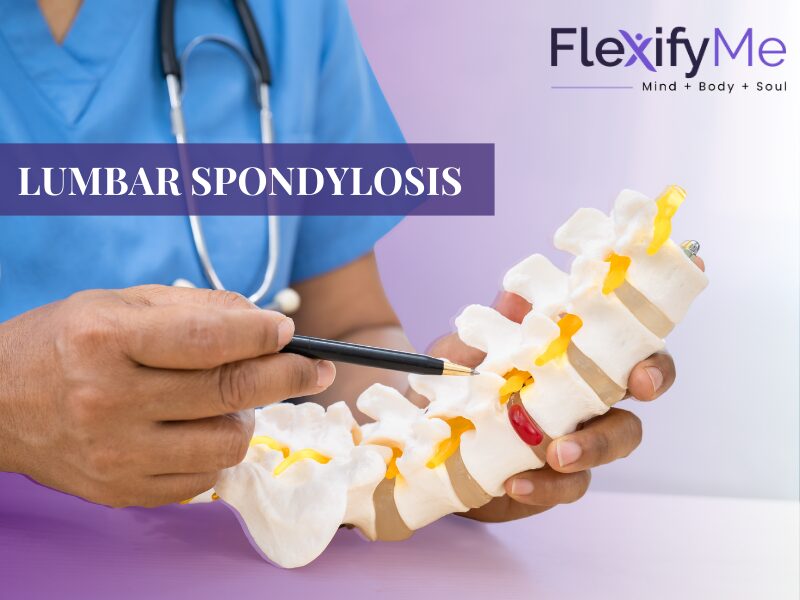
Lumbar Spondylosis: Symptoms, Causes And Treatment
Have you ever felt a sudden lower back pain? Or a constant pain spiralling down the back and radiating out towards the hip. This could be a result of a compression of the spinal nerves or an inflammation of the same. In medical terminology, it is called lumbar spondylosis.
Lumbar spondylosis is a degeneration of the intervertebral discs, vertebrae and the main joints in the lumbar region, which results in moderate to severe pain. Let us look at the symptoms and causes for this problem.
What Is Lumbar Spondylosis?
Lumbar spondylosis is a degeneration of the vertebrae and discs of the lower back due to osteoarthritis. The discs in the lower back act as cushioning between the vertebrae and accommodate any pressure that may occur on the spine. However, over time, these disks start to break down or rupture. As a result of this, the ruptured discs put pressure on the spinal nerve that runs down the back. This causes intense pain and can sometimes lead to nerve damage.
Furthermore, there may be stiffness in the area which impacts the movement and flexibility of the back. There may also be formation of bone spurs along the edge of the vertebrae. These spurs compress the spinal cord and this can lead to weakness in the arms or the legs.
But what are the lumbar spondylosis symptoms? Let us review.
Symptoms of Lumbar spondylosis
The symptoms of lumbar spondylosis can vary. Some common ones include:
- Lower back pain
- Stiffness after prolonged periods of inactivity may occur when one has been sedentary for some time and then suddenly starts moving into action.
- A constant radiating pain from the lower back to the legs or in the hip area.
- There is decreased range of motion and flexibility, in the low back or the legs. This is observed especially in the mornings or after a period of inactivity.
- Stiffness or tenderness in the lower back.
- Sensations of tingling and numbness can occur in some cases.
- Leg muscle weakening can also take place.
In severe cases, lumbar spondylosis can also lead to:
- A loss of bladder or bowel control or a numbness in the groin because of nerve dysfunction.
- Cauda equina syndrome: In such cases, the nerves at the bottom of the spinal cord are compressed by an intervertebral disc, causing nerve problems.
- Neurologic dysfunction due to nerve compression. This may be caused by bulging discs or bone spurs. This narrows the holes where the nerve roots exit the spinal canal.
Causes Of Lumbar Spondylosis
There are many reasons for which people can witness lumbar spondylosis. The most common lumbar spondylosis causes include:
Excessive Physical Activity
While it is good to be active, doing excessive manual work on the job, or playing contact sports aggressively and repeated back injuries, can weaken the back. The vertebrae gets damaged and over time, this damage may lead to a pars fracture.
Ageing
As one grows older, the discs in the spine lose water content, and the cartilage becomes thinner. As a result, there is reduced cushioning between the bones. The spine becomes less flexible, and there is a higher chance of accidents.
Genetics
At times, there could be a family history of lumbar spondylosis. If a person is born with thinner vertebrae at a later stage, it can make a person more likely to experience a pars fracture.
Previous Low Back Injuries
An older back injury is more susceptible to a repeat injury and this can also accelerate the degenerative process. In the case of previous back injuries, one should be extra careful not to lift heavy objects or overdo physical activity.
Treatment For Lumbar Spondylosis

The doctor may prescribe multiple pathways for lumbar spondylosis treatment, as it can take a few weeks to a few months to improve. The doctor would carry out X-rays, CT scans, or an MRI, along with a physical exam and prescribe some of these:
Rest
An immediate break from sports and other physical activities is recommended to reduce the stress on the spine and allow healing.
Physiotherapy
A consultation with a physiotherapist is usually suggested by the doctor. The physiotherapist will chart out a plan to help manage symptoms like pain, stiffness and discomfort that make it difficult to move. He/she will also teach closely guided exercises to strengthen the muscles in the back area. At Flexifyme, we have certified physiotherapists who work with you on lumbar spondylosis pain alleviation.
Medications
Pain medication or NSAIDs may be suggested by the doctor to relieve the inflammation and reduce inflammation.
Corticosteroids
At times, the doctor may administer an injection in the affected area to help relieve pain or reduce severe inflammation.
Heat or ice applications
These may also be suggested by the doctor to reduce the pain.
Lifestyle modifications
It is imperative to maintain an ideal weight by practising healthy eating habits. This reduces the extra pressure on the back. Conscious efforts must be made to maintain a good posture, as bending the back or hunching over the work table will only weaken the back muscles even more. One must do core strengthening exercises and reduce strenuous activities. Keeping these factors in check can help reduce pain and prevent further degeneration.
Surgery
In severe cases, surgery may be suggested, especially when the body does not respond to other treatments and the problem is impacting daily life severely.
What Is Mild Lumbar Spondylosis?
This is common and is an early stage of degenerative changes in the lower back region. It occurs due to ageing, strenuous sports, or physical work.
These are the symptoms of mild lumbar spondylosis:
- Degeneration: The discs between your vertebrae start to dry out and lose cushioning.
- The cartilage in the joints starts to wear down and get reduced.
- Bony growths may develop on the vertebrae. This condition is known as bone spur.
- Occasional low back pain
- Stiffness, especially in the morning
While the symptoms may not be significant here, one should take adequate rest and consult a physiotherapist for gentle exercises. Often, these can strengthen the back muscles and bring quick results. In case of persistent pain, a doctor must be consulted.
What is Lumbar Spondylosis ICD10?
ICD refers to the International Classification of Diseases, Tenth Revision. It is a system used by physicians to classify and code all diagnoses, symptoms and procedures for claims processing.
The ICD-10 code for Lumbar Spondylosis is M47.896. This code specifically refers to “Other spondylosis, lumbar region.” It is essential for healthcare providers to use accurate ICD-10 code for diagnosis, treatment and for billing purposes.
Lumbar Spondylosis Exercises
Exercises are essential for strengthening the back muscles and for pain relief. Here are some exercises that are generally recommended by doctors. You can get physiotherapy consultation on Flexifyme, who can guide you step-by-step on exercises for lumbar spondylosis.
Pelvic tilt
- Start by lying on your back, with your knees bent and feet flat on the ground.
- Enact your abdominal strength and gently press your lower back against the floor, promoting a tilt in your pelvis upwards.
- Regular pelvic tilts can help reduce pressure on the spinal disc and lessen the issues that come with lumbar spondylosis.
Cat-cow stretch
- Cat-cow pose Be in a tabletop position on your hands and knees.
- Exhale while assuming a cow position, with your back arched and your stomach sagging toward the floor.
- Round your back as you exhale and tuck in your chin, resembling the cat pose. This helps stretch the spine and maintains its natural curve.
Bridge pose
- Lie on your back with your knees bent and your feet spaced hip apart.
- Raise your hips from the floor while ensuring that your shoulders and feet keep in touch with the ground.
- Maintain the pose for a few breaths before lowering your hips slowly.
- Engaging the bridge pose helps stabilise the lumbar region.
Wall angel
- Stand with your back against a wall and your feet separated by a few inches.
- Twist your elbows at a 90-degree point and lean them against the wall.
- Slowly glide your arms upwards along the wall. Then, gently lower your arms back down.
- Wall angels help shoulder mobility and bring a neutral spine position.
Swimming
While swimming is a great form of exercise for all musculoskeletal ailments, it is especially beneficial in case of lumbar spondylosis. Opt for a swimming style that suits your comfort, whether free-style or backstroke. You should concentrate on maintaining a straight body position and involve your core muscles to stabilise the spine.
Conclusion
Lumbar spondylosis is a degenerative musculoskeletal ailment that can be caused due to ageing, excessive physical work, or due to recurring injuries. While it can be painful, it has to be managed effectively with lifestyle changes, physiotherapy, and pain medication prescribed by a doctor. If addressed in the early stages, it can be managed well with regular exercises under the guidance of a physiotherapist. One should also make the attempt to keep good posture, keep healthy and maintain healthy eating habits.
Frequently Asked Questions for Lumbar Spondylosis
1. What is Lumbar Spondylosis?
Lumbar spondylosis is age-related wear and tear affecting the lower spine (lumbar vertebrae), including the discs, joints, and bones. It can cause stiffness, lower back pain, and reduced flexibility.
2. What are the symptoms of Lumbar Spondylosis?
Common symptoms include lower back pain, stiffness (especially in the morning or after rest), numbness or tingling in the legs, muscle weakness, and pain that worsens with movement or prolonged sitting.
3. What causes Lumbar Spondylosis?
It is primarily caused by aging and spinal degeneration. Other contributing factors include poor posture, obesity, lack of exercise, spinal injuries, and a sedentary lifestyle.
4. Is Lumbar Spondylosis a serious condition?
While it’s not usually life-threatening, if left untreated, it can lead to chronic pain, reduced mobility, or nerve compression (like sciatica), significantly affecting your quality of life.
5. How is Lumbar Spondylosis diagnosed?
Diagnosis typically involves a physical exam, a review of symptoms, and imaging tests such as X-rays, MRI, or CT scans to assess disc degeneration or nerve involvement.
6. What is the best treatment for Lumbar Spondylosis?
Treatment options include physiotherapy, pain relievers, anti-inflammatory medications, posture correction, weight management, and in severe cases, surgical intervention.
7. Can Lumbar Spondylosis be cured permanently?
There is no permanent cure, but symptoms can be effectively managed with regular physiotherapy, exercise, lifestyle changes, and proper medical care to prevent progression.
8. Which exercises help relieve Lumbar Spondylosis pain?
Gentle stretching, core strengthening, yoga, and mobility exercises help reduce stiffness and pain. Always consult a physiotherapist before starting any exercise routine.
9. Can I continue working or doing physical activities with Lumbar Spondylosis?
Yes, most people can continue working with modifications. Avoid heavy lifting and prolonged sitting or standing. A physiotherapist can guide you on safe movements and ergonomics.
10. When should I see a doctor or physiotherapist for Lumbar Spondylosis?
Seek help if you experience persistent back pain, numbness, weakness in your legs, or if your symptoms are interfering with daily activities. Early intervention can prevent worsening.