




 ₹https://clinics.flexifyme.com/flexifyme/-in-mumbai/-in-goregaon-east/flexifyme-advanced-physiotherapy-clinic-in-goregaon-east-mumbai--e407IM/articles/bulging-disc-what-is-it-symptoms-causes-treatment-options--e580e5a9-b808-4ae0-8604-020a351b9724
FlexifyMe Advanced Physiotherapy Clinic, Goregaon East, mumbai
Physiotherapy Clinic in Goregaon East, Mumbai, Maharashtra
Building No 17, First Floor, Onkar CHS Ltd, A Wing, Dindoshi, Gokuldham Colony, Opposite Oberoi Mall, Goregaon East, mumbai, maharashtra - 400097
Request A Call Back
FlexifyMe Advanced Physiotherapy Clinic Social Feeds in Goregaon East, mumbai
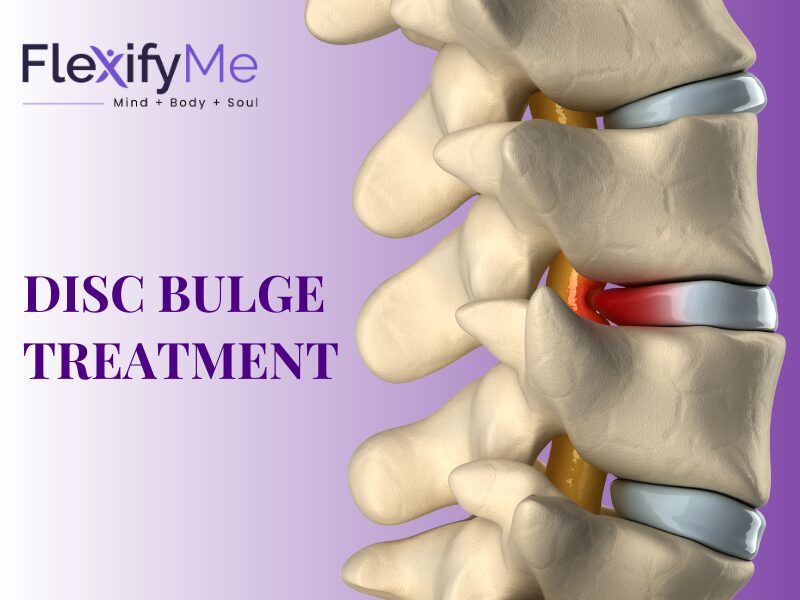
Bulging Disc: what Is It, Symptoms, Causes, Treatment Options
What is Bulging Disc? What is the Treatment for it?
The usual cause of bulging disc is ageing. Most people have it by the age of 40. Discs are parts of the spine that offer protection to the vertebrae. Sometimes, probably due to ageing an area of a disc becomes weak and bulges out somewhat. With time, it continues to bulge. As a result of disc bulge, the supporting ligaments may begin to collapse and perform less effectively.
A building disc doesn’t hurt much like a herniated disc. When you rest or take anti-inflammatory medications, the condition won’t bother you for a while. But as soon as you get back to work or when the effect of the medication wears off, the condition can become worse.
But that’s not something you want, right? What you’re looking for is a treatment that would reduce this bulge and get you in better shape. Well, some treatments can help you reduce disc bulges so that you can activate your muscles naturally. You must have heard about yoga and physiotherapy. It’s time you consider practising them as disc bulge treatment.
Here, you will learn about the symptoms and causes of bulges in discs and the right treatment for them.
Causes of Bulging Disc
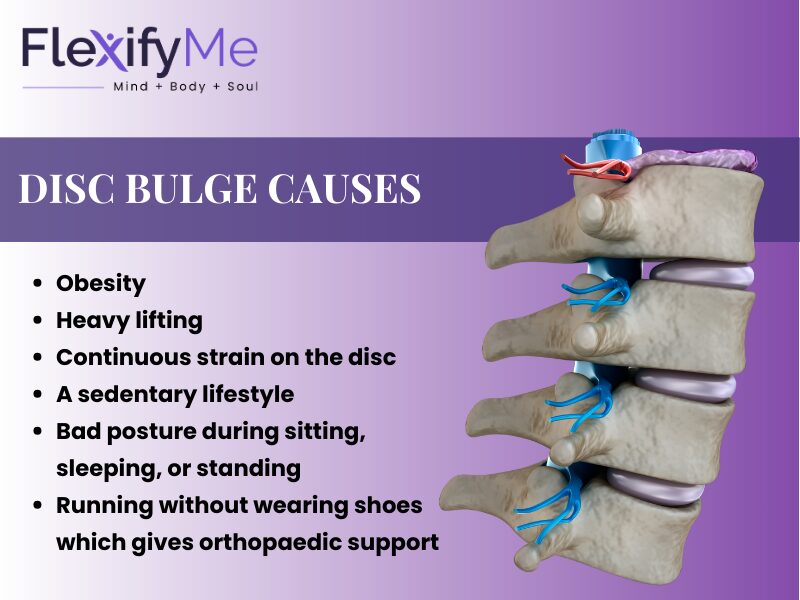
For diagnosing a bulge in a disc, the health practitioner may ask you certain questions regarding your lifestyle and the kinds of physical activities you perform.
The natural process of ageing is one of the primary causes of disc bulge. Besides these, the other causes for the vulnerability of discs may include:
- Obesity
- Heavy lifting
- Continuous strain on the disc
- A sedentary lifestyle
- Bad posture during sitting, sleeping, or standing
- Running without wearing shoes which gives orthopaedic support
Symptoms of Bulging Disc
If the bulge in dischas not reached the stage of hernia, you may have little to no pain. Finding the symptoms of disc bulge becomes difficult until the condition reaches a severity level. Usually, bulging discs create pressure points around the nerves, producing different sensations.
Depending on the condition, disc bulge symptoms can range from minor discomfort and numbness to moderate or extreme pain. In most scenarios, when a disc bulge starts to hurt, it means it has reached or is near a hernia.
Symptoms like difficulty walking, pain in the neck, legs, hands, or shoulders pain in the lower back or buttocks and impairment while holding or lifting things need immediate doctor consultation as they can be a sign of potential health condition.
What is Cervical Bulging Disc?
When the discs and ligaments in the neck region weaken and develop a bulge, it is called a cervical disc bulge. It is often difficult to identify a bulge in a disc until it creates pressure on the spinal nerves. Also known as diffuse a bulge in a disc, this condition may cause pain in the neck, shoulders, back and often lower back region. This pain can be aching, dull or sharp and may reach down to your arms and fingers, giving a tingling sensation. The tingling sensation of the fingers and fingertips can often make it difficult for you to hold things. When the bulge reaches the stage of herniation, it can be known as l4 l5 disc bulge.
How to Treat Bulging Disc Naturally?
If you don’t sign up for an early treatment for disc bulge it can take the form of herniated disc or slip disc. One way to combat a bulge in disc is by strengthening your core. And how to do that? Simple. You have to learn and practise some of the effective yoga poses.
Yoga is one of the oldest forms of treatment for various health conditions. Thus, if you’re looking for l4-l5 disc bulge treatment without surgery, here’s what you need to follow:Your Path to a Pain-Free Back Starts Here: Book a Virtual Physiotherapy Session!
1. Standing Extension
Standing extension reverses the habit of hunching. Since most bulges in disc and slip discs happen due to repetitive spinal bends and bad posture, this stretching exercise can move the discs back to their neutral position, offering proper body alignment.
To do a standing extension, you have to:
- Stand up with a good posture.
- Place your hands on both sides of your lower back.
- Use your hands to push your pelvis forward and stretch your spine to the back.
- While you are stretching to the back, make sure you extend from the neck so that you face up to the ceiling.
- Do 2-3 sets.
2. Spinal Decompression
One of the leading causes of disc bulge is pressure on the discs. Spinal decompression generates spaces between your vertebrae so that your discs don’t feel strained. To perform this exercise:
- Use the top of a door or a bar and simply hold on to it and hang.
- Hang for half a minute and perform three sets.
- While you’re releasing the hanging pose, ensure that you discontinue the pose slowly so that you don’t cause any spasms.
Avoid continuing this exercise if you feel any discomfort.
3. Cat-Cow Pose
For disc bulge, this is one of the most common workouts. Cat-cow exercise combines two yoga poses that reduce the pressure on discs by creating a space between the vertebrae. It also increases spinal mobility, which can assist in reducing slip disc discomfort and speeding up recovery. To perform a cat-cow pose, you have to:
- Bring your entire body weight on your hands and knees.
- Inhale and drop your stomach while you face up towards the ceiling.
- Exhale and curl your spine while using your hands to press into the floor.
- When you’re in this position, bend your neck down to see your feet.
- Try to do 10 reps and 2-3 sets of this exercise.
4. Half-Cobra Pose
This pose will allow people suffering from a bulge in a disc to push the disc material back to the centre of the intervertebral disc for better recovery. The purpose of this stretch is to centralise the pain that travels from the affected leg to the foot. With half-cobra exercise, you can move the pain to the lower back and ultimately alleviate the pain. To do the half-cobra pose, start by:
- Lying on your stomach and lift your body up through your elbows.
- While you do that, lock your hips to the floor.
- Maintain the face-up pose for 10-15 seconds and return to the face-down position.
- As you progress, aim to hold the position for 30 seconds.
As a beginner, you may find it challenging to perform the half-cobra pose. Give it some patience and practice, and you will reap the benefits of this pose as well.
5. Full Cobra Pose
The principle of this yoga pose is similar to the half-cobra pose. Just like the half-cobra exercise, this one also pushes the disc material back to the intervertebral disc to reduce discomfort sensations, creating a disc bulge or slip discs. Here’s how you can do a full cobra pose:
- Start with a half-cobra pose.
- Then, lift your body up on your hands and do a stretch while keeping your pelvis in contact with the floor.
- Keep your lower back relaxed when you stretch your body from the floor.
- Try to do 10 reps for this stretch.
Initially, when you do this pose try to hold the pose for at least 15 seconds. As you get used to it, increase your time to maintain the position.
6. Plank
Weakening of discs can lead to bulges in disc or herniated disks. To strengthen your core and glutes, you can perform the plank exercise. Follow these steps to do the plank:
- Begin by lying on the floor with your hands on either side of your body.
- Bring your forearms parallel to your chest and lift your body.
- Distribute your body weight between your forearms and toes, while you’re above the ground.
- Make sure you maintain a stable position and don’t sag your lower back or lift your buttocks.
- Try to do at least 5 reps, if possible. If not, then aim for 2.
7. Bird Dog Pose
To improve your l4-l5 muscle strength, you can do the bird dog pose. This yoga pose can also offer stability to your core. Following are the steps for the bird dog pose:
- Lie on your hands and knees.
- Place your hands under your shoulders and knees under your hips.
- Brace your core as much as you can before you start the pose.
- While you brace or contact your core, raise your left arm until it is aligned with your torso and kick your right leg until it is aligned with your torso.
- Hold this pose for 2-3 seconds and then go back to the start position.
Conclusion
Disc bulge Though it happens when you age, there are cases where disc bulges have happened to young people also. The early signs of bulges in the disc are hard to detect until they reach the point of herniation. To make sure, your intervertebral disc is strong and steady, follow the yoga poses as mentioned above. With these exercises, you can reduce the pain of slip discs or bulging disks.
Frequently Asked Questions for Bulging Disc
1. What is a disc bulge and how is it different from a herniated disc?
A disc bulge occurs when the outer layer of an intervertebral disc protrudes outward, while in a herniated disc, the inner gel-like material leaks out. Both can press on nearby nerves but vary in severity.
2. What are the main causes of a Bulging Disc?
Common causes include poor posture, aging, repetitive strain, heavy lifting, obesity, lack of exercise, or spinal injuries. Degeneration due to aging is the most common trigger.
3. What are the symptoms of a Bulging Disc?
Symptoms may include back or neck pain, numbness, tingling, muscle weakness, or shooting pain in the limbs-depending on which disc is affected (cervical, thoracic, or lumbar).
4. How is a bulging disc diagnosed?
Doctors typically use physical exams along with imaging tests such as MRI, CT scans, or X-rays to confirm a diagnosis and locate the affected disc.
5. Can a Bulging Disc heal on its own without surgery?
Yes, in most cases, a disc bulge can improve with conservative treatments like rest, physiotherapy, pain medications, lifestyle changes, and posture correction.
6. What are the best exercises or physiotherapy treatments for a Bulging Disc?
Stretching, core strengthening, posture correction, and guided physiotherapy programs are effective. Always follow a physiotherapist’s advice to avoid worsening the condition.
7. When should I consider surgery for a Bulging Disc?
Surgery is considered only if conservative treatments fail after several months, or if symptoms like severe pain, weakness, or loss of bladder/bowel control occur.
8. Is it safe to exercise or play sports with a bulging disc?
Light exercises may be safe under supervision, but high-impact or contact sports should be avoided. Always consult a physiotherapist before resuming physical activity.
9. How long does it take to recover from a bulging disc?
Recovery time varies—some people feel better in weeks, while others may take several months depending on severity and treatment adherence.
10. Can a Bulging Disc come back after healing?
Yes, if underlying causes like poor posture or weak core muscles aren’t addressed, the disc may bulge again. Ongoing physiotherapy and lifestyle changes are essential for prevention.