



Item 1 of 4
 ₹https://clinics.flexifyme.com/flexifyme/navi-mumbai/vashi/flexifyme-advanced-physiotherapy-clinic-in-vashi-navi-mumbai--4gxgTt/articles/strength-training-makes-you-powerful-but-power-alo--fb69a053-b177-4f17-b2f0-57d223b025e3
Shop No 119, First Floor, Satra Plaza, Juhu Nagar, Phase 2, Sector 19D, Palm Beach RoadVashi, navi mumbai400703in
1505
FlexifyMe Advanced Physiotherapy Clinic, Vashi, navi mumbai
Physiotherapy Clinic in Vashi, Navi Mumbai, Maharashtra
Shop No 119, First Floor, Satra Plaza, Juhu Nagar, Phase 2, Sector 19D, Palm Beach Road, Vashi, navi mumbai, maharashtra - 400703
06746649196
Clinic Locator
Write a ReviewDrive Direction
Request A Call Back
FlexifyMe Advanced Physiotherapy Clinic Social Feeds in Vashi, navi mumbai
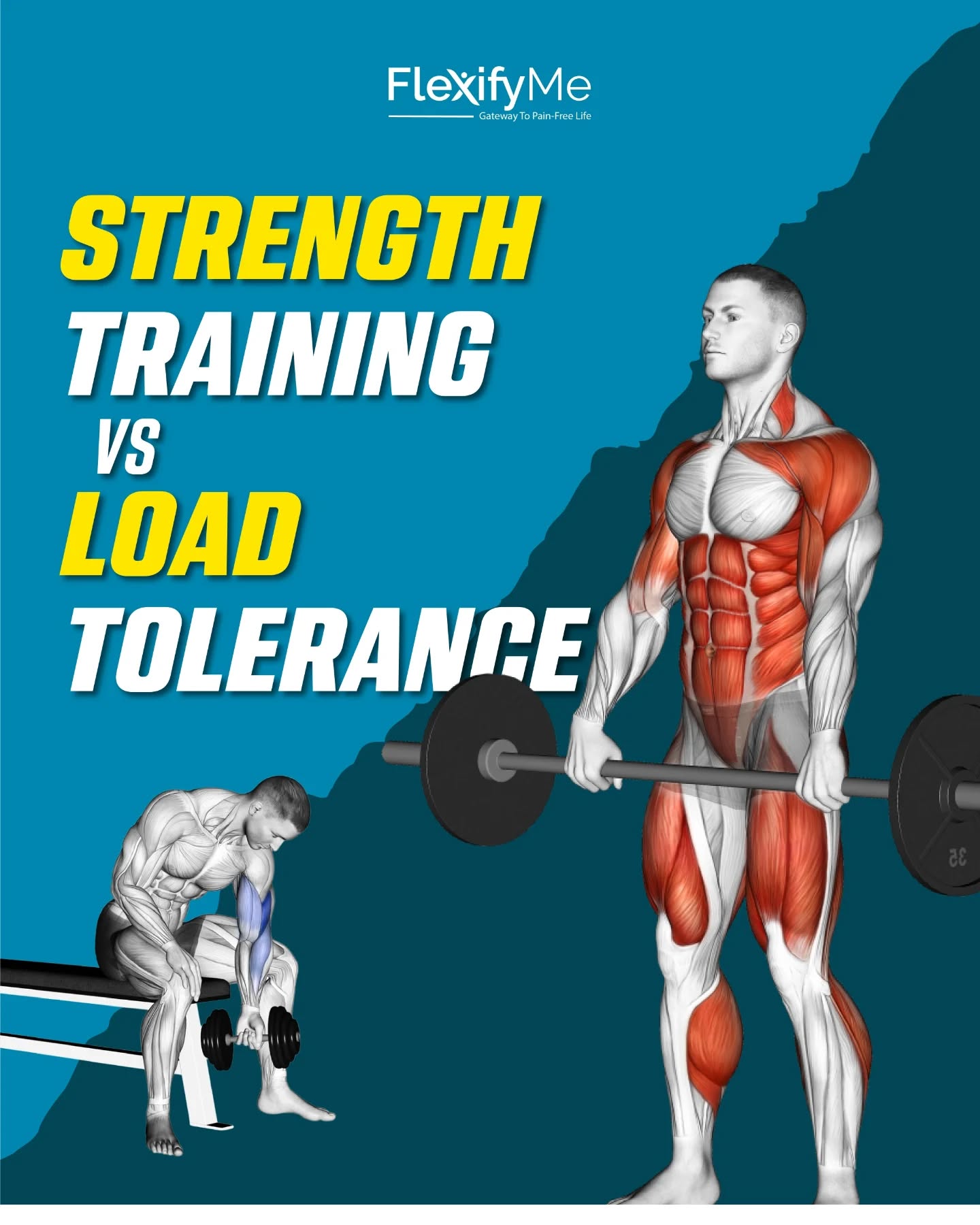
Strength training makes you powerful but power alone doesn’t protect you from pain.
Strength training makes you powerful but power alone doesn’t protect you from pain.
Many people lift weights regularly, hit PRs, and look strong… yet still feel pain during walking, sitting, standing, or everyday tasks. That’s because strength and load tolerance are not the same thing.
Strength refers to how much force your muscles can produce in short bursts. Load tolerance is your body’s ability to handle repeated, low-level force over long durations the kind demanded by daily life. Most daily activities only require a small percentage of your maximum strength, but they require that force to be sustained for minutes or hours at a time.
This is why pain often shows up in the evening, during prolonged standing, or after long sitting even in people who train hard at the gym. The issue isn’t weakness. It’s fatigue. When tissues are exposed to more load than they’re conditioned to tolerate over time, pain becomes a protective signal.
Traditional strength training focuses on high intensity, short sets, and full recovery between efforts. Real life doesn’t work that way. Walking, sitting, working, and standing demand continuous muscle activity with minimal rest, which is why endurance, isometrics, and gradual exposure to time-based load matter just as much as lifting heavier weights.
True recovery and injury prevention require training your body to tolerate duration, repetition, and task-specific demands not just peak force. Isometric holds, slow tempo work, progressive volume, and real-life movement patterns help build this missing layer of resilience.
Strength builds capacity.
Load tolerance keeps you pain-free.
Comment " HEALTH " to book a session with our experts.
#strengthtraining #loadtolerance #endurance #pain #spinepain
Strength training vs load tolerance | Load tolerance training | Strength vs endurance | Pain despite strength training | Why strong people have pain | Muscle fatigue and pain | Injury prevention physiotherapy | Isometric exercise benefits | Chronic pain physiotherapy | Functional strength training