


Item 1 of 4
 ₹https://clinics.flexifyme.com/flexifyme/navi-mumbai/vashi/flexifyme-advanced-physiotherapy-clinic-in-vashi-navi-mumbai--4gxgTt/articles/most-tennis-elbow-treatment-fails-for-one-simple-r--02d046f4-7292-4c32-a26e-73997f6c02f2
Shop No 119, First Floor, Satra Plaza, Juhu Nagar, Phase 2, Sector 19D, Palm Beach RoadVashi, navi mumbai400703in
1505
FlexifyMe Advanced Physiotherapy Clinic, Vashi, navi mumbai
Physiotherapy Clinic in Vashi, Navi Mumbai, Maharashtra
Shop No 119, First Floor, Satra Plaza, Juhu Nagar, Phase 2, Sector 19D, Palm Beach Road, Vashi, navi mumbai, maharashtra - 400703
06746649196
Clinic Locator
Write a ReviewDrive Direction
Request A Call Back
FlexifyMe Advanced Physiotherapy Clinic Social Feeds in Vashi, navi mumbai
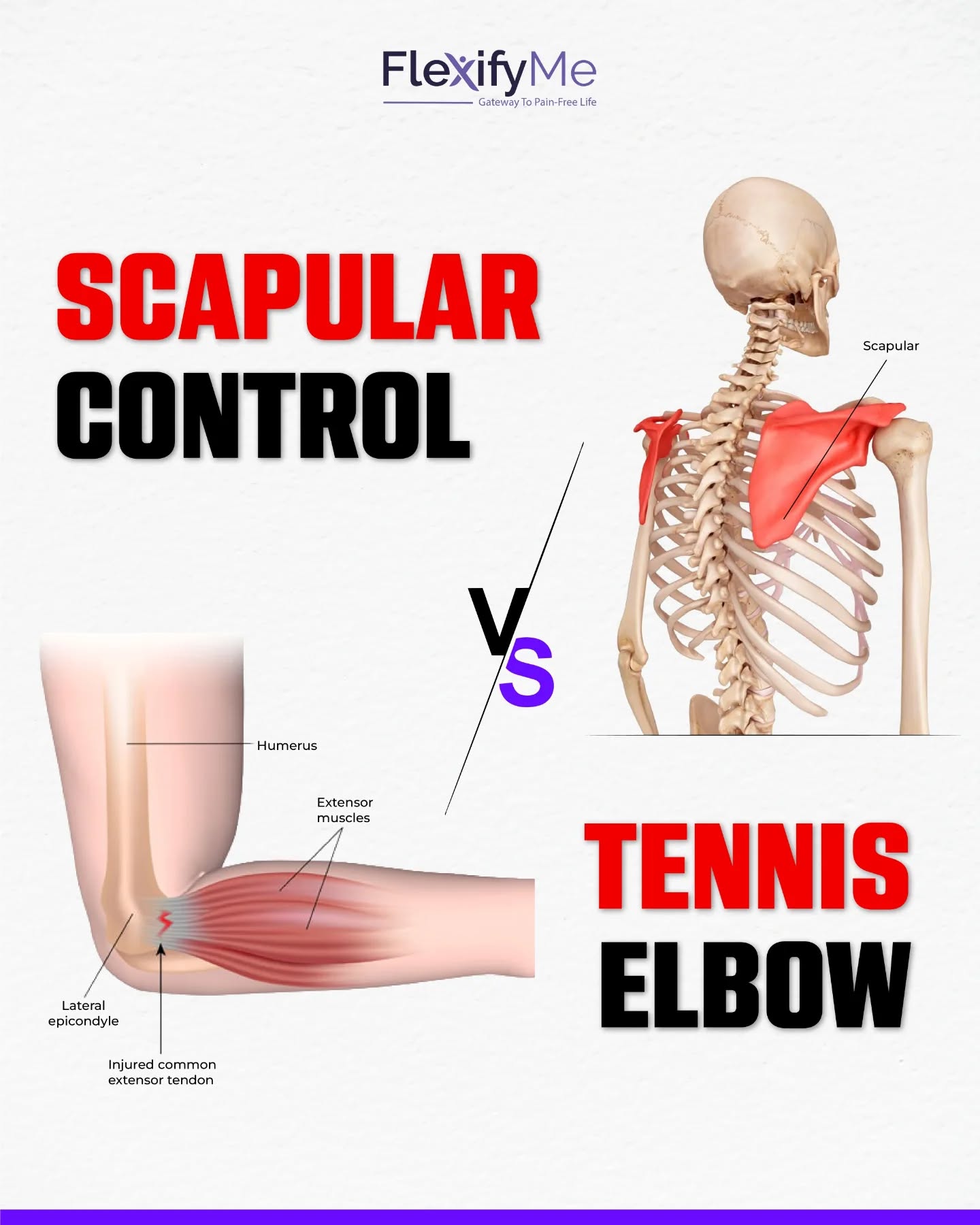
Most tennis elbow treatment fails for one simple reason
Most tennis elbow treatment fails for one simple reason:
we treat the elbow… but ignore the shoulder blade.
Tennis elbow is rarely just a local tendon issue. The elbow becomes painful when it starts absorbing force that should have been controlled higher up the chain.
When scapular control is poor, the forearm muscles overwork, load distribution becomes inefficient, and the tendon is forced to handle stress it wasn’t designed for. Pain appears at the elbow, but the mechanical error starts at the shoulder.
Your body works as a linked system. During gripping, lifting, typing, or sports tasks, force should transfer smoothly from hand → forearm → shoulder → trunk. When the scapula fails to stabilize, that force has nowhere to go. The elbow becomes a “force dump site,” leading to overload, irritation, and recurring pain.
This is why many people feel temporary relief from local massage or forearm strengthening but the pain returns once real-world load comes back.
Research consistently shows that shoulder weakness, poor scapular stability, and proximal control deficits increase elbow stress during functional tasks. Long-term recovery requires restoring the movement chain, not chasing symptoms
Scapular stability, shoulder endurance, controlled load progression, and integrated grip training reduce tendon strain by improving force distribution
not by isolating the elbow, but by supporting it.
At FlexifyMe, we don’t just calm pain.
We rebuild how force travels through your body
so the elbow doesn’t have to fight alone.