


 ₹https://clinics.flexifyme.com/flexifyme/mumbai/goregaon-east/flexifyme-advanced-physiotherapy-clinic-in-goregaon-east-mumbai--e407IM/articles/slip-disc-treatment-without-surgery-natural-ways-t--6bc84050-befa-45bf-82db-162412bcb5eb
FlexifyMe Advanced Physiotherapy Clinic, Goregaon East, mumbai
Physiotherapy Clinic in Goregaon East, Mumbai, Maharashtra
Building No 17, First Floor, Onkar CHS Ltd, A Wing, Dindoshi, Gokuldham Colony, Opposite Oberoi Mall, Goregaon East, mumbai, maharashtra - 400097
Request A Call Back
FlexifyMe Advanced Physiotherapy Clinic Social Feeds in Goregaon East, mumbai
Slip Disc Treatment Without Surgery | Natural Ways to Recover
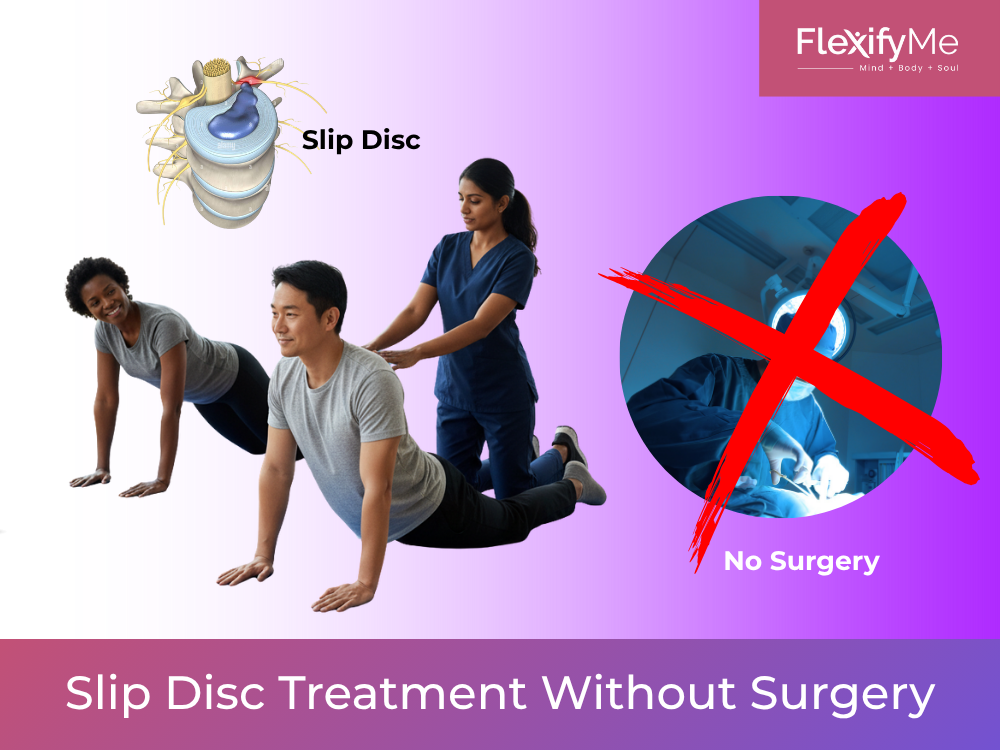
A herniated disc or slip disc treatment without surgery can cause a stabbing sensation when bending or a persistent ache that travels down your leg, which is annoying. With a slipped disk, you may find it difficult to get things done during the day, and it’s normal to have back pain that doesn’t go away easily.
But the positive news is that most individuals do not need surgery to get relief. Appropriate slipped disc treatment, such as physiotherapy, simple exercises, and lifestyle change, can help you minimise the pain. By making these subtle lifestyle changes, you can allow your spine to recover naturally without surgery. Yes, you heard it right. Surgery is the last resort, and in most instances, it is not needed at all.
In this blog, we will know what causes a slipped disc and discover slipped disc treatments without surgery.
What is a Slip Disc?
A slipped disc happens when the soft middle substance of a spinal disc pushes through its tough outer covering. This condition is also called a herniated or prolapsed disc. The discs act as shock absorbers for your vertebrae, facilitating smooth movement and shock absorption.
Slipped discs are extremely prevalent in the lower back (lumbar spine) but can occur in the neck (cervical spine). It can cause pain in the lower back, hips, buttocks, or legs (usually called sciatica). The neck (cervical spine) can also produce pain in the lower back, hips, buttocks, or legs (called sciatica).
Some of the most common signs of a slipped disc are:
- Shooting pain in the back or neck
- Numbness or tingling sensation
- Radiating pain down the arms or legs (sciatica)
- Muscle weakness
- Pain that is exacerbated by sitting, bending, or lifting
When a disc slips or bulges, it can put pressure on nerves, causing pain, weakness, or numbness. Two parts make up each spinal disc:
- A soft, jelly-like nucleus pulposus centre
- A tough, outer-ring (the annulus fibrosus)
When the outer wall is broken or weakened, which in the majority of instances occurs due to age, stress, poor posture, or injury, the soft inner part could protrude through. This is what we call a slipped or herniated disc.
Why Surgery is Rarely Required for a Slip Disc
If you are diagnosed with a slipped disc, also referred to as a prolapsed or herniated disc, it is understandable to be concerned. While the pain is debilitating or interfering with your lifestyle, surgery is not necessary. In fact, 90% of slipped disc symptoms are managed non-surgically over weeks or months and recover.
But why is surgery never the first option? The answer is simple: our body heals the disc naturally with time. Non-surgical procedures correct and restore function without damage, such as infections or complications.
Surgery is only needed in severe cases of conditions where there is nerve damage or loss of bladder and bowel control. Don’t worry, conservative treatment is the safest and best solution for most people.
Best Non-Surgical Treatments for Slip Disc
The plus point is that in most cases, people feel relieved and recovered without ever having to undergo surgery. If you also have a slipped disc, then the focus should be directed toward decreasing pain, improving movement, and giving the body the conditions it needs to heal itself.
Here are some of the best non-surgical solutions physicians typically prescribe:
1. Physiotherapy
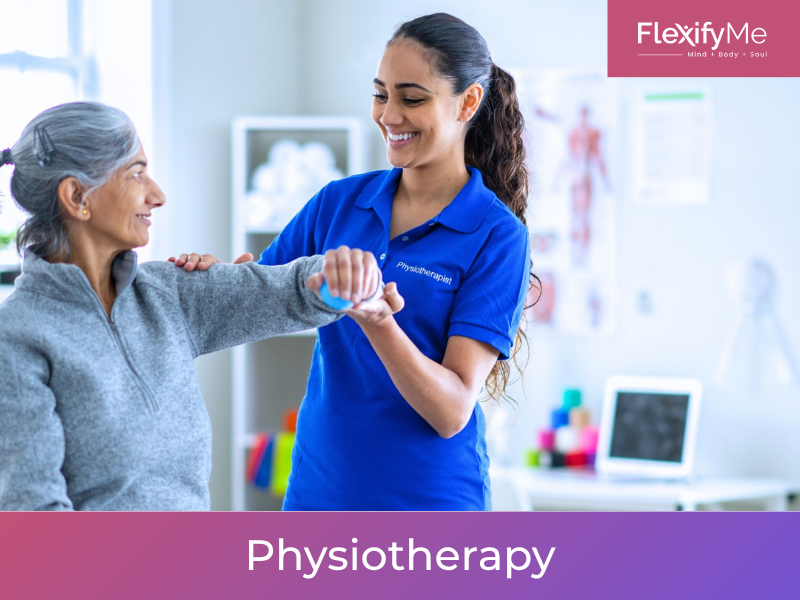
Daily exercises and physiotherapy make a big difference to your recovery. The physiotherapist creates a custom exercise program to relieve pain and build up muscle that stabilises the spine. In fact, they even help you correct your movement patterns and posture habits that led to the problem in the first place.
2. Heat and Cold Therapy
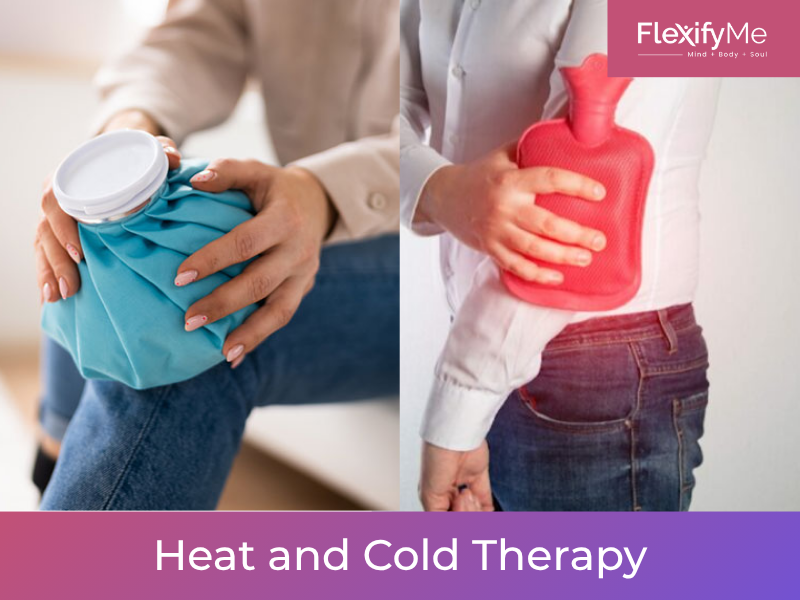
Basic and old-school remedies like the application of heat or ice can also help. Cold packs diminish swelling and numb the pain, especially in the early stages. Heat therapy increases the circulation of blood and alleviates constricted or stiff muscles, making it easier to move and stretch.
3. Medications

The over-the-counter pain medications ibuprofen or naproxen are commonly used to alleviate inflammation and discomfort. In other instances, your physician may even prescribe muscle relaxants to relieve spasms or stiffness. The medications do not treat the disc condition but make it more feasible to remain active and comply with physical therapy.
4. Lifestyle Changes
Some changes cannot be considered a treatment, but some lifestyle changes can be responsible for long-term recovery. Avoid heavy lifting, sudden twisting movements, or sitting for extended periods. Maintaining good posture, using ergonomic equipment, and being careful in movement during the day reduces strain on the spine and prevents worsening of the condition.
Effective Exercises for Slip Disc Relief
Exercise is extremely essential for rapid healing, but complying with some effective exercises for slipped disc relief can be helpful. Here are some proven tips that will guide you to reduce the pain.
1. Pelvic Tilts
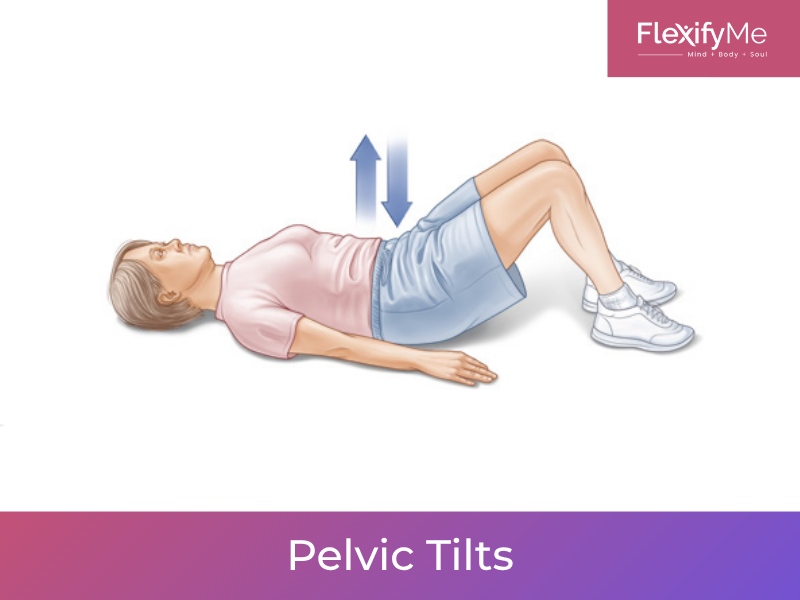
This will help you develop lower back and core muscles for stabilising the spine. To perform this exercise, follow the steps below.
- Lie on your back with your knees bent, feet flat on the ground, and arms at your sides.
- Contract your abdominal muscles and press your lower back against the ground.
- Hold for 5 to 10 seconds while inhaling and exhaling normally.
- Gradually release and go back to the initial position.
- Do it 4 to 8 times.
- Tips to keep in mind: Don’t overarch the back. Keep the motion controlled and use a yoga mat for support.
2. Knee-to-Chest Stretch
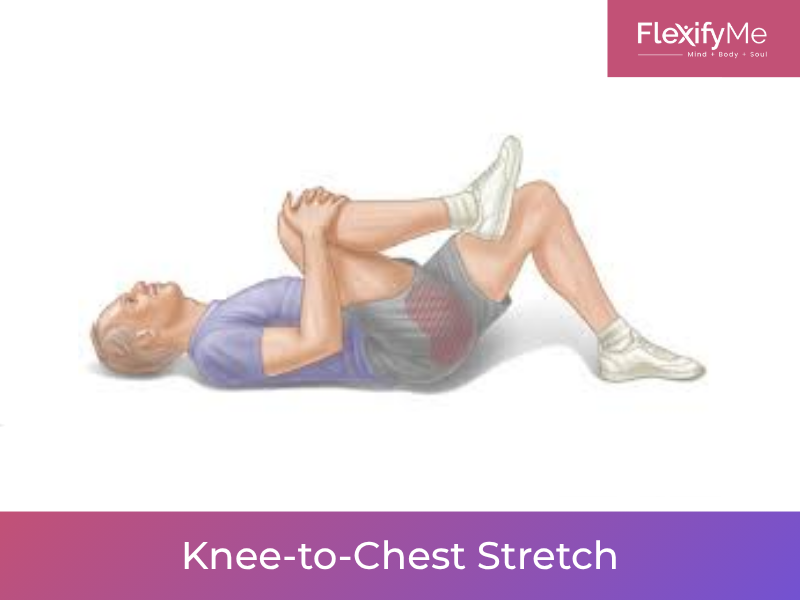
It may be able to relax by Knee to Chest Stretch pressure on spinal nerves and stretch the back lightly. Check the following steps to do it correctly.
- Lie down on your back, extending your legs.
- Gradually bend one knee and draw it towards your chest with both hands.
- Hold for 15 to 30 seconds.
- Release and switch sides.
- Repeat 2 to 3 times on each leg.
- Optional: bring knees to chest for more stretch.
3. Cat-Cow Stretch
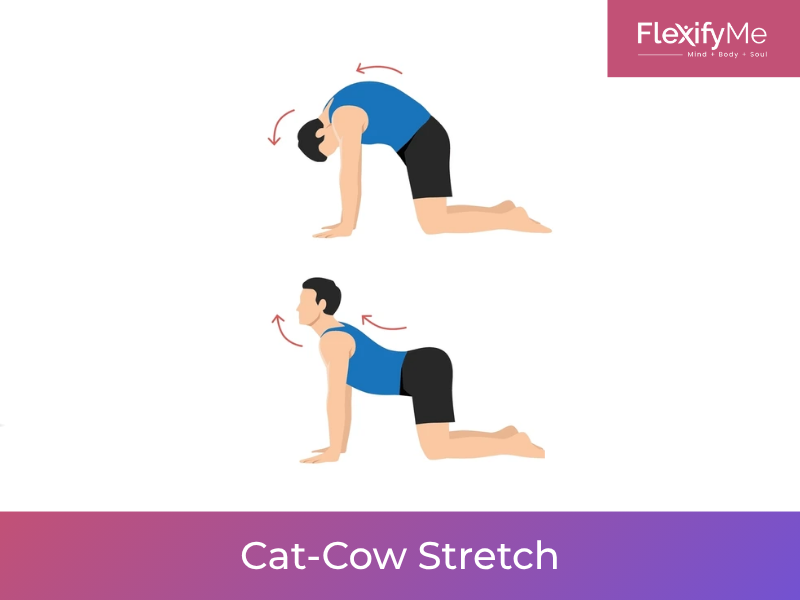
Continue with the cat-cow stretch for increasing spinal flexibility and mobility.
- For clarity, follow the steps.
- Start on hands and knees in a tabletop position.
- Breathe in and curve your spine (cow pose), raise your tailbone, and gaze forward.
- Breathe out and round your back (cat pose), bring your chin toward your chest.
- Transition between these two slowly and smoothly.
- Do 8 to 10 repetitions.
4. McKenzie Extension Exercises
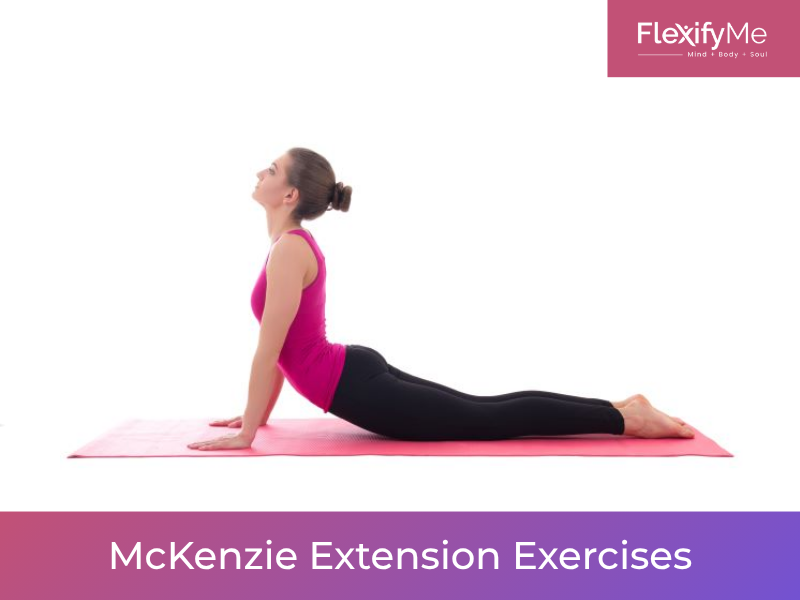
Physical therapists recommend this for those whose bulging disc is pushing on a nerve, causing sciatica. You need to make certain movements to reduce disc pressure and centralise pain.
Reminder: Avoid heavy lifting, twisting, or high-impact exercise that exacerbates pain.
Start Your Recovery with Expert Online Physiotherapy Sessions! Don’t let back pain limit your lifestyle. Get guided, one-on-one physiotherapy for slipped disc pain from certified experts all from the comfort of your home. Book Your Online Physiotherapy Consultation Now
Home Remedies for Slip Disc Pain
A slipped disc can often be treated at home with easy remedies and the right treatment and frequency. While these remedies won’t cure the severe bulges of the disc, they can be quite helpful for relief.
Stretching
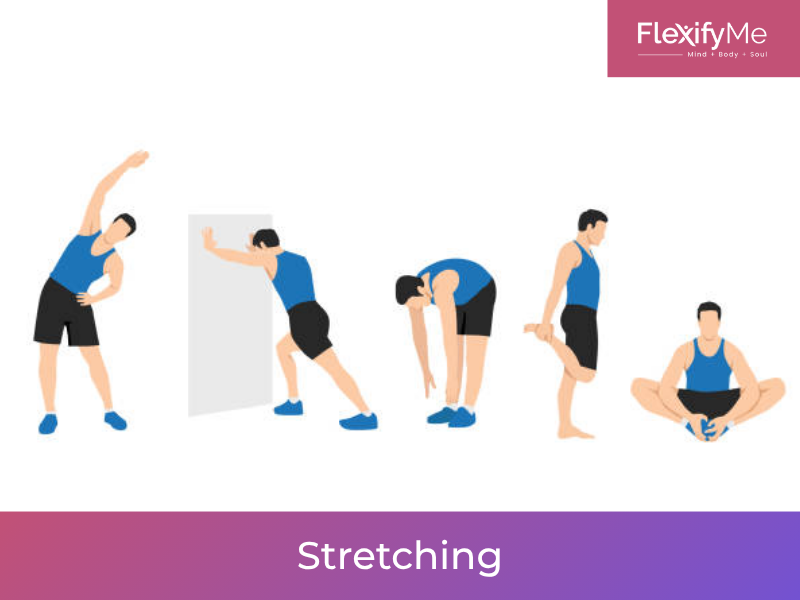
Easy stretches like the knee-to-chest, pelvic tilts, or child’s pose can relieve pressure on the spine. Do it slowly always, and don’t do anything that causes stabbing pain.
Anti-Inflammatory Diet

You would have heard that a healthy diet gets you a fit body as well as a fit mind. Eat foods high in omega-3 fatty acid content (flaxseeds or walnuts), turmeric, and green leafy vegetables that may reduce inflammation.
Supportive Sleeping Position
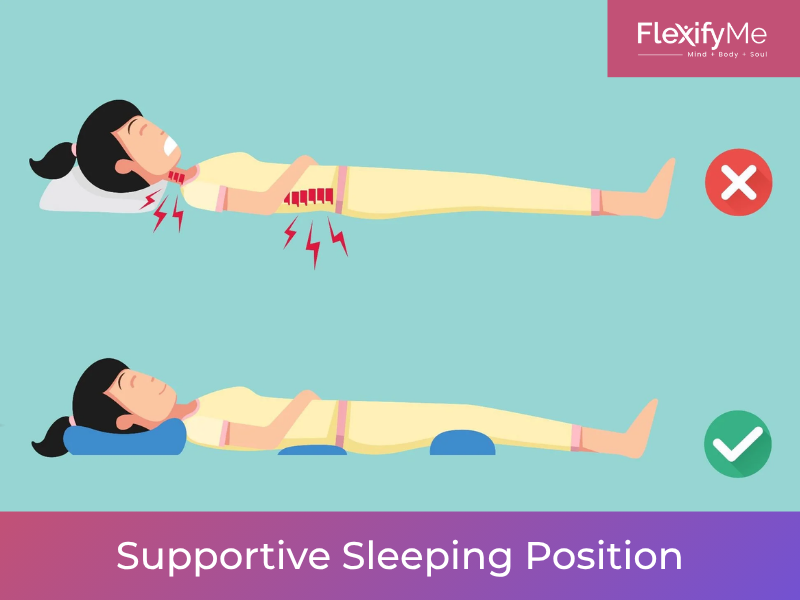
To get good relief, you can sleep on your back with a pillow under the knees or on your side with a pillow between your legs. And on top of all that, a firm mattress is just right for spine alignment.
When to See a Physiotherapist Immediately
For all the situations, the pain can be very severe, and slipped discs are not always cured at home. Some signs require immediate attention from a back therapist or a physiotherapist.
Seek it out right away if you experience radiating pain that goes down the leg (sciatica) and does not improve with rest. If numbness or tingling of the legs, feet, or groin, or increasing pain is experienced, then have it checked out at once.
If no relief is discovered despite home remedies for days, then a specialist doctor or physiotherapist must check how bad your condition is.
Looking for the Best Physiotherapist Near You. Find trusted, experienced physiotherapists who specialize in slip disc treatment and spinal rehabilitation. Get personalized care at home or visit our nearest clinic for hands-on recovery. Book an Appointment with a Physiotherapist Near You
Long-Term Recovery & Prevention
Recovery from a slipped disc may take longer than expected, depending on the severity and one’s own health. But with a tailor-made plan, most people resume normal activity without surgery.
Therefore, after the initial pain and inflammation start to decrease, either by home remedies, physiotherapy, or both, attention should turn towards long-term recovery and prevention. Follow the steps below For Long-Term Recovery.
- Adhere to a tailored physiotherapy program that will restore strength, flexibility, and function gradually.
- This can involve a combination of stabilisation of the core muscles, gentle spinal extensions, and aerobic conditioning.
- Steer clear of high-impact activities until your physiotherapist has cleared you.
Conclusion
Having a slipped disc doesn’t necessarily imply surgery, far from it. With the proper mix of physiotherapy, specific exercises, improving posture, and lifestyle modifications, many people get better completely without ever having to be cut open.
The key is early intervention, consistent care, and listening to your body. If you are just starting to feel discomfort or dealing with a disc issue, there are multiple non-surgical paths to relief.
Frequently Asked Questions For Slip Disc Treatment
1. What exactly is a slip disc and what causes it?
A slip disc, also called a herniated disc, occurs when the soft inner material of a spinal disc bulges or slips out, pressing on nearby nerves. Common causes include poor posture, heavy lifting, prolonged sitting, and aging.
2. What are the main symptoms of a slip disc?
Symptoms vary but usually include:
- Severe back or neck pain
- Pain radiating to the arms or legs (sciatica)
- Numbness or tingling in limbs
- Muscle weakness or difficulty moving
3. How is a slip disc diagnosed by a doctor?
Doctors use a combination of:
- Physical examination
- Imaging tests like MRI or CT scans
- Neurological assessment to check nerve function
4. Can slip disc pain be treated without surgery?
Yes. Most slip disc cases improve with physiotherapy, exercises, pain management, and lifestyle modifications. Surgery is only needed in severe cases with nerve compression or persistent pain.
5. What physiotherapy treatments are effective for slip disc?
Physiotherapy can help relieve pain, improve mobility, and prevent recurrence. Effective treatments include:
- Targeted exercises for core and back muscles
- Posture correction and ergonomic advice
- Manual therapy and stretches
6. How long does it take to recover from a slip disc?
Recovery depends on severity:
- Mild: 4–6 weeks with physiotherapy
- Moderate: 8–12 weeks
- Severe or post-surgery: 3–6 months for full recovery
7. Are there exercises I can do at home for a slip disc?
Yes, gentle stretches, core strengthening, and low-impact exercises like walking or swimming can help. It’s important to follow a physiotherapist-guided exercise plan to avoid worsening the condition.
8. Can lifestyle changes prevent a slip disc from recurring?
Absolutely. Maintaining good posture, avoiding heavy lifting, staying active, and regular physiotherapy can reduce the risk of recurrence.
9. When should I consider surgical treatment for a slip disc?
Surgery is considered if:
- Pain doesn’t improve with physiotherapy or medications
- You have severe leg or arm weakness
- Bladder or bowel issues occur due to nerve compression
10. Is online physiotherapy effective for slip disc treatment?
Yes. Online physiotherapy provides guided exercises, posture correction, and pain management techniques. It’s especially effective for mild to moderate cases, but severe cases may still require in-person treatment.