





 ₹https://clinics.flexifyme.com/flexifyme/mumbai/goregaon-east/flexifyme-advanced-physiotherapy-clinic-in-goregaon-east-mumbai--e407IM/articles/cervical-kyphosis-causes-symptoms-6-effective-exer--5f133ea2-0e2f-4660-b025-e3315eded52b
FlexifyMe Advanced Physiotherapy Clinic, Goregaon East, mumbai
Physiotherapy Clinic in Goregaon East, Mumbai, Maharashtra
Building No 17, First Floor, Onkar CHS Ltd, A Wing, Dindoshi, Gokuldham Colony, Opposite Oberoi Mall, Goregaon East, mumbai, maharashtra - 400097
Request A Call Back
FlexifyMe Advanced Physiotherapy Clinic Social Feeds in Goregaon East, mumbai
Cervical Kyphosis: Causes, Symptoms, 6 Effective Exercises and More
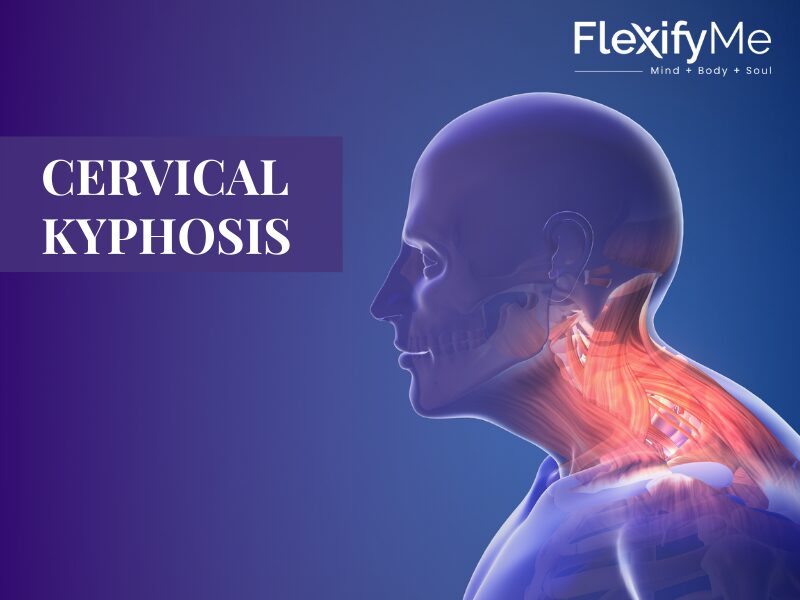
Have you heard of the military neck? It is a condition in which a person experiences an unusual curve in the cervical spine or neck. This condition is also known as cervical kyphosis. In this condition rather than your head moving at the back, forming a C bend, move forward.
The normal curvature of your neck gets disrupted if you have cervical kyphosis. Your neck becomes abnormally straight which makes your head tilt towards the front. Both children and adults can experience cervical kyphosis. This condition can happen due to various reasons like trauma, stiffness in the cervical muscles, injury in the head and more. Even bad posture during sleep can lead to cervical kyphosis.
Here you will learn about the causes, symptoms and natural treatments for cervical kyphosis.
Causes of Cervical Kyphosis
Cervical kyphosis can arise in both adults and children. There are several causes for this condition. Some of the common ones are as follows:
Congenital Kyphosis
In some cases, infants are born with unusual spine developments and impairments. The spine may not be completely formed or the bones are in triangular shape. When this happens, the bones are not arranged properly which forms an unusual curve in the neck, making it bend forward, causing cervical kyphosis.
Trauma
Vertebral compressions or dislocations can take place with severe spine or neck injuries or trauma. This can be one of the cervical kyphosis causes. Trauma may include:
- Falling from high-rise places
- Automobile accidents
- Falling while riding horses
- Hard injuries during sports
Cervical Spondylosis
Another reason for cervical kyphosis is cervical spondylosis which is a type of arthritis that happens in the neck region. When you age, your vertebral disc starts to wear down and with a little impact, your bone can break. This condition can weaken your spine and your head starts tilting forward while your neck moves back, creating an unusual posture.
Symptoms of Cervical Kyphosis
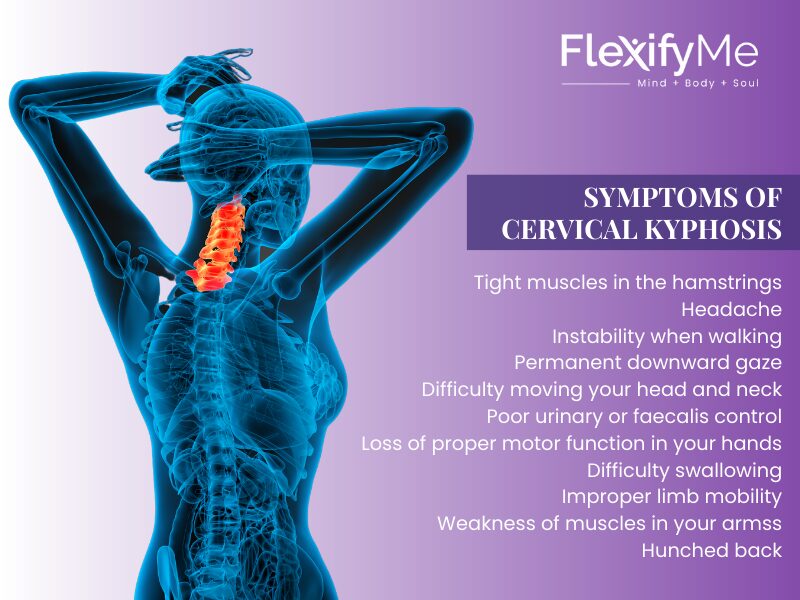
When your cervical vertebrae have moved out of alignment, it means you have a military neck or crooked neck in layman’s terms. When this non-alignment happens, it may result in symptoms varying from mild cases to neurological damage, permanent deformity or even paralysis, if it is not treated as soon as you detect it.
The general symptoms of cervical kyphosis include:
- Tight muscles in the hamstrings
- Headache
- Instability when walking
- Permanent downward gaze
- Difficulty moving your head and neck
- Poor urinary or faecal control
- Loss of proper motor function in your hands
- Difficulty swallowing
- Improper limb mobility
- Weakness of muscles in your arms, shoulders and hands
- Hunched back
- Tingling sensation in your arms, hands and shoulders
Exercises to Treat Cervical Kyphosis
If you experience any misalignment in your neck area, you must consult a doctor and check for cervical kyphosis. Furthermore, if you have symptoms, you must start with the treatment immediately. You shouldn’t run for surgery in the first round and consider the non-surgical treatment.
There’s physical therapy and different yoga asanas which can help you reduce this health condition. Since cervical kyphosis disrupts the posture along with weakening their motor and neurological function, it is important to implement exercises appropriate for the condition. And what’s a better form of exercise than yoga poses? Here are some yoga poses you can follow to get your physical and mental health back on track!
1. Supported Fish Pose
Cervical kyphosis bends the head forward. To counter its symptoms, you can practise the supported fish pose, which would help you to open the chest and arch your upper back, forming a C-bend, which is how your body alignment should be. Here’s how you can do a supported fish pose:
- Lie on your back on the floor or a yoga mat.
- Place a rolled-up towel or foam roller (for more stretch) across the back under the tips of your shoulder blades.
- Take out your arms and place to the sides with elbows bent and palms face-up.
- Make sure your shoulders and arms are above the towel or foam roller as you let the shoulders drop.
- Now, if you are a beginner, you can simply bring your legs towards your lower abdomen in a position where your knees face the ceiling.
- For more impact, you can stretch your legs out in the front direction.
- Hold this pose for half a minute and take deep and easy breaths while you do so.
2. Chin Tucks
Often, heavy head or neck injury or pressure in the cervical vertebrae can cause cervical kyphosis. To release the tension from the neck region, you can do chin tucks. This exercise also improves body alignment and strengthens muscles in the neck. To do this pose you have to:
- Stand at ease.
- Move your head slightly so that your chin and chest are aligned.
- Sway or pull back your chin while you relax your jaw muscles and hold the pose.
- To go back to the starting pose, relax your neck muscles, slowly.
- Repeat this pose a few times, till you feel comfortable.
3. Chest and Shoulder Stretch
The weakening of bones and muscles near the vertebral column can lead to cervical kyphosis. To strengthen the muscles in the lumbar and neck region, you can consider adding chest and shoulder stretch to your workout routine. If you’re an amateur, you can take the support of the doorway.
- Stand on one side of the doorway and place your palms on either side of the door frame at shoulder level or slightly up with your elbows bent.
- Take one step forward inside the doorway while your hands are still on the doorframe. It should look like you are about to collapse.
- Take several deep breaths while you’re in this pose.
- Step back and then again forward. This time place your hands on the door frame but above your head.
- Hold this pose, take a few breaths and repeat.
- Stretch your hands on the door frame as high as you can and do the same thing again.
4. Bridge Pose
When you experience cervical kyphosis, your upper spine tends to hunch or round up, which makes your body posture look awkward. To correct your body alignment, a bridge pose is a great yoga asana. This yoga pose also helps strengthen your upper back muscles along with offering spine mobility and chest and hip flexion. To do a bridge pose, begin with:
- Lying on your back, keeping your shoulders and feet wide apart.
- Bend your knees and place your arms face-down on the mat on either side.
- Inhale and raise one vertebrae at a time.
- At this position, you have to shift your pelvis toward the mid-back.
- While you raise your hips and chest, use your forearms and push into the mat as hard as you can.
- Exhale and bring your hip back to the floor, again with one vertebra at a time.
- Do this pose 2-3 times for better results.
5. Bow Pose
Cervical kyphosis often tightens the muscles in the hamstrings, cervix and lumbar region. With a fine stretch, as this asana offers, you can open up the muscles and improve the muscles’ elasticity. Dhanurasana yoga pose also makes adjustments to the vertebral bones. Here’s how you can do a bow pose:
- Lie on your stomach and keep your legs and arms close together.
- Bend your knees and lift your feet so that it points to your head.
- Take your hands back and grab your ankles from the sides.
- Inhale and raise your chest from the floor.
- Now use your hands to pull your legs up in the air.
- Your toes should be pointing to the ceiling and your glutes should be relaxed, while you maintain the pose for 10-20 seconds.
- While releasing the asana, lower your thighs, ease your grip and bring your legs to the resting position.
6. Cobra Pose
Muscle stiffness is one of the concerning symptoms of cervical kyphosis. To ease the muscles of the neck, spine and shoulders, the cobra pose is an ideal yoga pose. Cobra pose also increases the flexibility of the spine, thereby supporting good body posture. Follow these steps to learn the cobra pose:
- Lie on your stomach and keep your palms flat across your shoulders.
- Push your forearms into the floor.
- Lift your head and upper chest off the floor slowly while your hips are on the ground.
- Keep your elbows straight, bend your back and look slightly upwards.
- During the progression of this pose, keep breathing.
- To deepen the asana, drop your head.
- To finally get out of the pose, get back on the ground.
Seeking relief from Cervical Kyphosis? Our team of experienced physiotherapists specializes in personalized treatment plans. Sign Up Today for a Free Consultation and take the first step towards a pain-free future
Conclusion
Cervical kyphosis. It can occur due to trauma, deformity since birth, poor posture habits or even a sedentary lifestyle. The condition can range from mild to severe, with constant aching in the bones and muscles. So, to avoid reaching severe stages, you can include some yoga asanas and bring a healthy change to your lifestyle. These asanas help ease the muscles in the invertebrate region and improve posture.
Frequently Asked Questions for Cervical Kyphosis
1. What is Cervical Kyphosis and how is it different from normal posture?
Cervical Kyphosis is an abnormal forward curvature of the neck spine (cervical spine), which normally has a slight backward curve (lordosis). This condition can lead to poor posture, neck pain, and nerve compression.
2. What are the main causes of Cervical Kyphosis?
Cervical Kyphosis can result from congenital issues, degenerative disc disease, spine surgery complications, trauma, infections, tumors, or poor posture developed over time—especially from prolonged screen time or improper ergonomics.
3. What are the common symptoms of Cervical Kyphosis?
Common symptoms include neck pain, stiffness, headaches, muscle fatigue, forward head posture, numbness or tingling in arms, and in severe cases, difficulty walking or balancing due to spinal cord compression.
4. Can Cervical Kyphosis be reversed or corrected without surgery?
Yes, in many cases, Cervical Kyphosis can be improved with physiotherapy, postural correction, chiropractic care, bracing, and lifestyle changes. Surgery is usually reserved for severe or progressive cases.
5. How is Cervical Kyphosis diagnosed by doctors?
Doctors typically diagnose Cervical Kyphosis using a physical exam, patient history, and imaging tests like X-rays, MRI, or CT scans to evaluate the severity and cause of the spinal curve.
6. What are the best exercises or stretches for Cervical Kyphosis?
Effective exercises include chin tucks, wall angels, thoracic extensions, neck isometrics, and scapular strengthening. Always consult a physiotherapist to ensure proper technique and suitability for your condition.
7. Is poor posture or prolonged screen use responsible for Cervical Kyphosis?
Yes, poor posture—especially forward head posture from long hours on phones or computers can contribute significantly to developing Cervical Kyphosis over time.
8. When should I see a doctor or physiotherapist for Cervical Kyphosis?
You should consult a healthcare provider if you experience persistent neck pain, visible curvature, posture changes, or neurological symptoms like numbness or weakness in the arms or legs.
9. What is the difference between Cervical Kyphosis and Thoracic Kyphosis?
Cervical Kyphosis affects the neck region, while Thoracic Kyphosis involves the upper back (thoracic spine). Although both involve spinal curvature, they differ in location, causes, symptoms, and treatment.
10. Can online physiotherapy help with Cervical Kyphosis?
Yes, online physiotherapy offers personalized posture correction plans, guided exercises, and ergonomic advice that can significantly improve Cervical Kyphosis—especially for those seeking convenience and flexibility.