







 ₹https://clinics.flexifyme.com/flexifyme/-in-pune/-in-hinjewadi/flexifyme-advanced-physiotherapy-clinic-in-hinjewadi-pune--7gAsKd/articles/tmj-pain-treatment-in-hinjewadi-pune-physiotherapy-for-jaw-pain-stiffness-and-movement-problems--950cc460-e841-406f-b1d7-fc9f5c866090
FlexifyMe Advanced Physiotherapy Clinic, Hinjewadi, pune
Physiotherapy Clinic in Hinjewadi, Pune, Maharashtra
No 3/1, Second Floor, Hinjawadi Phase II, Rajiv Gandhi Infotech Park, Hinjewadi, pune, maharashtra - 411057Request A Call Back
FlexifyMe Advanced Physiotherapy Clinic Social Feeds in Hinjewadi, pune
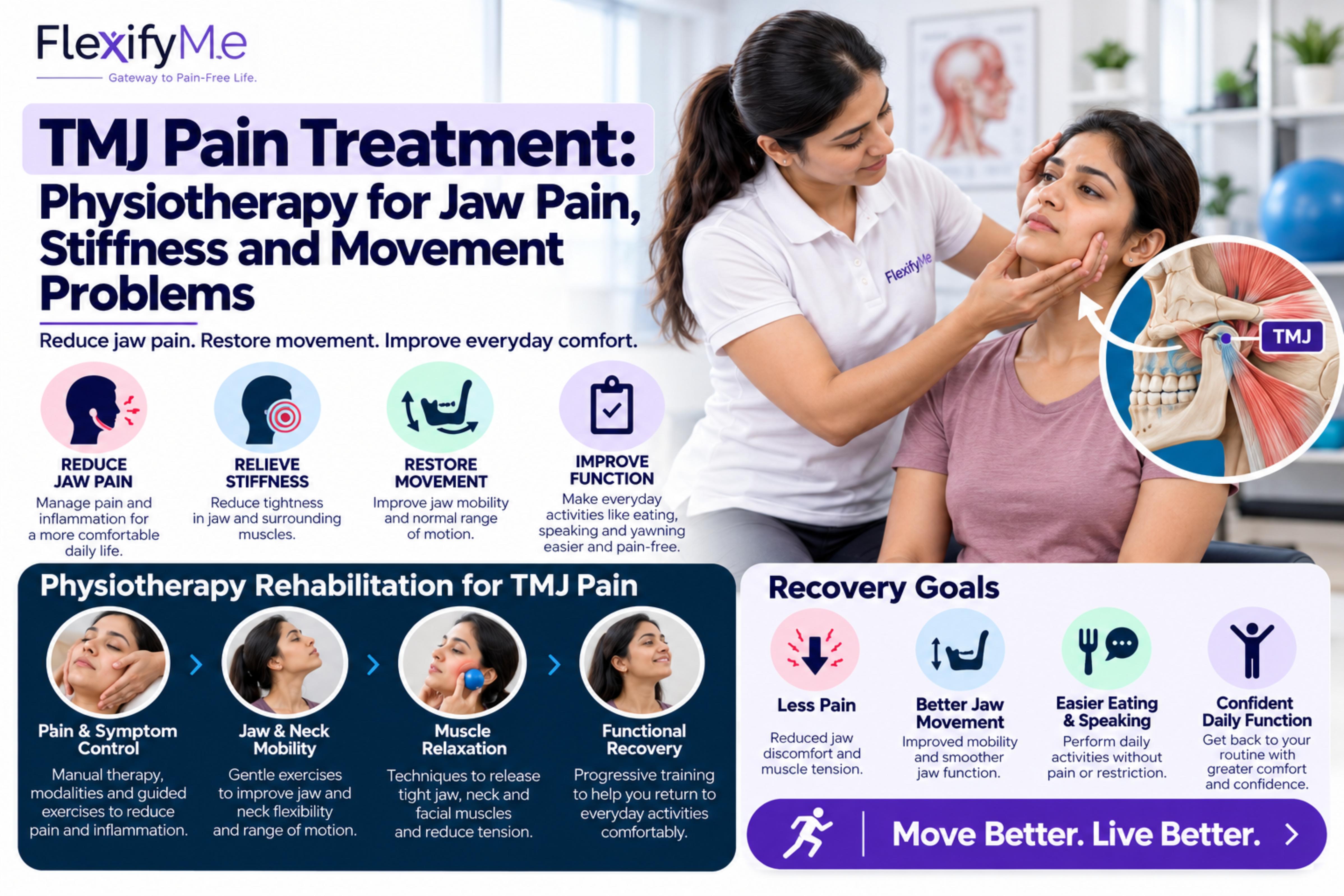
TMJ Pain Treatment in Hinjewadi, Pune: Physiotherapy for Jaw Pain, Stiffness and Movement Problems
Jaw pain can make everyday activities such as eating, talking, yawning, and opening your mouth uncomfortable. You may notice clicking near your ears, stiffness when you wake up, headaches around your temples, or discomfort when chewing.
These symptoms can have several causes, including dental problems, jaw joint disorders, and muscle tension. Understanding what may be contributing to your discomfort can help you choose the right professional for assessment and treatment.
If you are looking for TMJ pain treatment in Hinjewadi, Pune, it helps to understand how the jaw joint works, which symptoms need attention, and when dental care, medical assessment, or specialised physiotherapy may be appropriate.
What Is the Temporomandibular Joint (TMJ)?
The temporomandibular joints connect your lower jaw to your skull, with one joint on each side of your face, just in front of your ears. They work with surrounding muscles and other structures to help you speak, chew, swallow, and yawn.
When the joints or the muscles involved in jaw movement become painful or do not function comfortably, the problem may be described as a temporomandibular disorder (TMD). TMJ refers to the joint itself, while TMD describes conditions affecting the joint and related structures.
These conditions can vary considerably. Some involve the jaw muscles, while others affect the joint or the structures within it. Treatment depends on the cause, so similar symptoms do not always require the same approach.
Common TMJ Disorder Symptoms
Temporomandibular disorders can cause a range of symptoms, including:
Jaw pain or tenderness near the ears, cheeks, or jaw muscles.
Clicking, popping, or other sounds when opening or closing the mouth.
Difficulty opening the mouth fully.
Jaw stiffness or discomfort during chewing.
A jaw that catches or locks during movement.
Headaches around the temples.
Discomfort that extends into the face, neck, or surrounding muscles.
Clicking by itself does not necessarily indicate a disorder that needs treatment. However, clicking accompanied by pain, restricted movement, or locking deserves assessment.
Earache, facial pain, and headaches can also have causes unrelated to the jaw joint. It is important not to assume that all these symptoms are due to TMJ problems.
What Can Contribute to TMJ Pain?
Jaw pain can develop for different reasons. Identifying the likely cause helps determine whether dental treatment, medical care, self-management, or specialised physiotherapy may be appropriate.
Teeth Clenching and Grinding
Some people clench their teeth during the day or grind them while sleeping. These habits can place additional demands on the jaw muscles and may contribute to pain or tenderness.
Clenching can occur without a person noticing it. Becoming aware of the habit and discussing persistent symptoms with a dentist may help identify appropriate management options.
Stress and Muscle Tension
Stress may contribute to jaw clenching and increased muscle tension in some people. However, stress is not the only cause of jaw pain, and symptoms should not automatically be attributed to it.
Relaxation strategies and awareness of clenching may be useful alongside appropriate assessment and treatment.
Repeated or Wide Jaw Opening
Prolonged chewing, frequent gum chewing, or repeatedly opening the mouth very wide may aggravate symptoms in some people. Dental procedures or other activities involving sustained mouth opening can also be uncomfortable when the jaw is already sensitive.
Temporarily modifying activities that trigger pain may help reduce irritation while the cause is being assessed.
Dental Problems or Injury
Tooth decay, dental infections, and other dental conditions can cause pain around the jaw. An injury to the face or jaw may also affect joint movement.
These causes need appropriate dental or medical assessment rather than being treated as a routine TMJ problem.
When Should You Seek Medical or Dental Assessment?
Jaw pain is not always caused by a temporomandibular disorder. Certain symptoms should be assessed promptly to rule out conditions that need specific treatment.
Seek dental or medical advice if you experience:
Toothache, a cracked tooth, or suspected dental infection.
A jaw that becomes locked or cannot open normally.
Jaw pain following a blow, fall, or accident.
Facial swelling, fever, or other signs of infection.
New facial numbness or other unexplained neurological symptoms.
Persistent or worsening pain that interferes with eating or daily activities.
Seek emergency medical care if jaw pain occurs with chest tightness, breathlessness, sweating, nausea, or other possible symptoms of a heart attack. Do not assume that this type of pain is caused by a jaw joint problem.
What May Help Manage Jaw Pain?
For some uncomplicated temporomandibular disorders, conservative self-care can help manage symptoms. The right measures depend on the cause and severity of the problem.
1. Temporarily Modify Foods and Activities
If chewing aggravates your jaw, softer foods may be more comfortable for a short period. Cutting food into smaller pieces can also reduce the amount of opening and chewing required.
You may find it helpful to temporarily limit:
Hard or chewy foods that increase discomfort.
Chewing gum.
Repeatedly opening your mouth very wide.
Habits such as nail biting or chewing on objects.
These changes are intended to reduce aggravating demands, not to restrict your diet unnecessarily or permanently. Persistent difficulty eating needs professional assessment.
2. Become Aware of Jaw Clenching
Pay attention to whether you hold your teeth together when concentrating, working, or feeling stressed. When the jaw is relaxed, the teeth generally do not need to remain in contact.
Gentle reminders to relax the jaw may help reduce unnecessary clenching during the day. If you suspect that you grind your teeth at night, a dentist can assess the situation and discuss whether a dental appliance is appropriate.
Do not assume that a night guard is necessary for every person with jaw pain.
3. Try Comfortable Warmth
A comfortably warm compress may help some people with muscular jaw discomfort. Avoid excessive heat, and stop if it makes the symptoms worse.
Warmth is a self-care measure rather than a treatment for every cause of TMJ pain. It should not delay assessment if you have swelling, fever, a locked jaw, or symptoms following an injury.
4. Avoid Forcing Jaw Movement
Gentle movement within a comfortable range may be suitable for some people. However, forcing the mouth open or repeatedly trying to release a locked jaw can worsen discomfort.
If you cannot open or close your mouth normally, seek prompt professional assessment rather than attempting to manipulate the joint yourself.
5. Consider the Neck and Surrounding Muscles
Jaw symptoms can occur alongside neck discomfort or muscle tension, although this does not mean that the neck is necessarily causing the jaw problem.
If you also have neck pain or stiffness, a clinician may assess these symptoms as part of a broader evaluation. Treatment should be based on the findings rather than assuming that posture correction or neck exercises will resolve TMJ pain.
Who Should You See for TMJ Pain?
Choosing the right professional depends on your symptoms and their likely cause.
Dentist: A dentist is a suitable starting point when you have tooth pain, suspected grinding, dental concerns, or jaw symptoms that may be related to your teeth or bite.
Doctor or other medical professional: Medical assessment can help investigate symptoms that may arise from causes other than a dental or jaw joint problem. This is particularly important when symptoms are new, persistent, severe, or accompanied by other concerning signs.
Physiotherapist with relevant TMJ training: Some physiotherapists have specific training in temporomandibular or craniofacial conditions. Depending on the diagnosis, they may assess jaw and neck movement and provide appropriate exercises or other rehabilitation techniques.
Oral and maxillofacial specialist: A specialist may be involved when symptoms are complex, a significant injury is suspected, or further assessment or treatment is required.
Not every physiotherapy clinic offers TMJ-specific care. Before booking, ask whether the clinician has relevant experience and whether your symptoms are appropriate for physiotherapy assessment.
Frequently Asked Questions
Is jaw clicking without pain a problem?
Painless jaw clicking is common and does not always require treatment. If clicking occurs with pain, locking, reduced mouth opening, or difficulty chewing, arrange a professional assessment.
Will TMJ pain go away on its own?
Some mild symptoms improve with time and changes to aggravating habits. However, persistent or recurring jaw pain may need assessment to identify the cause and determine suitable treatment.
Can stress contribute to jaw pain?
Stress may contribute to clenching and muscle tension, which can aggravate symptoms in some people. However, jaw pain can have several causes, including dental and joint problems, so ongoing symptoms should not automatically be attributed to stress.
Should I see a dentist or a physiotherapist first?
If you have toothache, suspected dental infection, or concerns about grinding, a dentist is a sensible first contact. If the main problem is jaw movement or muscular discomfort, a clinician can help determine whether a physiotherapist with specific TMJ training is appropriate. Seek prompt assessment for a locked jaw, injury, swelling, or severe symptoms.
Can neck problems and jaw pain occur together?
Yes, some people experience jaw discomfort alongside neck pain or stiffness. However, one does not automatically cause the other. Both sets of symptoms may need to be assessed to determine the appropriate treatment.
How do I find a physiotherapist near me for jaw pain?
Search for physiotherapist near me or physiotherapy near me in Hinjewadi, Pune. Before booking, ask whether the clinician assesses temporomandibular disorders and has relevant training in jaw or craniofacial physiotherapy. Confirm that the clinic can assess your particular symptoms.
Take the Right First Step for Jaw Pain
Jaw pain, clicking, and restricted movement can have several causes, so the most useful first step is to understand what is contributing to your symptoms. Avoid forcing painful movements, consider temporarily modifying activities that aggravate the jaw, and seek appropriate dental or medical advice when needed.
If you are experiencing jaw pain alongside neck discomfort or headaches in Hinjewadi, Pune, make sure each symptom is assessed appropriately rather than assuming they share the same cause.
FlexifyMe offers physiotherapy for neck pain and certain types of headaches. For TMJ or jaw pain, contact the team to confirm whether suitable assessment and treatment options are available.
This article is for general information only and is not a substitute for individual medical or dental advice. Jaw pain accompanied by chest tightness, breathlessness, or sweating requires emergency medical care. A locked jaw, facial swelling with fever, or jaw pain following an injury needs prompt professional assessment.