


 ₹https://clinics.flexifyme.com/flexifyme/-in-pune/-in-hinjewadi/flexifyme-advanced-physiotherapy-clinic-in-hinjewadi-pune--7gAsKd/articles/tennis-elbow-treatment-in-hinjewadi-pune-treatment-options-for-faster-recovery--1ac60f55-a937-429d-9361-a24bd567fb1a
FlexifyMe Advanced Physiotherapy Clinic, Hinjewadi, pune
Physiotherapy Clinic in Hinjewadi, Pune, Maharashtra
No 3/1, Second Floor, Hinjawadi Phase II, Rajiv Gandhi Infotech Park, Hinjewadi, pune, maharashtra - 411057Request A Call Back
FlexifyMe Advanced Physiotherapy Clinic Social Feeds in Hinjewadi, pune
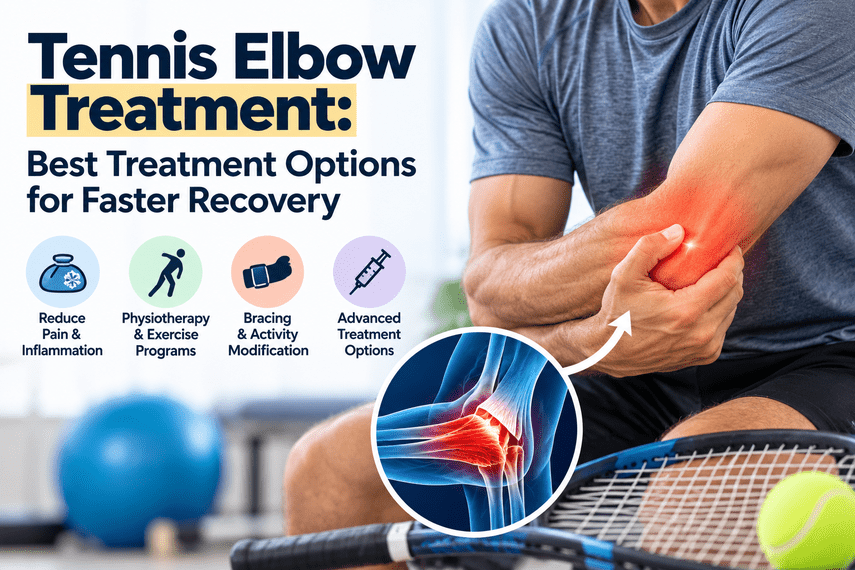
Tennis Elbow Treatment in Hinjewadi, Pune: Treatment Options for Faster Recovery
Tennis elbow is not limited to people who play tennis. Repetitive gripping, lifting, wrist movements and changes in activity can all contribute to pain around the outside of the elbow.
The condition can affect everyday activities such as opening a jar, turning a doorknob, lifting a cup, using tools or carrying a bag. For some people, the discomfort gradually develops. For others, it appears after a noticeable increase in a particular activity.
If you are searching for tennis elbow treatment in Hinjewadi or elsewhere in Pune, the first step is understanding what may be contributing to your symptoms and finding an appropriate way to manage the load on your elbow.
What Is Tennis Elbow?
Tennis elbow is commonly known as lateral epicondylalgia and is also referred to as lateral epicondylitis.
It involves pain around the outer part of the elbow and can be associated with the tendons and muscles responsible for wrist and finger extension.
Despite the name, you do not need to play tennis to develop tennis elbow. Activities involving repeated gripping, lifting or wrist movements can also place stress on the tissues around the elbow.
Common Symptoms of Tennis Elbow
Symptoms can vary between individuals, but may include:
Pain around the outside of the elbow
Pain that extends into the forearm
Elbow pain when gripping objects
Discomfort when lifting or carrying items
Pain during wrist or hand movements
Tenderness around the outer elbow
Reduced ability to perform activities that require gripping
If your symptoms include significant numbness, tingling or weakness in the hand or arm, the cause may not be limited to tennis elbow and should be assessed by a healthcare professional.
What Can Trigger Tennis Elbow?
Tennis elbow can be associated with repeated or increased loading of the forearm and elbow.
Possible contributing activities include:
Repetitive gripping
Frequent wrist movements
Lifting or carrying heavy objects
Racquet sports
Weight training
DIY or manual work
Gardening
Other occupational or recreational activities involving repeated hand use
A sudden increase in an activity that your body is not accustomed to can also contribute to symptoms.
Your workstation and movement habits may be relevant in some cases, but they are not necessarily the cause of every person's elbow pain.
What Can Help With Tennis Elbow?
Treatment should be based on your symptoms, activity level and assessment. There is no single exercise or treatment that works for every person.
1. Manage the Activities That Aggravate Pain
Complete rest is not always necessary.
Instead, consider modifying activities that repeatedly increase your symptoms. Depending on the activity, this may involve:
Reducing repetitive gripping temporarily
Taking breaks during prolonged hand or wrist activities
Changing how you hold or carry objects
Reducing the weight or duration of demanding tasks
Returning to activities gradually as symptoms improve
The aim is to find a level of activity that you can tolerate while gradually rebuilding strength and function.
2. Progressive Strengthening
Exercise-based rehabilitation can form an important part of treatment for tennis elbow.
A physiotherapist may prescribe exercises targeting the muscles and tendons around the forearm and wrist. The programme can then be progressed according to your strength, symptoms and functional requirements.
Depending on the assessment, exercises may include:
Controlled wrist extension exercises
Forearm strengthening
Grip strengthening
Isometric exercises
Progressive resistance exercises
Functional strengthening related to your daily activities
The amount of resistance and number of repetitions should be adjusted to the individual rather than following a fixed programme from the internet.
3. Work on the Rest of the Upper Limb
Your physiotherapist may also assess movement and strength around the shoulder, arm and upper limb.
This does not mean that shoulder weakness is automatically the cause of tennis elbow. However, looking at the broader movement pattern can help identify factors that may be relevant to your symptoms and activities.
4. Manual Therapy and Other Physiotherapy Techniques
Depending on the assessment, physiotherapy may include hands-on treatment alongside an exercise programme.
FlexifyMe's current therapy information lists manual therapy, IFT/TENS, therapeutic exercises, AI postural assessment and kinesiology taping among its physiotherapy approaches. Availability of specific therapies can vary by clinic and treatment requirement.
FlexifyMe also has an official dry needling page that specifically discusses its use for conditions including tennis elbow and golfer's elbow.
These techniques should be considered as part of an individualised treatment plan rather than as replacements for appropriate rehabilitation.
Can a Tennis Elbow Brace Help?
A tennis elbow brace or counterforce strap may provide support during activities for some people.
However, a brace does not automatically address the underlying reason for your symptoms.
If you are considering a tennis elbow brace, ask a physiotherapist or other healthcare professional whether it is appropriate for your condition and how it should be used.
The goal should be to combine symptom management with appropriate rehabilitation rather than depending on a brace indefinitely.
What About Painkillers or Injections?
Pain-relieving medication may be appropriate for some people, but medication decisions should be discussed with a qualified healthcare professional, particularly if you have other medical conditions or take other medicines.
Injections are also not automatically required for tennis elbow. Whether an injection is appropriate depends on the diagnosis, duration and severity of symptoms and your overall medical situation.
If your elbow pain is persistent or repeatedly returning, assessment can help identify an appropriate treatment approach rather than relying on repeated short-term symptom relief.
How Long Does Tennis Elbow Take to Improve?
There is no single recovery timeline for tennis elbow.
Some people improve relatively quickly, while persistent or recurrent symptoms can take considerably longer to settle.
Recovery can depend on:
How long you have had the symptoms
The severity of the condition
Your usual activities and workload
Whether aggravating activities can be modified
Your strength and movement capacity
Consistency with an appropriate rehabilitation programme
Other conditions affecting the arm or elbow
FlexifyMe's treatment information similarly notes that recovery varies according to the condition, severity, individual health and consistency, with more complex or long-standing problems potentially requiring longer treatment.
Instead of expecting a fixed number of weeks, look for gradual improvements in pain, strength, grip and your ability to perform everyday activities.
Practical Ways to Reduce Elbow Strain
Alongside your rehabilitation programme, small changes may make demanding activities easier to manage.
Reduce prolonged gripping
If a task requires continuous gripping, take appropriate breaks where possible.
Avoid sudden increases in workload
If you are starting a new sport, exercise programme, DIY project or work task, increase your activity gradually rather than immediately doing large amounts.
Consider the size and weight of objects
Where appropriate, using tools or objects that are easier to hold may reduce the effort required from your hand and forearm.
Vary repetitive tasks
If your work involves repeated wrist or hand movements, changing tasks or taking regular movement breaks may help reduce continuous loading.
Do not stop strengthening as soon as pain improves
If strengthening has been prescribed as part of your rehabilitation, continue according to the programme provided by your physiotherapist rather than stopping immediately when symptoms feel better.
When Should You See a Physiotherapist?
Consider a professional assessment if:
Elbow pain is interfering with work or daily activities
Grip strength has noticeably reduced
Symptoms continue despite modifying aggravating activities
Pain repeatedly returns when you resume normal activity
You are unsure whether the pain is actually coming from the elbow
You have numbness or tingling in the arm or hand
You need help creating a progressive exercise programme
Seek prompt medical assessment if elbow pain follows significant trauma, the elbow appears deformed, there is marked swelling, the joint becomes locked, or you develop significant weakness or loss of sensation.
A physiotherapist can assess the elbow, forearm and surrounding movement patterns and determine whether physiotherapy is appropriate.
Frequently Asked Questions
Can I keep working or exercising with tennis elbow?
You may be able to continue some activities with appropriate modification, depending on the severity of your symptoms.
Rather than completely stopping everything, identify the movements that aggravate your pain and discuss suitable modifications with a physiotherapist if needed.
Is tennis elbow the same as golfer's elbow?
No.
Tennis elbow generally refers to pain around the outside of the elbow, while golfer's elbow generally involves pain around the inside of the elbow.
Although both conditions can involve the tendons around the elbow, the symptoms and rehabilitation programme may differ.
Can tennis elbow heal without treatment?
Some cases improve over time, but persistent symptoms may interfere with work, exercise and everyday activities.
If the pain continues, repeatedly returns or affects your grip and function, professional assessment can help identify an appropriate treatment plan.
Do I need a tennis elbow brace?
Not necessarily.
A brace may provide support for some people during particular activities, but it should not be considered a complete treatment for tennis elbow.
Ask a healthcare professional whether a brace is appropriate for your symptoms and how it should be used.
What exercises are best for tennis elbow?
There is no single exercise that is best for everyone.
A physiotherapist may prescribe progressive strengthening exercises based on your pain, grip strength, activity requirements and stage of recovery.
Common exercise approaches can include isometric and resistance exercises for the wrist and forearm, with progression based on your response.
How do I find a physiotherapist near me for tennis elbow?
Search for physiotherapist near me and look for a provider that offers a proper assessment and an individualised rehabilitation programme.
You can also search for physiotherapy near me in and around Hinjewadi and check whether the provider treats musculoskeletal and sports-related conditions.
FlexifyMe currently provides physiotherapy through online consultations and physical clinics in selected locations. Its website describes personalised assessment and treatment planning rather than a one-size-fits-all approach.
Treat the Cause, Not Just the Elbow Pain
Tennis elbow can interfere with simple activities such as gripping, lifting and working. Managing the activities that aggravate symptoms is important, but long-term rehabilitation may also require a gradual return to strengthening and normal activity.
If your elbow pain continues, keeps returning or is affecting your daily routine, a professional assessment can help determine what may be contributing to the problem.
FlexifyMe provides personalised physiotherapy based on individual assessment. Its current approach combines physiotherapy with therapeutic exercises and, where appropriate, other physical therapy techniques. FlexifyMe also offers online physiotherapy as well as physical clinic services in selected locations.
For people searching for tennis elbow treatment in Hinjewadi, Pune, the appropriate care option will depend on your symptoms, assessment and location.
This article is for general information and is not a substitute for personal medical advice. Elbow pain following significant injury, deformity, marked swelling, a locked joint, significant weakness or loss of sensation requires prompt medical assessment.