







 ₹https://clinics.flexifyme.com/flexifyme/-in-pune/-in-hinjewadi/flexifyme-advanced-physiotherapy-clinic-in-hinjewadi-pune--7gAsKd/articles/rotator-cuff-injury-treatment-in-hinjewadi-pune-physiotherapy-for-shoulder-pain-and-movement--a1480e03-acf6-4710-b9b9-1541cc64f5b4
FlexifyMe Advanced Physiotherapy Clinic, Hinjewadi, pune
Physiotherapy Clinic in Hinjewadi, Pune, Maharashtra
No 3/1, Second Floor, Hinjawadi Phase II, Rajiv Gandhi Infotech Park, Hinjewadi, pune, maharashtra - 411057Request A Call Back
FlexifyMe Advanced Physiotherapy Clinic Social Feeds in Hinjewadi, pune
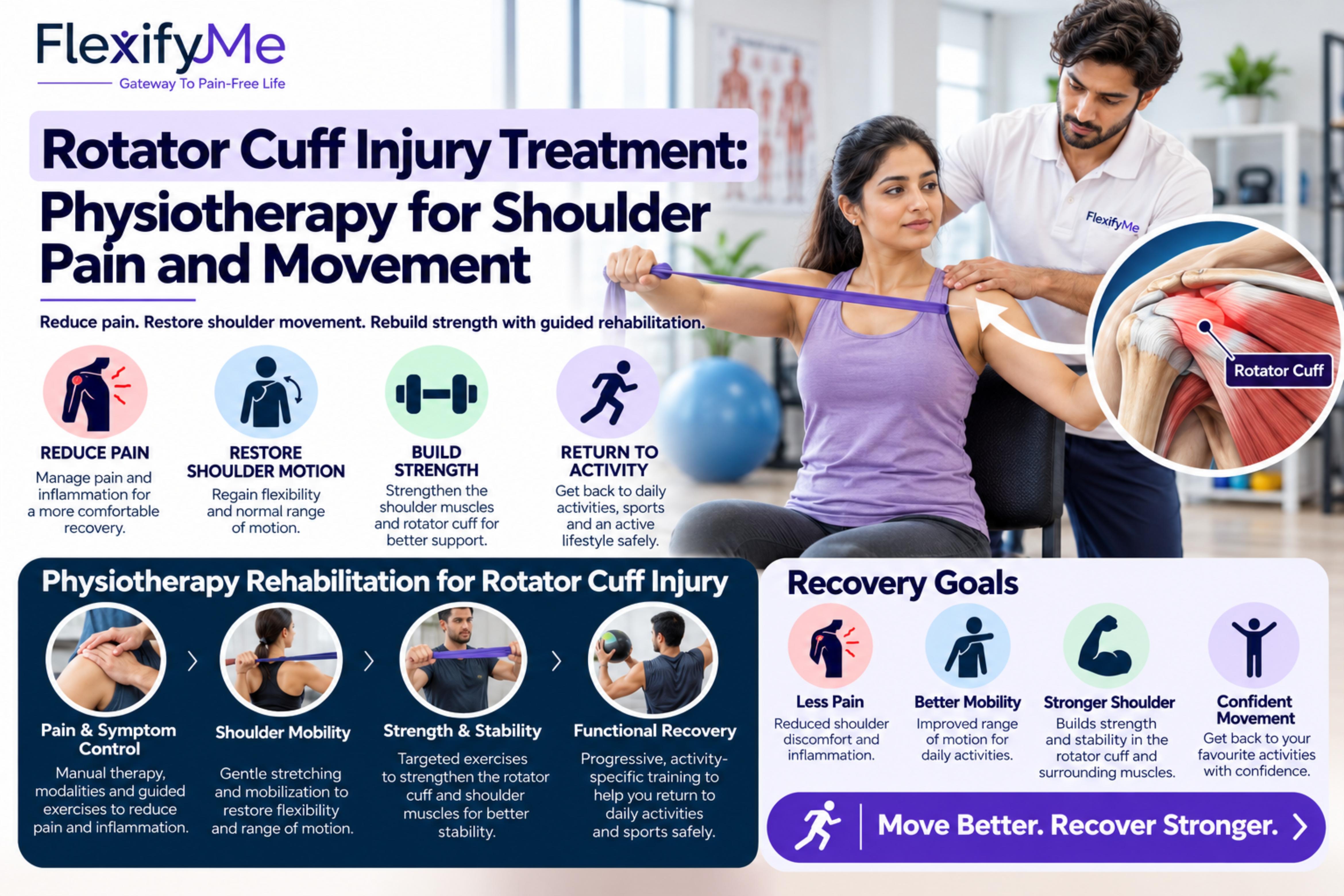
Rotator Cuff Injury Treatment in Hinjewadi, Pune: Physiotherapy for Shoulder Pain and Movement
Shoulder pain can make everyday activities such as lifting your arm, reaching behind your back, getting dressed, or sleeping comfortably more difficult. For some people, discomfort develops gradually. For others, it begins after a fall, sports injury, or sudden movement.
If a scan report mentions a rotator cuff tear, it is natural to wonder whether surgery is necessary. However, a scan finding needs to be considered alongside your symptoms, strength, shoulder movement, and daily activities. Not every rotator cuff tear requires surgery, and the right treatment depends on the type and severity of the injury.
If you are looking for rotator cuff injury treatment in Hinjewadi, Pune, understanding the possible causes of shoulder pain and the role of physiotherapy can help you make informed decisions about your care.
What Is the Rotator Cuff?
The rotator cuff is a group of four muscles and their tendons that help stabilise the shoulder joint and control arm movement. These structures work together when you lift, rotate, and reach with your arm.
The shoulder has a wide range of movement, but its muscles, tendons, ligaments, and other structures must work together to support that movement. Injury or irritation affecting the rotator cuff can cause pain, weakness, and difficulty performing everyday tasks.
Common Symptoms of a Rotator Cuff Injury
Symptoms vary depending on the cause and severity of the problem. They may include:
Pain when lifting or lowering the arm.
Discomfort when reaching overhead or behind the back.
Weakness when lifting or rotating the arm.
Pain when lying on the affected shoulder.
Shoulder discomfort that interrupts sleep.
Difficulty with dressing, reaching shelves, or other routine activities.
These symptoms can also occur with other shoulder conditions, including frozen shoulder, bursitis, arthritis, and referred pain from the neck. A suitable assessment is important before deciding which treatment is appropriate.
Types of Rotator Cuff Problems
Rotator cuff problems do not all develop in the same way. Understanding the difference between gradual tendon-related symptoms and an injury caused by a sudden event can help guide the next steps.
Rotator Cuff-Related Shoulder Pain
Some people develop shoulder pain gradually without a single identifiable injury. Discomfort may increase when lifting the arm, reaching overhead, or performing repeated activities.
This type of presentation may involve irritation or changes in the rotator cuff tendons. Other shoulder structures can also contribute to similar symptoms, so a clinical assessment is needed to identify the likely cause.
Degenerative Rotator Cuff Tears
Rotator cuff tendons can change with age, and tears may develop gradually over time. Some tears are discovered during imaging performed for another reason, even when the person has no related symptoms.
When a degenerative tear is associated with pain or weakness, treatment depends on its size, symptoms, functional impact, and the person's needs. Non-surgical care may be appropriate for many people, but the decision should be individualised.
Traumatic Rotator Cuff Tears
A traumatic tear may occur after a fall, sudden force, or injury involving the shoulder. New and significant weakness, particularly after an injury, warrants prompt medical assessment.
Some traumatic tears need early review by an orthopaedic specialist. It is important not to assume that every tear can be managed with exercises alone.
Why a Scan Does Not Tell the Whole Story
Imaging tests such as ultrasound or MRI can help identify structural changes in the shoulder. However, the findings must be interpreted alongside the person's symptoms and physical examination.
A tear on a scan does not automatically explain every symptom or mean that surgery is necessary. Similarly, significant shoulder pain can occur even when imaging does not show a major tear.
A clinician may consider:
Where and when the shoulder hurts.
Whether the pain started suddenly or gradually.
How far the arm can move.
Whether the shoulder feels weak during specific activities.
Whether symptoms interfere with sleep or daily tasks.
Whether imaging or further specialist assessment is needed.
The aim is to understand how the shoulder is functioning, not to make treatment decisions based on a scan report alone.
What Rotator Cuff Injury Treatment Can Involve
Treatment depends on the diagnosis, the severity of the injury, the person's activity requirements, and whether a traumatic tear or another condition is suspected.
For many people with rotator cuff-related shoulder pain, physiotherapy can help address movement limitations and build strength. More significant injuries may require medical or orthopaedic assessment before an exercise programme begins.
1. Clinical Assessment and Activity Modification
The first step is to understand the symptoms and determine which movements are difficult or painful. Assessment may include shoulder range of motion, strength, posture, and functional movement.
Some activities may need to be modified temporarily, particularly those that repeatedly aggravate the shoulder. This does not necessarily mean avoiding all movement. The goal is to find a manageable level of activity while the cause of the symptoms is assessed and treatment begins.
2. Gradual Shoulder Strengthening
Exercise therapy is commonly used in the rehabilitation of rotator cuff-related shoulder pain. A physiotherapist may prescribe exercises based on your current strength, movement, symptoms, and goals.
Exercises may include:
Gentle isometric exercises: Contracting the shoulder muscles without substantial joint movement may be suitable for some people early in rehabilitation.
External rotation exercises: These work muscles involved in rotating and supporting the shoulder.
Rowing and shoulder blade exercises: These can help strengthen the muscles that contribute to shoulder and upper-back movement.
Progressive resistance exercises: Resistance may be increased as strength and exercise tolerance improve.
Functional exercises: These help prepare the shoulder for activities such as reaching, lifting, or returning to sport.
No single exercise is best for everyone. Exercise selection and progression should account for the type of injury and how the shoulder responds.
3. Improving Shoulder Movement
When pain makes it difficult to raise or rotate the arm, a rehabilitation plan may include appropriate mobility exercises. These should be selected according to the assessment findings and performed within a suitable range.
For example, a person with a stiff shoulder may need a different approach from someone who has relatively good movement but weakness during lifting. Identifying the difference helps prevent the wrong exercise routine from aggravating symptoms.
4. Posture and Movement Guidance
Daily activities, work habits, and repeated movements may affect shoulder comfort. Depending on the assessment, a physiotherapist may provide guidance on posture, activity modification, and movement technique.
The goal is to help you manage tasks more comfortably and gradually rebuild the strength and control needed for everyday activities.
5. A Home Exercise Plan
A personalised home exercise plan can help you continue rehabilitation between supervised sessions. It should explain which exercises to perform, how to progress them, and when to modify or stop an activity.
If an exercise causes sharp pain, noticeably worsens symptoms, or produces a significant loss of function, stop and seek advice from your treating professional rather than pushing through it.
Does Rest Help Shoulder Pain?
Temporarily reducing activities that aggravate shoulder pain may be helpful. However, avoiding all shoulder movement for an extended period without medical advice can contribute to stiffness and reduced strength.
The appropriate approach depends on the injury. Some people benefit from gentle movement and gradual strengthening, while others may need specific precautions following trauma, surgery, or a confirmed significant tear.
Do not start a demanding strengthening routine before assessment if you have sudden weakness or severe pain after an injury. A clinician can help determine whether exercise is appropriate and how to begin safely.
How FlexifyMe Approaches Shoulder Pain Treatment
FlexifyMe provides physiotherapy for shoulder pain and rotator cuff injuries. Assessment may include a clinical examination, range-of-motion and strength checks, functional tests, and AI-assisted posture analysis at supported locations. Imaging may be recommended when clinically appropriate.
Based on the assessment, treatment options listed by FlexifyMe for shoulder pain include:
Exercise therapy: Individualised strengthening and stretching exercises.
Manual therapy: Hands-on techniques that may be used to address movement limitations.
Postural correction: Guidance and exercises related to posture and movement.
Shoulder stabilisation training: Exercises intended to support shoulder control and stability.
Home exercise planning: Exercises tailored to the person's needs and rehabilitation goals.
Dry needling or cupping therapy: Listed as options that may be considered when appropriate.
These are general shoulder pain services, not a guarantee that every treatment is suitable for a particular rotator cuff tear. The physiotherapist should determine which options are appropriate after assessing the condition. Availability can also vary by location.
If you are searching for shoulder pain treatment in Hinjewadi, Pune, check FlexifyMe's official website for current clinic locations and available services before booking. Online physiotherapy consultations are also listed on the website for people seeking guidance remotely.
How Long Does Rotator Cuff Rehabilitation Take?
There is no single recovery timeline for every rotator cuff problem. The time needed to improve depends on factors such as the cause of the pain, the extent of the injury, symptom duration, general health, and the activities you want to return to.
Some people improve with a period of appropriately guided exercise and activity modification. More complex or long-standing problems may need a longer rehabilitation process. Recovery after surgery also involves a separate rehabilitation plan and may take several months.
Progress is best assessed through changes in pain, shoulder movement, strength, sleep, and the ability to carry out daily tasks. Your physiotherapist or treating clinician can review these factors and adjust the plan as needed.
When Is Surgery Considered for a Rotator Cuff Tear?
Surgery is not required for every rotator cuff tear. The decision depends on the type of tear, its size, the amount of weakness or functional loss, the person's activity requirements, and the response to non-surgical treatment.
An orthopaedic specialist may consider surgery in situations such as:
A traumatic tear associated with substantial weakness or loss of function.
A tear for which early specialist intervention is considered appropriate.
Persistent symptoms and functional limitations despite a suitable non-surgical treatment plan.
Other clinical findings that make surgery a reasonable option.
A specialist can explain the potential benefits, risks, alternatives, and likely rehabilitation requirements. Physiotherapy may form part of care before or after surgery, depending on the individual treatment plan.
Frequently Asked Questions
Can a rotator cuff tear improve without surgery?
Some people with rotator cuff tears manage their symptoms and improve shoulder function without surgery. The appropriate approach depends on the tear, its cause, the degree of weakness, and the person's goals. A traumatic tear with significant weakness should be assessed promptly.
What are the best rotator cuff exercises?
Suitable exercises may include external rotation, shoulder blade strengthening, and progressive resistance exercises. The best selection depends on the diagnosis, symptoms, and current shoulder function. A physiotherapist can help choose and progress exercises safely.
Why does my shoulder hurt at night?
Shoulder pain can become more noticeable when lying on the affected side or when changing sleeping positions. Rotator cuff problems are one possible cause, but other shoulder conditions can also produce night pain. Persistent or unexplained symptoms should be assessed.
Should I use a sling for a rotator cuff injury?
A sling may be recommended in certain injuries or after surgery, but it is not necessary for every case. Follow the advice of your treating clinician, especially if you have sustained a significant injury or have been given specific movement restrictions.
Is shoulder clicking always a sign of a rotator cuff tear?
No. Shoulder clicking can occur for several reasons and does not automatically indicate a tear. If clicking is accompanied by pain, weakness, catching, instability, or difficulty moving the arm, seek a clinical assessment.
How do I find a physiotherapist near me for shoulder pain?
Search for a physiotherapist near me or physiotherapy near me and choose a qualified professional who assesses shoulder movement, strength, and daily function. If you are considering FlexifyMe, check the official website for its current clinic locations and available shoulder pain services.
Take an Informed Step Towards Better Shoulder Movement
Shoulder pain and rotator cuff injuries can affect sleep, work, exercise, and everyday tasks. Understanding the likely cause of the symptoms is an important part of choosing the right treatment.
For many people, an appropriately tailored physiotherapy programme can help improve movement and strength. However, sudden weakness after an injury or severe loss of function needs prompt medical assessment rather than an unsupervised exercise routine.
If you are experiencing shoulder pain in Hinjewadi, Pune, consider arranging an assessment with a qualified healthcare professional. FlexifyMe offers physiotherapy services at listed clinic locations and online. Visit the official website www.flexifyme.com to confirm availability and discuss which service may be suitable for your needs.
This article is for general information only and is not a substitute for individual medical advice. Seek urgent medical help for shoulder or arm pain accompanied by chest tightness, breathlessness, sweating, nausea, or other possible signs of a medical emergency.