







 ₹https://clinics.flexifyme.com/flexifyme/-in-pune/-in-hinjewadi/flexifyme-advanced-physiotherapy-clinic-in-hinjewadi-pune--7gAsKd/articles/post-surgery-physiotherapy-in-hinjewadi-pune-when-should-you-start-rehabilitation-after-surgery--d64b021a-ca6c-4b41-8bcb-50623aef2a4b
FlexifyMe Advanced Physiotherapy Clinic, Hinjewadi, pune
Physiotherapy Clinic in Hinjewadi, Pune, Maharashtra
No 3/1, Second Floor, Hinjawadi Phase II, Rajiv Gandhi Infotech Park, Hinjewadi, pune, maharashtra - 411057Request A Call Back
FlexifyMe Advanced Physiotherapy Clinic Social Feeds in Hinjewadi, pune
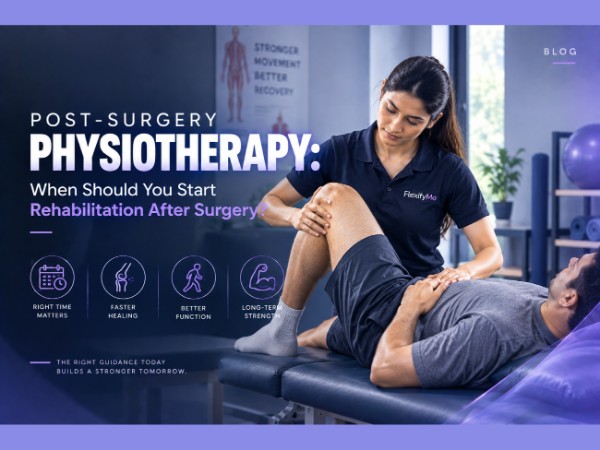
Post-Surgery Physiotherapy in Hinjewadi, Pune: When Should You Start Rehabilitation After Surgery?
After surgery, it is natural to be cautious about movement. You may wonder whether walking is safe, when you should start exercises, or whether resting for several weeks will help the operated area heal faster.
The answer is not the same for everyone. The right time to start post-surgery physiotherapy depends on the type of surgery, the tissue involved, your overall condition and your surgeon's rehabilitation protocol.
For many procedures, some form of rehabilitation begins early. However, early does not mean doing every exercise immediately. The objective is to introduce the right movement at the right stage, while protecting the healing tissue.
If you are looking for post-surgery physiotherapy in Hinjewadi, Pune, the first step should therefore be to understand your surgical restrictions and then follow a rehabilitation programme designed around them.
Why rehabilitation matters after surgery
Surgery addresses the medical problem, but recovery does not necessarily end when the procedure is complete.
Depending on the operation, you may experience:
Reduced muscle strength
Joint stiffness or reduced range of motion
Changes in walking or movement patterns
Reduced confidence when using the operated area
Difficulty returning to normal daily activities
Reduced endurance after a period of lower activity
This is where physiotherapy can become an important part of recovery.
FlexifyMe officially lists post-surgical rehabilitation among its physiotherapy services and describes its approach as personalised rehabilitation based on an individual's condition and recovery needs.
Does physiotherapy start immediately after surgery?
Not necessarily in the same way for every patient.
Some people may begin basic movement or mobility work very soon after surgery, while others need a period of protection before particular movements or strengthening exercises are introduced.
Your surgeon's instructions always take priority.
Factors that influence the rehabilitation timeline include:
The type of surgery
The area that was operated on
Whether tissue needs additional protection while healing
Weight-bearing restrictions
Your previous activity level
Pain and swelling
Other health considerations
Your surgeon's specific rehabilitation protocol
A physiotherapist can then help translate those restrictions into safe exercises and functional goals.
When does rehabilitation typically begin?
There is no universal timeline, but these are useful examples of how rehabilitation can differ.
Knee or hip replacement
Rehabilitation commonly focuses on restoring safe movement, walking ability, joint mobility and strength. The exact exercises and weight-bearing instructions depend on the procedure and the surgeon's protocol.
ACL reconstruction
ACL rehabilitation is usually a structured, long-term process. Early goals can include managing swelling, restoring appropriate movement and activating the surrounding muscles. Strength, balance and functional training are progressed later according to recovery milestones.
Shoulder surgery
Shoulder rehabilitation is particularly dependent on the procedure. A repair may require more protection during the early healing period, with movement and strengthening introduced according to the surgeon's protocol.
Spinal surgery
Walking and general movement may be introduced early in some procedures, but restrictions on bending, lifting and other activities can vary considerably.
Fracture surgery
The rehabilitation plan depends on the location and severity of the fracture, the type of fixation and whether weight-bearing is permitted.
The important point is that surgery-specific timelines should never be replaced with a generic internet exercise programme.
What does post-surgery physiotherapy involve?
A rehabilitation programme is not simply a collection of exercises. It usually progresses according to what you can safely do at each stage.
1. Assessment and recovery planning
The physiotherapist first needs to understand:
What surgery you underwent
When the surgery took place
Your surgeon's instructions
Your current pain and movement
Your strength and functional limitations
What activities you need to return to
FlexifyMe describes its physiotherapy approach as beginning with an assessment and then creating a structured recovery plan tailored to the individual's condition and progress.
2. Restoring movement
After surgery, movement may be limited because of pain, swelling, protection or reduced activity.
Depending on your procedure, physiotherapy may focus on gradually improving mobility and helping you use the operated area safely.
The goal is not to force movement. It is to restore appropriate movement progressively.
3. Rebuilding strength
Reduced activity can affect muscle strength.
Once your surgeon's protocol allows strengthening, exercises can be progressed according to your capacity. The emphasis should be on controlled movement and gradual progression rather than doing as much as possible as quickly as possible.
4. Functional re-training
Recovery is ultimately about getting back to everyday life.
FlexifyMe offers Functional Re-Training, which focuses on movement patterns involved in activities such as walking, sitting, standing, reaching and lifting. Its official page specifically describes the approach as useful in post-surgical rehabilitation and injury recovery.
This can be particularly relevant when surgery has affected how you perform normal daily activities.
5. Home exercise and continued progress
Much of rehabilitation happens between physiotherapy sessions.
FlexifyMe's official physiotherapy information describes personalised therapeutic exercises, movement-based rehabilitation and continued progress tracking as components of its approach.
A good home programme should be realistic enough to follow consistently and should change as your recovery progresses.
Why starting too early can also be a problem
Early rehabilitation does not mean rushing.
Some surgical repairs require specific protection. Performing an exercise before the tissue is ready can interfere with the recovery process.
That is why you should not copy exercises from another patient's rehabilitation programme, even if they had the same type of surgery.
The procedure name alone does not determine what you should do. Your surgeon's protocol and individual assessment matter.
Before starting or progressing an exercise, clarify:
Whether you are allowed to bear weight
Which movements are restricted
Whether active or passive movement is permitted
When strengthening can begin
When you can return to driving, work or sport
Which symptoms should be reported to your medical team
Signs that you should contact your surgeon
Physiotherapy should be progressed carefully, but some symptoms require medical attention rather than simply changing your exercise programme.
Contact your surgical team promptly if you notice:
Increasing redness, warmth or discharge around the wound
Fever or feeling significantly unwell
Sudden or severe worsening of pain
New swelling that concerns you
A sudden loss of movement or function
A new neurological symptom such as significant numbness or weakness
Sudden breathlessness or chest pain requires urgent medical attention.
Can post-surgery physiotherapy be done at home?
In some situations, yes.
FlexifyMe offers online physiotherapy, with one-to-one sessions conducted with a physiotherapist and personalised exercise guidance. Its official website also states that online physiotherapy can support post-surgical rehabilitation when advised by a healthcare professional.
However, whether online physiotherapy is suitable depends on the surgery, your recovery stage and the type of assessment or supervision required.
For some patients, in-clinic rehabilitation may be more appropriate, particularly when direct physical assessment or specific functional training is required.
How long does post-surgery rehabilitation take?
There is no single recovery period that applies to every surgery.
Some procedures allow a relatively quick return to everyday activities, while others require several months of progressive rehabilitation.
Your recovery may depend on:
The type and extent of surgery
Your physical condition before surgery
The condition being treated
Your adherence to the rehabilitation programme
Pain and swelling
Your functional goals
Your surgeon's restrictions
Rather than focusing only on a number of weeks, look at functional milestones.
For example, depending on the procedure, your goals may include walking comfortably, climbing stairs, restoring joint movement, regaining strength or returning to work and sport.
What should you look for in a post-surgery physiotherapy programme?
If you are comparing options for post-surgery physiotherapy in Hinjewadi, Pune, look for a programme that:
Starts with an individual assessment
Takes your surgical protocol into account
Uses progressive rehabilitation rather than a fixed exercise list
Tracks changes in movement and function
Includes appropriate home exercises
Explains what you can and cannot do at each stage
Adjusts the programme as your recovery changes
FlexifyMe describes its rehabilitation approach as personalised and guided by physiotherapists, with treatment plans adjusted according to the individual's condition and progress.
Frequently Asked Questions
When should I start physiotherapy after surgery?
The timing depends on your surgery and your surgeon's rehabilitation protocol. Some rehabilitation begins early, while certain procedures require specific restrictions before particular movements or strengthening exercises are introduced.
Is physiotherapy necessary after every surgery?
Not necessarily. The need for physiotherapy depends on the procedure, your recovery and your functional requirements. After orthopaedic procedures in particular, rehabilitation can help address movement, strength and functional limitations.
Can physiotherapy damage a surgical repair?
The wrong exercise or progression can be inappropriate for a healing surgical repair. This is why rehabilitation should follow the surgeon's restrictions and be progressed according to your individual recovery.
How long does post-surgery physiotherapy take?
It varies widely. Some people need a shorter period of rehabilitation, while complex orthopaedic procedures may require months of progressive recovery. Your procedure and recovery milestones are more useful than a fixed timeline.
Can I do post-surgery physiotherapy online?
FlexifyMe offers one-to-one online physiotherapy and states that online physiotherapy can support post-surgical rehabilitation when advised by a healthcare professional. Suitability depends on the individual procedure and recovery stage.
What is functional re-training after surgery?
Functional re-training focuses on restoring movement patterns needed for everyday activities such as walking, sitting, standing, reaching and lifting. FlexifyMe lists Functional Re-Training as an approach that can be used in post-surgical rehabilitation.
Start rehabilitation with the right plan
Recovering from surgery is not about moving as little as possible or trying to regain everything immediately. It is about progressing movement, strength and function at the right pace for your procedure.
If you have recently undergone surgery and need guidance with your rehabilitation, consider a personalised assessment rather than relying on a generic exercise programme.
FlexifyMe provides personalised physiotherapy and post-surgical rehabilitation support in applicable locations, with treatment plans guided by physiotherapists. Its official website also offers online physiotherapy for suitable cases.
If you are searching for post-surgery physiotherapy in Hinjewadi, Pune, speak with a physiotherapist about your surgery, current limitations and recovery goals to understand the next appropriate step.
This article is for general information and is not a substitute for personal medical advice. Always follow your surgeon's instructions after surgery. Contact your medical team for concerning wound changes, fever, sudden loss of function or other significant symptoms. Seek urgent medical attention for sudden breathlessness or chest pain.