






 ₹https://clinics.flexifyme.com/flexifyme/-in-pune/-in-hinjewadi/flexifyme-advanced-physiotherapy-clinic-in-hinjewadi-pune--7gAsKd/articles/ganesh-chaturthi-in-hinjewadi-pune-how-to-prevent-ankle-and-foot-injuries-during-the-celebrations--f5fede0e-1e1a-4564-91a9-67d963f11536
FlexifyMe Advanced Physiotherapy Clinic, Hinjewadi, pune
Physiotherapy Clinic in Hinjewadi, Pune, Maharashtra
No 3/1, Second Floor, Hinjawadi Phase II, Rajiv Gandhi Infotech Park, Hinjewadi, pune, maharashtra - 411057Request A Call Back
FlexifyMe Advanced Physiotherapy Clinic Social Feeds in Hinjewadi, pune
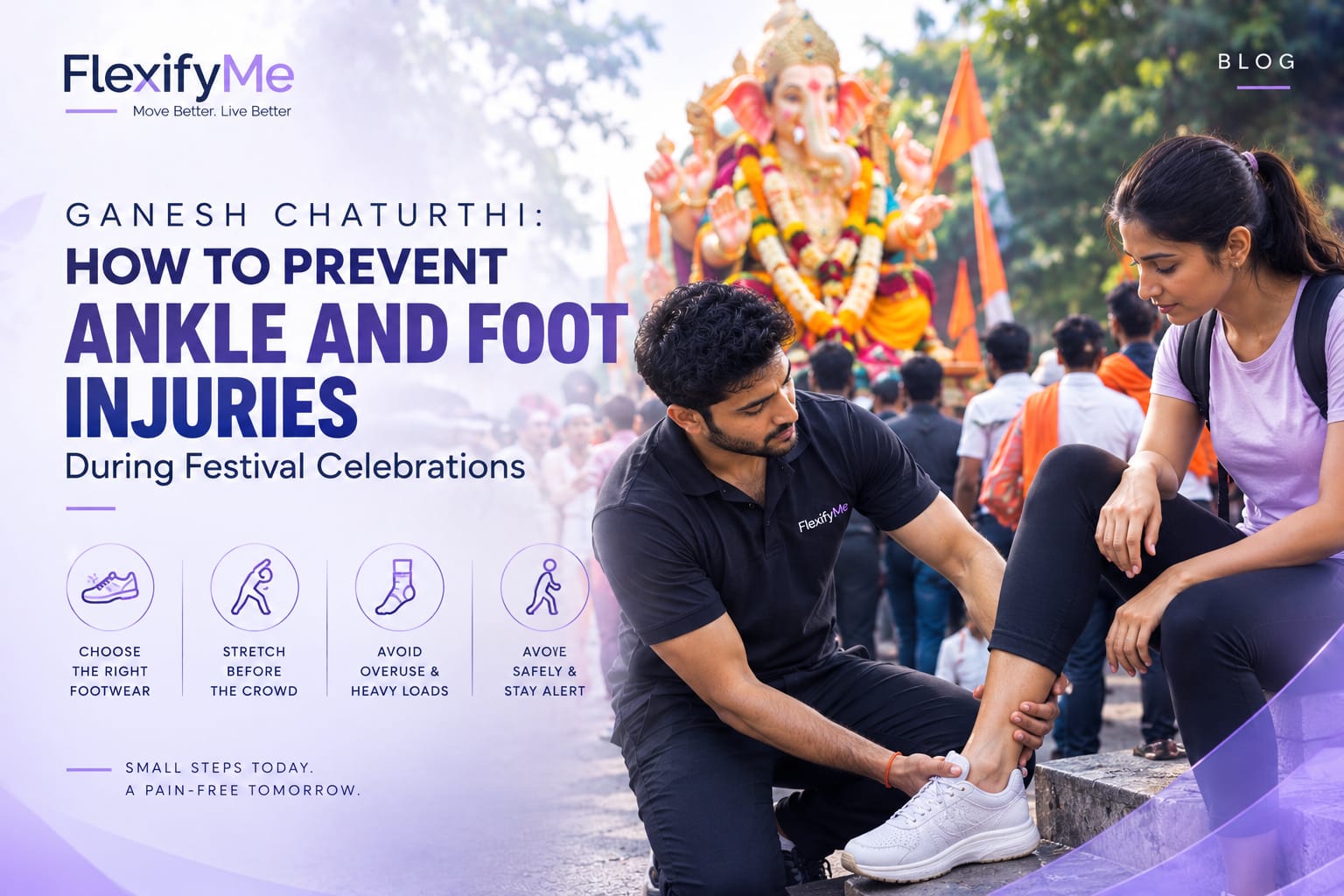
Ganesh Chaturthi in Hinjewadi, Pune: How to Prevent Ankle and Foot Injuries During the Celebrations
Ganesh Chaturthi brings long walks, crowded pandals, extended periods of standing and, for many people, hours outdoors during the visarjan procession. All that activity can put extra stress on the feet and ankles, particularly when it is combined with uneven surfaces, wet ground or unsuitable footwear.
A festival that starts with a short visit to a pandal can quickly turn into several hours on your feet. By the end of the day, you may notice sore feet, heel discomfort, blisters or an ankle that feels painful after an awkward step.
Good footwear, sensible pacing and attention to the walking surface can help reduce unnecessary foot and ankle strain.
If you are celebrating Ganesh Chaturthi in Hinjewadi and Pune, here are practical ways to look after your feet and ankles throughout the festivities.
Common Foot and Ankle Problems During Ganesh Chaturthi
Different activities during the festival can place different demands on your feet and ankles.
Ankle Sprains
An ankle sprain can occur when the foot suddenly rolls or twists. Uneven roads, broken footpaths, steps, slippery surfaces and unexpected movement in crowds can all make an awkward landing more likely.
The risk can be higher when you are distracted, rushing or carrying something while walking.
Heel and Foot Pain
Standing and walking for long periods can increase discomfort in people who already have foot or heel problems. A sudden increase in activity can also make existing symptoms more noticeable.
Plantar fasciitis is one possible cause of heel pain. FlexifyMe's official content describes plantar fasciitis as a condition involving the plantar fascia along the bottom of the foot and notes that prolonged standing, unsupportive footwear and increased activity can contribute to symptoms.
Blisters
New footwear, friction, moisture and long-distance walking can contribute to blisters. Wearing familiar, comfortable footwear and appropriate socks can help reduce friction.
Cuts and Puncture Injuries
Pandal areas and immersion sites can contain unexpected debris, including broken materials or sharp objects. Walking barefoot in an unfamiliar outdoor area can therefore increase the risk of cuts or puncture injuries.
Slips and Falls
Wet roads, mud, uneven ground and slippery surfaces can become particularly challenging during visarjan. Footwear with a suitable grip and slower movement on wet surfaces can help you maintain better control.
Foot and Leg Fatigue
Standing for several hours can leave the feet and lower legs feeling tired and uncomfortable. Taking regular breaks and changing your position can make long festival days easier on your body.
Before the Festival: Choose Your Footwear Carefully
Your footwear can make a significant difference when you expect to spend several hours walking or standing.
Consider these simple precautions:
Choose comfortable footwear that you have already worn, rather than wearing brand-new shoes for a long festival day.
Look for a secure fit and a sole that provides suitable grip.
Avoid footwear that repeatedly causes rubbing or pressure points.
If you already experience heel or foot pain, use footwear that you know you can tolerate comfortably.
Carry an extra pair when rain or water exposure is likely.
Wear suitable socks when they improve comfort and reduce friction.
If you have an existing foot or ankle condition, avoid experimenting with unfamiliar footwear immediately before a long procession.
If You Have Diabetes or Reduced Foot Sensation
People with diabetes or reduced sensation in their feet need to take additional care.
A small cut, blister or puncture injury may not always be noticed immediately when sensation is reduced. Avoid unnecessary barefoot walking in areas where the surface may contain debris or other hazards.
Check your feet after a long festival day and seek appropriate medical advice if you notice a wound, swelling, redness or other concerning changes.
Protect Your Feet at Pandals
Visiting several pandals can involve long periods of standing and walking. A few simple habits can reduce unnecessary strain.
Watch Where You Step
Crowds can make it easy to focus on the people or decorations around you rather than the ground.
Pay attention to steps, uneven pavement, cables, wet patches and other obstacles, particularly when moving through unfamiliar areas.
Take Sitting Breaks
You do not need to remain standing throughout your visit. If there is a safe opportunity to sit, use it.
Short breaks can give your feet and lower legs a chance to recover before you continue walking.
Change Position Regularly
If you need to stand for a long time, avoid remaining completely still. Shift your weight between your feet and move gently when space allows.
Keep Hydrated
Long periods outdoors, particularly in warm weather, can contribute to fatigue. Carry water and drink regularly according to your needs.
Take Extra Care During Visarjan
Visarjan can present different risks because the ground may be wet, uneven or crowded.
Keep these precautions in mind:
Wear footwear with a suitable grip.
Walk carefully on wet or muddy surfaces.
Take shorter steps when the ground is slippery.
Be careful around steps, slopes and uneven ground.
Watch for changes in the surface before moving forward.
Do not enter unsafe water or areas that are restricted.
Follow instructions provided by local authorities and organisers.
Avoid rushing when crowds become congested.
If your footwear becomes wet and uncomfortable, change into a dry pair when possible.
What to Do If You Twist Your Ankle
If your ankle suddenly rolls and becomes painful, do not immediately continue with the procession as though nothing happened.
First, stop and assess how the ankle feels.
You can:
Reduce activities that increase pain.
Avoid putting unnecessary load on the injured ankle.
Elevate the leg if swelling develops.
Use cold therapy for short periods if it helps with comfort.
Resume gentle movement gradually as tolerated, provided there is no indication of a more serious injury.
Do not attempt to diagnose the severity of an ankle injury solely from swelling or pain. If you cannot comfortably bear weight, the ankle looks deformed, there is significant swelling, numbness or severe pain, seek medical assessment.
If pain, swelling or instability continues, professional assessment can help determine whether further rehabilitation is required.
When Should You See a Physiotherapist for Ankle Pain?
An ankle injury does not always stop being a problem when the initial pain decreases.
Consider professional assessment if:
Your ankle continues to hurt during normal activities.
You feel that the ankle is unstable.
The ankle repeatedly gives way.
You have difficulty walking normally.
Pain or swelling continues after the initial injury.
You have previously injured the same ankle and symptoms keep returning.
Physiotherapy can involve assessment of movement, strength, mobility and function, followed by a rehabilitation plan suited to the individual's condition.
FlexifyMe's current official treatment information lists ankle pain among the conditions it treats. Its physiotherapy services use personalised assessment and rehabilitation rather than applying one identical programme to every patient.
Can Long Festival Hours Trigger Plantar Fasciitis?
Long periods of standing and walking can aggravate existing heel pain, particularly when activity suddenly increases.
Plantar fasciitis commonly causes pain around the underside of the heel and foot. FlexifyMe's official plantar-fasciitis content discusses prolonged standing, unsupportive footwear and changes in activity as factors associated with symptoms.
If you already experience plantar fasciitis, avoid treating festival activity as a test of how much pain you can tolerate. Use comfortable footwear, take appropriate breaks and reduce activities that clearly aggravate your symptoms.
If heel pain continues or interferes with normal walking, consider getting it assessed rather than assuming it is simply festival-related tiredness.
How Physiotherapy Can Help With Foot and Ankle Problems
Physiotherapy for ankle or foot problems begins with understanding the individual's symptoms and movement needs.
FlexifyMe's current official website describes an assessment-led approach that can include understanding the patient's pain, analysing posture and movement, identifying contributing factors and creating a personalised treatment plan. Its listed physiotherapy services include manual therapy, gait training, functional re-training, AI postural assessment, dry needling, cryotherapy and other rehabilitation approaches, depending on the condition and assessment.
For plantar fasciitis specifically, FlexifyMe's official content discusses physiotherapy alongside stretching, strengthening, manual therapy, dry needling and AI posture analysis. The appropriate approach depends on the individual's symptoms and assessment.
FlexifyMe also offers online physiotherapy, while physical clinic availability depends on location. The current official website lists physiotherapy centres in specific locations rather than every locality or city.
After the Festival: Check Your Feet
Once the celebrations are over, take a few minutes to check your feet and ankles.
Look for:
Blisters
Cuts or puncture wounds
Persistent swelling
Bruising
Skin irritation
New areas of heel pain
Ankle pain or instability
If you have diabetes or reduced sensation in your feet, be particularly attentive to wounds or changes that may require medical attention.
Do not return immediately to strenuous activity if your ankle or foot remains painful. Give the symptoms appropriate attention and seek professional guidance when needed.
Frequently Asked Questions
Is walking barefoot at pandals safe?
Walking barefoot can expose your feet to cuts, hot surfaces, uneven ground and other hazards. If footwear must be removed at a particular location, pay attention to the surface and avoid unnecessary prolonged barefoot walking.
People with diabetes or reduced foot sensation should take additional precautions because foot injuries may not be noticed immediately.
Why do my feet hurt after standing for several hours?
Long periods of standing can place continuous stress on the feet and lower legs. Existing foot problems can become more noticeable when your activity level suddenly increases.
Changing position, taking sitting breaks and wearing comfortable footwear can help manage the physical demands of a long festival day.
Can Ganesh Chaturthi activities aggravate plantar fasciitis?
They can aggravate existing heel pain when there is a sudden increase in walking or standing. Unsupportive footwear may also contribute to discomfort.
FlexifyMe's official plantar-fasciitis content specifically discusses prolonged standing, activity changes and footwear as factors associated with plantar-fasciitis symptoms.
Should I use an ankle brace if I have sprained my ankle before?
An ankle brace may be appropriate for some people, but whether you need one depends on the injury, stability of the ankle and your individual circumstances.
A brace should not replace appropriate assessment and rehabilitation, particularly if you have repeated ankle sprains or ongoing instability.
How do I find a physiotherapist near me for an ankle sprain?
Search for physiotherapist near me and look for a provider that assesses ankle pain, movement, strength and function rather than focusing only on short-term pain relief.
FlexifyMe currently lists ankle pain among its physiotherapy treatment areas and provides personalised physiotherapy through physical and online options, subject to location and service availability.
When should I get foot or ankle pain checked?
Consider professional assessment when pain persists, walking remains difficult, the ankle feels unstable, swelling does not settle, or symptoms repeatedly return.
Severe pain, significant deformity, numbness, inability to bear weight or a concerning wound should be assessed promptly.
Celebrate Ganesh Chaturthi While Looking After Your Feet
Ganesh Chaturthi can mean long walks, crowded pandals, extended standing and challenging outdoor surfaces. You do not need to avoid the celebrations to protect your feet and ankles.
Choose familiar and comfortable footwear, take regular breaks, watch the ground carefully and slow down on wet or uneven surfaces. If you twist your ankle or develop persistent heel or foot pain, do not ignore symptoms simply because the festival is still underway.
For people looking for ankle sprain treatment in Hinjewadi, Pune or searching for physiotherapy near me, FlexifyMe provides personalised physiotherapy for conditions including ankle pain, with assessment-led rehabilitation and online physiotherapy options also available. Physical clinic availability varies by location.
This article is intended for general information and does not replace an individual medical assessment. Seek prompt medical attention for severe pain, significant deformity, numbness, inability to bear weight or a concerning foot wound.