




 ₹https://clinics.flexifyme.com/flexifyme/-in-pune/-in-hinjewadi/flexifyme-advanced-physiotherapy-clinic-in-hinjewadi-pune--7gAsKd/articles/frozen-shoulder-treatment-in-hinjewadi-pune-can-physiotherapy-restore-shoulder-movement--8d73402f-1577-46c6-89cb-41b2fc9d93bd
FlexifyMe Advanced Physiotherapy Clinic, Hinjewadi, pune
Physiotherapy Clinic in Hinjewadi, Pune, Maharashtra
No 3/1, Second Floor, Hinjawadi Phase II, Rajiv Gandhi Infotech Park, Hinjewadi, pune, maharashtra - 411057Request A Call Back
FlexifyMe Advanced Physiotherapy Clinic Social Feeds in Hinjewadi, pune
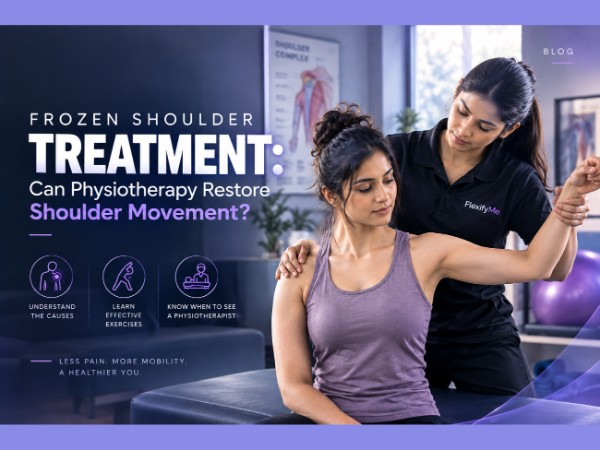
Frozen Shoulder Treatment in Hinjewadi, Pune: Can Physiotherapy Restore Shoulder Movement?
Putting on a shirt should not require planning. Neither should reaching for a shelf, fastening a seatbelt or lifting your arm to comb your hair.
Yet these everyday movements can become surprisingly difficult when you develop a frozen shoulder. The pain and stiffness can gradually limit how far you can move your arm, making even familiar tasks frustrating.
If you are looking for frozen shoulder treatment in Hinjewadi or Pune, physiotherapy can be an important part of managing the condition. FlexifyMe specifically lists frozen shoulder among the shoulder conditions it treats and describes personalised physiotherapy focused on pain management, mobility and improving movement.
The important point is that frozen shoulder is different from many other causes of shoulder pain. Understanding that difference can help you seek the right care instead of simply pushing through the stiffness.
What Is a Frozen Shoulder?
The medical term for frozen shoulder is adhesive capsulitis.
The condition affects the capsule surrounding the shoulder joint and is associated with pain, stiffness and restricted shoulder movement. FlexifyMe's shoulder information identifies frozen shoulder as a condition involving shoulder stiffness and pain caused by tightening of the surrounding capsule.
You may notice difficulty with movements such as:
Raising your arm overhead
Reaching behind your back
Putting on or removing clothing
Reaching for objects on a high shelf
Fastening clothes behind your back
Moving your arm into certain positions while sleeping
One of the defining features is that shoulder movement can be restricted rather than simply painful.
What Causes Frozen Shoulder?
Frozen shoulder does not always have an obvious cause.
It can occur without a clear injury or event. In other cases, shoulder stiffness may develop after a period when the arm has not been moving normally.
Factors associated with frozen shoulder can include:
Previous shoulder problems
Reduced shoulder movement for a period of time
Recovery following an injury or surgery
Certain underlying health conditions
Because several shoulder conditions can cause pain and restricted movement, a proper assessment matters before choosing frozen shoulder exercises or treatment.
Understanding the Stages of Frozen Shoulder
Frozen shoulder is often described in three broad stages. However, symptoms and timelines vary between individuals.
The Freezing Stage
Pain and stiffness gradually increase. You may find that movements which were previously easy are becoming more uncomfortable.
Night-time discomfort can also make sleeping difficult.
During this phase, the priority is generally to manage symptoms while maintaining as much comfortable movement as possible.
Forcing a painful shoulder through aggressive stretches is not a sensible substitute for assessment.
The Frozen Stage
Pain may become less prominent for some people while stiffness remains a major problem.
You may notice that reaching overhead, behind your back or across your body is particularly restricted.
A physiotherapy programme can focus on maintaining and gradually improving available movement according to your symptoms and assessment.
The Thawing Stage
Movement gradually begins to return.
As mobility improves, rehabilitation can also focus on restoring strength and helping you return to normal activities.
The stages do not follow an identical timetable for everyone. How long frozen shoulder lasts can vary considerably, so treatment should be based on your symptoms and progress rather than a fixed calendar.
Can Physiotherapy Help a Frozen Shoulder?
Yes. Physiotherapy can help manage frozen shoulder, improve mobility and support a return to everyday movement.
FlexifyMe lists frozen shoulder among the shoulder conditions addressed through its physiotherapy services. Its physiotherapy information describes personalised care based on an individual's condition and recovery goals.
However, physiotherapy should not be presented as a guarantee that every person will regain completely normal movement.
A suitable programme may involve:
Assessment of shoulder movement
Identification of movement restrictions
Therapeutic exercises
Mobility exercises
Strengthening as appropriate
Guidance on managing daily activities
Progress monitoring and adjustment of the programme
The exact approach depends on the individual's presentation.
Why the Right Exercise Matters
Frozen shoulder is not simply a weak shoulder.
If stiffness is the main problem, repeatedly performing strengthening exercises without addressing mobility may not address the main limitation. Similarly, aggressively forcing a painful shoulder can make movement more difficult.
That is why frozen shoulder exercises should be selected and progressed according to your symptoms and physical assessment.
Gentle Range-of-Motion Exercises
A physiotherapist may recommend controlled movements designed to maintain or gradually improve available shoulder movement.
Examples can include:
Gentle arm elevation
Assisted shoulder movements
Comfortable rotation exercises
Pendulum-style movements
The appropriate movement, repetitions and intensity depend on the individual.
Strengthening Exercises
Strengthening may become more relevant as shoulder movement improves.
The aim is not simply to make the shoulder stronger. It is to help you regain the capacity needed for everyday activities and normal movement.
Functional Movement
Rehabilitation should eventually connect exercises with real-life tasks.
That might mean working towards:
Reaching overhead
Putting on a shirt
Reaching behind your back
Carrying everyday objects
Returning to normal household activities
The goal is useful movement, not simply completing exercises.
What Happens During a Physiotherapy Assessment?
A good assessment starts by understanding what you are experiencing.
For shoulder problems, FlexifyMe describes a structured assessment that considers factors such as posture, range of motion and strength, along with functional testing to understand affected movement patterns.
Your physiotherapist may therefore look at:
Your Symptoms
When the pain began, which movements aggravate it and whether symptoms are affecting sleep or everyday activities.
Shoulder Movement
Both the amount and quality of movement can provide useful information.
Strength
Strength testing helps identify whether weakness is contributing to the problem or has developed because the shoulder has not been used normally.
Functional Limitations
Rather than focusing only on measurements, the assessment should consider what you are actually struggling to do.
Other Possible Sources
Shoulder symptoms can sometimes overlap with other conditions. A clinical assessment helps determine whether frozen shoulder is an appropriate working diagnosis or whether further evaluation is needed.
Should You Rest a Frozen Shoulder?
Avoiding every movement is usually not a good long-term strategy.
A shoulder that is already stiff can become more difficult to use if normal movement is avoided for extended periods.
At the same time, more exercise is not automatically better.
Your activity should be adjusted according to your symptoms and the stage of your condition. A physiotherapist can help you understand which movements are appropriate and how to progress them.
How Long Does Frozen Shoulder Last?
This is one of the most common questions people ask.
Unfortunately, there is no single recovery timeline that applies to everyone.
Frozen shoulder can take a prolonged period to improve, and symptoms may change as the condition progresses through its different stages.
Factors such as the severity of stiffness, pain, general health and response to treatment can influence recovery.
FlexifyMe also notes more generally that recovery varies between individuals depending on the condition, its severity, overall health and consistency with the treatment plan.
Rather than judging progress only by the number of weeks that have passed, look at practical changes such as:
Can you reach higher than before?
Is getting dressed easier?
Can you sleep more comfortably?
Has reaching behind your back improved?
Are everyday activities becoming easier?
When Should You See a Physiotherapist?
Consider an assessment if:
Shoulder stiffness is progressively increasing
Pain is interfering with sleep
You are struggling with everyday arm movements
You cannot raise your arm normally
Reaching behind your back has become difficult
Shoulder pain has continued without improvement
You are unsure whether the problem is actually frozen shoulder
Early assessment can also help distinguish frozen shoulder from other causes of shoulder pain.
FlexifyMe's official shoulder information lists frozen shoulder alongside conditions such as rotator cuff injuries, impingement, arthritis, instability and bursitis, highlighting why identifying the underlying condition matters.
When Shoulder Pain Needs Medical Attention
Not every painful, stiff shoulder should automatically be treated as frozen shoulder.
Seek prompt medical assessment if shoulder symptoms follow significant trauma, particularly if:
The shoulder looks deformed
You suddenly cannot move the arm following an injury
There is severe or rapidly worsening pain
The joint is hot, red or significantly swollen
You have fever or feel seriously unwell
You develop significant numbness or weakness
A physiotherapist can help with many musculoskeletal problems, but some symptoms require medical investigation first.
Frequently Asked Questions
Can physiotherapy cure frozen shoulder?
Physiotherapy can help manage frozen shoulder and work towards improving pain, movement and function. However, recovery varies between individuals, so it would be inappropriate to promise a complete cure or a fixed recovery time.
What are the best frozen shoulder exercises?
The appropriate exercises depend on your available movement, pain levels and stage of the condition. Gentle mobility and range-of-motion exercises may be appropriate, while strengthening can become part of rehabilitation as movement improves.
Should I force my frozen shoulder to move?
No. Forcing a painful, stiff shoulder is not a substitute for a properly planned rehabilitation programme. Exercise intensity should be appropriate to your symptoms and response.
Can frozen shoulder improve without treatment?
Frozen shoulder can change over time, but that does not mean you should simply ignore persistent pain and stiffness. An assessment can help you understand what is happening and identify appropriate ways to manage symptoms and maintain function.
How long does frozen shoulder last?
There is no universal timeline. The condition can take a prolonged period to improve, and recovery differs from person to person. Progress should be assessed through changes in pain, mobility and everyday function rather than a fixed deadline.
Is frozen shoulder the same as rotator cuff pain?
No. Both can cause shoulder pain, but frozen shoulder is characterised by significant restriction in shoulder movement. Rotator cuff-related conditions can present differently. A proper clinical assessment helps distinguish between them.
Where can I get frozen shoulder treatment in Hinjewadi?
If you are searching for frozen shoulder treatment in Hinjewadi, Pune, look for a physiotherapy provider that assesses shoulder movement and strength and creates an individualised rehabilitation plan. FlexifyMe lists frozen shoulder among the shoulder conditions it treats through its physiotherapy services.
Move Beyond the Stiffness
Frozen shoulder can make ordinary movements feel unnecessarily difficult. Reaching, dressing, sleeping and everyday household activities can all be affected when shoulder mobility reduces.
The good news is that frozen shoulder can be managed with an appropriate rehabilitation approach, and physiotherapy can play an important role in improving movement and helping you return to useful daily activities.
If shoulder stiffness is affecting your routine in Hinjewadi, Pune, consider getting it assessed rather than continuing to work around it. FlexifyMe offers personalised physiotherapy care for shoulder conditions including frozen shoulder, with treatment based on individual assessment and recovery needs.
This article is for general information and is not a substitute for personal medical advice. Sudden loss of shoulder movement following an injury, severe symptoms, or a hot and swollen joint with fever requires prompt medical assessment.