





 ₹https://clinics.flexifyme.com/flexifyme/-in-pune/-in-hinjewadi/flexifyme-advanced-physiotherapy-clinic-in-hinjewadi-pune--7gAsKd/articles/dussehra-travel-from-hinjewadi-pune-sciatica-treatment-options-and-tips-for-long-journeys--8be1d32e-ff18-4b20-91ab-f458ac9f68ed
FlexifyMe Advanced Physiotherapy Clinic, Hinjewadi, pune
Physiotherapy Clinic in Hinjewadi, Pune, Maharashtra
No 3/1, Second Floor, Hinjawadi Phase II, Rajiv Gandhi Infotech Park, Hinjewadi, pune, maharashtra - 411057Request A Call Back
FlexifyMe Advanced Physiotherapy Clinic Social Feeds in Hinjewadi, pune
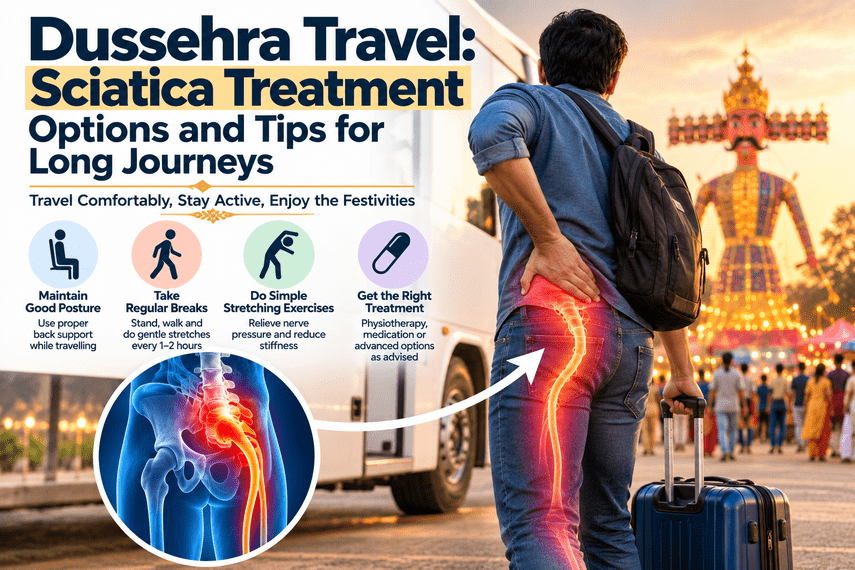
Dussehra Travel from Hinjewadi, Pune: Sciatica Treatment Options and Tips for Long Journeys
Introduction
Dussehra often involves travelling to visit family, attend celebrations or explore festive events. However, long journeys can be challenging if you experience sciatica. Sitting in a car, bus or train for an extended period may aggravate pain that travels from your lower back or buttock down your leg.
If you are planning a journey from Hinjewadi or travelling across Pune, a few practical changes can help you manage discomfort. Choosing a comfortable sitting position, taking movement breaks and understanding when to seek medical advice can make travel easier.
Sciatica symptoms vary from person to person, so there is no single travel position or routine that works for everyone. If your pain is severe, new or getting worse, seek professional advice before starting a long journey.
What Is Sciatica?
Sciatica describes pain associated with irritation or compression affecting the sciatic nerve or the nerve roots that contribute to it. The pain commonly travels from the lower back or buttock into one leg and may extend towards the foot.
Common symptoms include:
Sharp, shooting or burning pain travelling down the leg.
Tingling or pins and needles in the leg or foot.
Numbness in parts of the leg.
Pain that changes with sitting, standing or certain movements.
Muscle weakness or difficulty moving the leg or foot in some cases.
A herniated disc is one possible cause. Other causes include narrowing of the spinal canal and certain conditions affecting the spine or surrounding structures. A clinical assessment can help identify the likely cause of your symptoms.
Sciatica does not affect everyone in the same way. Treatment and recovery depend on the underlying cause, symptom severity and individual health.
Warning Signs That Need Urgent Medical Attention
Do not try to manage certain symptoms with travel adjustments or home exercises alone. Seek emergency medical care if you experience:
New difficulty passing urine or loss of bladder or bowel control.
Numbness around the groin, genitals or inner thighs.
Severe or rapidly worsening weakness in the leg or foot.
New weakness or numbness affecting both legs, particularly when accompanied by other neurological symptoms.
These symptoms can indicate a serious problem involving the nerves in the lower spine. They require immediate medical assessment rather than a routine physiotherapy appointment.
How to Travel More Comfortably With Sciatica
Before Your Journey
Planning ahead can help you manage symptoms during a long trip.
Choose an aisle seat when possible. It can make it easier to change position or get up during suitable breaks.
Plan regular stops on car journeys so you can stand and walk briefly, if comfortable.
Carry a small cushion or rolled towel for lower-back support if it helps you sit comfortably.
Wear comfortable clothing that does not restrict movement.
If your pain is severe, worsening or accompanied by weakness, seek medical advice before travelling.
If you already have a treatment plan, follow your clinician's advice about movement, exercises and travel.
There is no universally correct interval for movement breaks. Adjust them to your comfort, the journey and any advice you have received from a healthcare professional.
While Sitting in a Car, Bus or Train
Prolonged sitting can aggravate sciatica symptoms for some people. The aim is to find a position that feels comfortable and change it when needed.
Sit with your back supported rather than remaining slouched or leaning forward for long periods.
Adjust the seat so your feet are supported and your knees and hips are in a comfortable position.
Use a small cushion or rolled towel behind your lower back if it provides relief.
Avoid keeping a wallet or phone in a back pocket if it makes sitting uneven or uncomfortable.
Change your sitting position regularly instead of holding one posture throughout the journey.
If practical, try gentle ankle movements while seated, provided they do not worsen your symptoms.
Avoid forcing yourself into a particular posture simply because it is recommended for sciatica. Comfort and symptom response are important, and persistent or worsening symptoms need assessment.
At Rest Stops
If you are travelling by car, use safe stopping points to change position and move around.
Take a short, comfortable walk if walking does not significantly increase your leg symptoms.
Stand and move gently before returning to your seat.
Avoid sudden twisting, heavy lifting or movements that trigger sharp or spreading pain.
If a particular movement makes symptoms worse, stop rather than pushing through it.
Walking can help some people remain active during recovery, but it is not suitable at every intensity for every case of sciatica. Reduce the activity and seek advice if symptoms worsen or you notice new weakness.
What About Stretching During Travel?
Some people find gentle movements helpful, while others experience more pain with stretching. There is no single stretch that is appropriate for every cause of sciatica.
Avoid forceful hamstring stretches, deep forward bends or repeated back movements if they increase pain, tingling or numbness down your leg. A physiotherapist can assess your movement and recommend suitable sciatica exercises based on your symptoms.
Do not use an exercise to push through worsening leg pain or new neurological symptoms.
Sciatica Treatment Options
Sciatica treatment depends on what is causing the symptoms and how they affect everyday activities. A healthcare professional can assess your condition and help determine the appropriate next steps.
Staying Active Within Your Limits
Complete bed rest is generally not the preferred approach for uncomplicated back and leg pain. Gentle daily movement may help you maintain function, provided it does not worsen your symptoms.
Try to balance activity with rest when needed. Avoid both prolonged inactivity and pushing through severe pain. If you have difficulty walking or your symptoms are worsening, get medical advice.
Physiotherapy and Rehabilitation
Physiotherapy may help manage sciatica symptoms and improve movement. A suitable programme may include:
Exercises selected according to your assessment and tolerance.
Gradual mobility and strengthening activities.
Advice on sitting, lifting and everyday movement.
Guidance on modifying activities that aggravate symptoms.
A progressive return to work, travel or other daily activities.
The exercises and pace of rehabilitation should match your condition. Exercises that help one person may not be appropriate for another, so personalised guidance is useful when symptoms persist or movement is limited.
Physiotherapy Treatments at FlexifyMe
FlexifyMe's official website lists sciatica treatment among its physiotherapy services. Its sciatica treatment page describes assessment of pain distribution, movement limitations, muscle strength and reflexes to help guide treatment.
The website also lists therapies such as manual therapy, dry needling, cupping, IFT and TENS, and decompression therapy. These treatments are not suitable for every person or every cause of sciatica. A physiotherapist should assess your condition and determine which options, if any, are appropriate.
FlexifyMe provides appointment options for online consultations and in-clinic physiotherapy. Clinic locations and available services depend on the area, so check the official website before planning a visit.
Medication and Injections
A doctor may discuss medication or other treatment options depending on your symptoms, medical history and the likely cause of the pain. Do not start or change medication based solely on general online advice.
In selected cases, a specialist may consider an injection. Whether it is appropriate depends on the clinical assessment, and its potential benefits and risks should be discussed with the treating professional.
When Is Surgery Considered?
Many people with sciatica do not need surgery. However, a specialist may consider it when there is significant nerve compression, certain progressive neurological problems or persistent disabling symptoms despite appropriate non-surgical treatment.
The decision depends on the cause, examination findings, imaging when indicated and the person's overall condition. New bladder or bowel problems, saddle-area numbness or rapidly worsening weakness require urgent assessment rather than waiting for a routine treatment plan.
How Long Does Sciatica Take to Improve?
There is no fixed recovery timeline for sciatica. Some people improve over a relatively short period, while others need longer assessment and treatment, particularly when symptoms are persistent or caused by an underlying spinal condition.
Pain, tingling, numbness and weakness may not improve at the same pace. If symptoms continue, interfere with daily activities or become worse, consult a healthcare professional rather than relying on a predicted recovery date.
Frequently Asked Questions
Is walking good for sciatica?
Gentle walking may help some people stay active, but the appropriate amount depends on their symptoms and condition. Start within your comfort level and reduce activity if it causes a significant increase in leg pain. New or worsening weakness needs medical assessment.
Which sitting position is best for sciatica during travel?
There is no single best position for everyone. Try sitting with your back supported and your feet comfortably placed. Change position regularly and use a small cushion if it helps. Avoid staying in a position that makes your leg symptoms worse.
Should I avoid bending completely if I have sciatica?
Not necessarily. Some bending movements can aggravate symptoms during a flare-up, but permanent avoidance is not usually the goal. A physiotherapist can guide you on modifying painful movements and gradually returning to activities when appropriate.
How can I find a physiotherapist near me for sciatica treatment?
Search for physiotherapist near me or sciatica treatment in Hinjewadi to explore local options. Check the provider's services, qualifications and available appointments. FlexifyMe also lists online appointment options, which may be useful if travelling to a clinic is difficult.
Do I need an MRI for sciatica?
An MRI is not necessary for every case of sciatica. A clinician may recommend imaging when symptoms, examination findings or the possibility of a serious underlying condition make it appropriate, or when the results could affect treatment decisions.
Travel Smarter This Dussehra
Sciatica does not always mean you have to cancel your Dussehra plans, but it is important to consider your symptoms before setting off. Plan suitable breaks, support your lower back if it helps, change positions regularly and avoid movements that clearly aggravate your leg pain.
If symptoms persist or interfere with walking, sitting or daily activities, seek professional advice about appropriate sciatica treatment. FlexifyMe offers physiotherapy appointment options online and at its listed clinic locations. Check the official website for current service and location details before booking.
With suitable guidance and a travel plan that respects your limits, you can make more informed decisions about travelling and managing discomfort.
This article is for general information only and is not a substitute for individual medical advice. Seek emergency medical care for new bladder or bowel problems, numbness around the groin or saddle area, or severe or rapidly worsening weakness.