







 ₹https://clinics.flexifyme.com/flexifyme/-in-pune/-in-hinjewadi/flexifyme-advanced-physiotherapy-clinic-in-hinjewadi-pune--7gAsKd/articles/dussehra-preparation-in-hinjewadi-pune-wrist-pain-prevention-and-treatment-options--ba522cd9-4b21-470f-b19d-0750314753cc
FlexifyMe Advanced Physiotherapy Clinic, Hinjewadi, pune
Physiotherapy Clinic in Hinjewadi, Pune, Maharashtra
No 3/1, Second Floor, Hinjawadi Phase II, Rajiv Gandhi Infotech Park, Hinjewadi, pune, maharashtra - 411057Request A Call Back
FlexifyMe Advanced Physiotherapy Clinic Social Feeds in Hinjewadi, pune
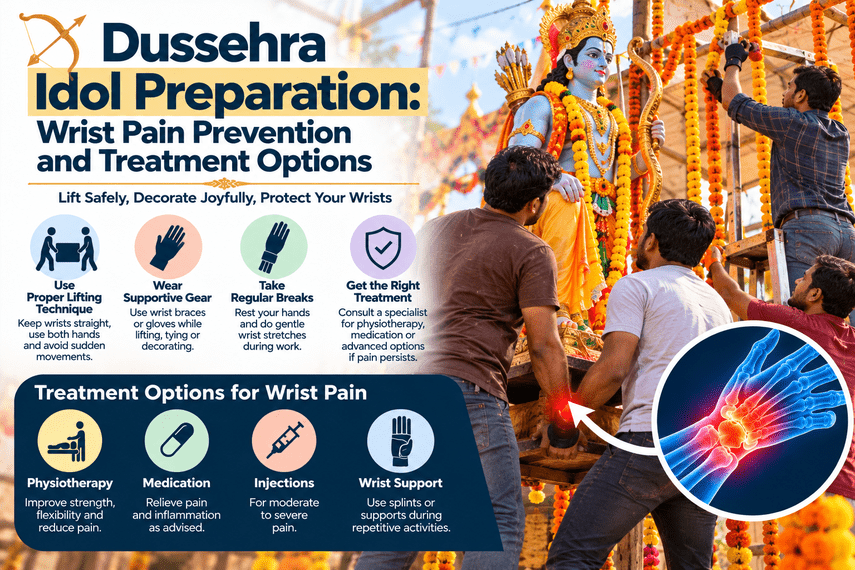
Dussehra Preparation in Hinjewadi, Pune: Wrist Pain Prevention and Treatment Options
Introduction
During Dussehra, wrists handle many small but repetitive tasks. In Hinjewadi and across Pune, preparations may include stringing garlands, cutting decorations, tying torans, cleaning, preparing festive meals, carrying trays and helping with pandal or effigy arrangements.
These activities may not involve heavy lifting, but repeated gripping, twisting and awkward wrist positions can lead to hand and wrist strain. Discomfort may develop gradually, especially when the same task continues for long periods without enough rest.
The good news is that adjusting your working position, sharing tasks and taking regular breaks can help reduce unnecessary strain. If pain, tingling or weakness persists, understanding the cause is important before choosing a suitable wrist pain treatment.
What Causes Wrist Pain During Dussehra Preparations?
Wrist pain can develop for several reasons, including repetitive movements, tendon irritation, an injury or pressure on a nerve. The symptoms can offer clues, but they cannot confirm a diagnosis on their own.
1. Pain on the Thumb Side of the Wrist
Pain near the base of the thumb that becomes more noticeable while gripping, twisting a cloth or lifting objects may be related to irritation of the tendons around the thumb.
One possible cause is De Quervain's tenosynovitis, a condition affecting tendons on the thumb side of the wrist. Repetitive thumb movements and gripping may aggravate symptoms. However, other conditions can cause similar pain, so persistent discomfort should be assessed by a qualified healthcare professional.
2. General Wrist and Forearm Aching
Repeated cutting, scrubbing, kneading or gripping can place strain on the muscles and tendons of the hand and forearm. You may notice aching, tenderness or discomfort when turning your wrist or holding an object.
Working with your wrist in an awkward position for extended periods may add to the strain. Changing tasks and adjusting your work surface can help reduce repeated loading.
3. Tingling or Numbness in the Fingers
Tingling, numbness or weakness in the hand can sometimes be associated with carpal tunnel syndrome, which involves pressure on the median nerve at the wrist. Symptoms often affect the thumb, index and middle fingers and may be more noticeable at night.
These symptoms can have other causes too. If numbness keeps returning, wakes you at night or affects your grip, arrange a medical assessment rather than assuming it is ordinary fatigue.
4. Pain After a Sudden Movement or Fall
A sudden twist, a slip while carrying decorations or trying to catch a falling object can injure the wrist. A sprain, fracture or other injury may cause pain, swelling, bruising or difficulty moving the hand.
Do not assume that significant pain after an injury is simply a repetitive strain. Severe pain, visible deformity, marked swelling or an inability to use the hand needs prompt medical attention.
How to Prevent Wrist Pain During Festival Preparation
A few practical changes can make repetitive household and decoration tasks more manageable.
Keep Your Wrist in a Comfortable Position
Try to keep your wrist relatively straight and aligned with your forearm when cutting, cleaning or lifting. Repeatedly bending the wrist forwards or backwards while applying force may increase strain.
Bring decorations or ingredients closer to you instead of reaching repeatedly.
Avoid forcefully twisting your wrist while wringing cloths or opening tight containers.
Change your position when a task requires you to hold your wrist at an uncomfortable angle.
Use a comfortable working height to avoid leaning over a low surface for long periods.
The aim is to reduce awkward positions, not to hold your wrist rigidly throughout the day.
Use Both Hands When Possible
Carrying trays, plates, flower baskets and decoration materials with one hand can place extra demand on the wrist and forearm.
Use both hands to distribute the load when practical.
Keep items close to your body while carrying them.
Choose containers with comfortable handles.
Use a trolley for heavier supplies where available.
Avoid lifting an awkward or heavy object if it causes pain.
These adjustments can make tasks easier without requiring you to stop all activity.
Break Up Repetitive Tasks
Doing the same movement for a long period can leave the hand and forearm fatigued. Instead of completing all the garland making, cutting or cleaning in one stretch, divide the work into shorter periods.
Alternate repetitive jobs with tasks that use different movements.
Change hands when it is comfortable and safe to do so.
Share tasks with family members instead of assigning all the repetitive work to one person.
Take breaks when discomfort or fatigue begins.
Reduce the amount of a task if your symptoms increase.
There is no single break schedule that suits everyone. Adjust the frequency and length of breaks to the task, your comfort and any existing wrist condition.
Choose Comfortable Tools and Work Surfaces
Small changes to your setup may help make festival preparation less demanding on your hands.
Use scissors and tools that feel comfortable to hold.
Avoid gripping tools more tightly than necessary.
Work at a table or counter that allows you to keep your shoulders relaxed and wrists comfortable.
Keep frequently used supplies within easy reach.
Use suitable carrying aids instead of relying on a tight pinch grip for bulky items.
If a particular tool consistently causes pain, change the grip or task where possible.
Include Gentle Movement Breaks
During breaks, relax your grip and gently open and close your hands if the movement feels comfortable. You can also move your wrists slowly through a comfortable range without forcing the movement.
Stop if an exercise causes sharp pain, increases tingling or worsens your symptoms. If you already have a wrist injury or an ongoing condition, ask a healthcare professional which movements are appropriate for you.
Wrist Pain Treatment: What Can Help?
The right approach depends on what is causing the pain. A repetitive strain, tendon problem, nerve compression and wrist injury may need different forms of care.
What to Do When Wrist Pain Starts
If discomfort begins during cleaning, cooking or decoration work, consider the following steps:
Reduce the activity that aggravates the pain. Avoid pushing through repeated or increasing discomfort.
Keep movement gentle and comfortable. Complete rest is not always necessary, but do not force painful movements.
Use a cold or warm pack for comfort if appropriate. Protect your skin and avoid applying extreme temperatures directly to it.
Avoid heavy gripping and forceful twisting until the symptoms improve or you have received professional guidance.
Do not rely on a fixed recovery timeline. The time needed for improvement depends on the cause and severity of the problem. Seek assessment if the pain persists, worsens or interferes with everyday activities.
When Should You Consider Physiotherapy?
A physiotherapist may assess wrist movement, grip strength, functional mobility and the way you perform activities that place stress on your hand. The assessment can help identify contributing factors and guide an appropriate rehabilitation plan.
Depending on the findings, care may include:
Manual therapy: Hands-on techniques or gentle mobilisation when appropriate.
Strengthening exercises: Exercises selected to improve wrist and forearm strength and support function.
Tendon-gliding exercises: Specific movements that may be recommended for suitable tendon or nerve-related conditions.
Splinting or support: A suitable wrist support may be recommended for some problems, including certain wrist sprains or carpal tunnel symptoms.
Posture and ergonomic guidance: Adjusting hand positions, grip and task setup to reduce unnecessary strain.
Home exercise guidance: Exercises and activity advice suited to your condition and progress.
These approaches are not interchangeable, and not every person needs all of them. A clinician should select treatment based on the assessment and the likely cause of your symptoms.
Wrist Pain Assessment and Physiotherapy at FlexifyMe
FlexifyMe has a dedicated wrist pain treatment page that describes assessment and physiotherapy options for wrist and hand symptoms. Its published approach includes a physical examination of wrist range of motion, grip strength and functional mobility, along with postural and ergonomic evaluation.
The website also describes AI-assisted posture analysis in select locations and guidance for imaging referrals, such as X-rays, MRI or nerve conduction studies, when needed. AI-assisted analysis is one part of the assessment process and should not be presented as a stand-alone medical diagnosis.
Depending on the assessment, FlexifyMe's wrist pain treatment plan may include manual therapy, strengthening exercises, tendon-gliding exercises, splinting or support, postural re-education and a home exercise plan. Dry needling or cupping may also be considered where applicable. The appropriate options depend on individual needs and clinical assessment.
FlexifyMe lists physiotherapy services in selected locations as well as online options; check the official website to confirm availability for your location before booking.
When to Seek Medical Assessment
Do not delay assessment if you experience:
Inability to use your hand or wrist after an injury.
Visible deformity or significant swelling after a fall.
Persistent or worsening numbness, tingling or weakness.
Increasing pain that does not improve when you reduce aggravating activities.
Night-time symptoms that repeatedly interrupt your sleep.
A red, hot or severely swollen wrist, particularly with fever.
A clinician can assess whether the problem needs medical investigation, physiotherapy or another form of care.
Frequently Asked Questions
Do wrist splints help with wrist pain?
A wrist splint or support may help with certain conditions, including some wrist sprains and carpal tunnel symptoms. Whether it is suitable, when to wear it and how long to use it depend on the problem. Ask a qualified healthcare professional for guidance, especially if numbness or weakness is present.
Why does the base of my thumb hurt after cleaning?
Repeated gripping, twisting and wringing can aggravate the tendons and other structures around the base of the thumb. De Quervain's tenosynovitis is one possible cause, but it is not the only explanation. If the pain persists, worsens or affects your grip, arrange an assessment.
Are carpal tunnel symptoms always serious?
Not every episode of tingling indicates a serious problem, but recurring numbness, night-time symptoms or reduced grip strength should not be ignored. A healthcare professional can assess the symptoms and determine whether further investigation is needed.
Can I continue cooking and cleaning if my wrist hurts?
It may be possible to continue some activities with modifications, such as using both hands, choosing comfortable tools, changing tasks and reducing painful movements. Do not push through increasing pain, and seek advice if symptoms persist or affect normal hand function.
How do I find a physiotherapist near me for wrist pain?
Search for physiotherapist near me or wrist pain treatment in Hinjewadi to explore local options. Look for a qualified professional who assesses wrist movement, grip strength, everyday function and possible nerve involvement, rather than focusing only on the painful area. Confirm the clinic's services and availability before booking.
Protect Your Wrists While Preparing for Dussehra
Wrist discomfort during Dussehra preparation can build up through repeated gripping, twisting and awkward hand positions. Keeping your wrists comfortable, using suitable tools, sharing repetitive jobs and taking breaks may help reduce strain.
If wrist pain, tingling or weakness continues after you modify your activities, get it assessed instead of relying on home care alone. The right treatment depends on the cause of the symptoms.
For people exploring wrist pain treatment, FlexifyMe describes physiotherapy assessment and personalised treatment options on its official website.
This article is for general information only and is not a substitute for individual medical advice. Seek prompt medical assessment for significant injury, visible deformity, inability to use the hand, or persistent numbness or weakness.