







 ₹https://clinics.flexifyme.com/flexifyme/-in-pune/-in-hinjewadi/flexifyme-advanced-physiotherapy-clinic-in-hinjewadi-pune--7gAsKd/articles/diwali-safety-in-hinjewadi-pune-how-to-prevent-falls-sprains-and-injuries-during-the-celebrations--40fe3a0b-64db-44db-8795-1a9152a7aa36
FlexifyMe Advanced Physiotherapy Clinic, Hinjewadi, pune
Physiotherapy Clinic in Hinjewadi, Pune, Maharashtra
No 3/1, Second Floor, Hinjawadi Phase II, Rajiv Gandhi Infotech Park, Hinjewadi, pune, maharashtra - 411057Request A Call Back
FlexifyMe Advanced Physiotherapy Clinic Social Feeds in Hinjewadi, pune
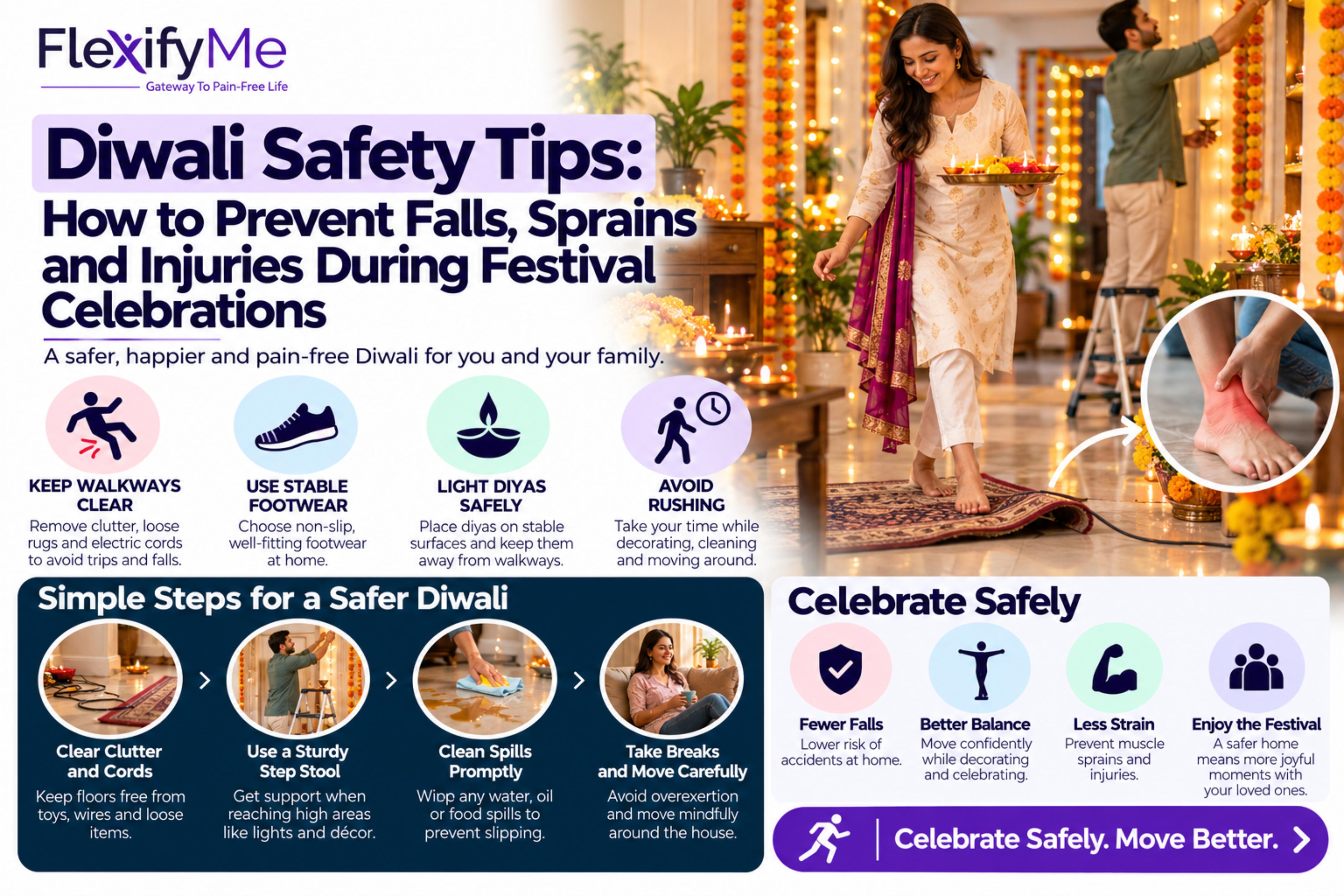
Diwali Safety in Hinjewadi, Pune: How to Prevent Falls, Sprains and Injuries During the Celebrations
Why Fall Prevention Matters During Diwali
Diwali celebrations often change the way people use their homes. Diyas are placed around rooms, rangoli decorates entrances, electrical lights run along walls, and furniture may be rearranged to accommodate guests.
These festive touches can create hazards if walkways become cluttered, floors become slippery or familiar routes are poorly lit. Children moving around excitedly and older relatives visiting an unfamiliar home may need additional precautions.
Whether you are preparing your home in Hinjewadi or welcoming guests from across Pune, a few safety checks can help make the celebrations more comfortable.
The goal is not to remove festive decorations. It is to arrange them thoughtfully, keep walking routes clear and know what to do if someone falls.
Common Diwali Hazards to Check at Home
1. Slippery Floors
Oil from a diya, spilled drinks, food or cleaning products can make a floor slippery. Rangoli powder may also affect grip on some smooth surfaces.
How to reduce the risk:
Clean spills promptly and keep people away from the affected area until it is safe.
Keep floors dry, particularly near entrances, kitchens and prayer areas.
Place decorations where people will not need to step around them.
Avoid walking across wet floors in a hurry.
Check that entrance mats are secure and do not slide.
If you use oil lamps, place them on stable, heat-resistant surfaces away from curtains, loose fabrics and busy walkways.
2. Loose Electrical Wires
String lights, extension cords and charging cables can become trip hazards when they cross doorways or walking routes.
Before guests arrive:
Route cables along walls where practical.
Use suitable cable covers or secure cables so they do not move into walkways.
Keep extension boards away from wet areas.
Avoid overloading electrical outlets.
Check that lights and cables are in good condition.
Do not leave loose wires stretched across stairs or doorways, even if the arrangement is temporary.
3. Poor Lighting
Decorative lighting can create a festive atmosphere, but dim corners, steps and thresholds may become harder to see.
Keep entrances, corridors, staircases and routes to bathrooms adequately lit. Check the lighting from the perspective of someone walking through the home rather than judging it only from the seating area.
Night-time routes deserve particular attention, especially when older relatives or children are staying over.
4. Cluttered Floors and Changed Furniture Layouts
Gift boxes, shoes, shopping bags and decorations can easily accumulate around entrances and seating areas. Furniture moved for cleaning or entertaining may also obstruct familiar walking routes.
Keep floors clear and arrange furniture so people can move between rooms without squeezing through narrow gaps. Avoid leaving objects on stair treads or in front of doorways.
5. Unsafe Climbing to Hang Decorations
Standing on chairs, buckets or stacked furniture to hang lights can increase the risk of a fall.
Use an appropriate step ladder on a firm, level surface and follow its instructions. Avoid leaning sideways to reach distant areas, and move the ladder when necessary.
If the task requires excessive stretching or feels unsafe, ask someone to help or arrange professional assistance.
A Simple Home Safety Check Before Diwali
Walk through your home before the main celebrations begin. Check the areas people are most likely to use, including entrances, living rooms, kitchens, prayer spaces and staircases.
Use this checklist:
Clear walking routes: Remove shoes, packaging, bags and other loose objects from the floor.
Secure cables: Keep electrical wires away from walkways and stairs.
Check for spills: Make sure floors are dry and that no oily or slippery patches remain.
Position diyas carefully: Use stable, heat-resistant surfaces and keep flames away from traffic routes and flammable materials.
Light steps and thresholds: Make changes in floor level easy to see.
Secure mats and rugs: Replace or reposition anything that curls up or slides.
Keep stairs clear: Do not place decorations, gifts or other objects on steps.
Arrange furniture thoughtfully: Leave enough space for people to move around comfortably.
Keep essentials accessible: Position frequently used items where people can reach them without climbing or stretching.
Pay special attention to routes that people may use at night, when visibility is lower and everyone may be tired after the celebrations.
Choose Suitable Footwear for Festive Gatherings
Footwear can affect stability, particularly on smooth or slippery surfaces.
For indoor movement during Diwali:
Choose footwear that fits properly and has a secure, non-slip sole.
Avoid worn slippers that no longer provide reliable grip.
Be cautious with new festive footwear if you have not worn it before and are unsure how stable it feels.
Avoid walking on wet or oily floors until they have been cleaned and dried.
People with reduced foot sensation or balance difficulties may need additional precautions.
If you have diabetes and reduced sensation in your feet, avoid walking barefoot where you could step on a sharp object or sustain an unnoticed injury. Check your feet regularly and seek medical advice for a wound, blister or injury that concerns you.
Elderly Fall Prevention During Diwali
Older adults may face additional challenges when visiting an unfamiliar home, particularly if the furniture layout has changed or the lighting is poor. Previous falls, balance difficulties, vision problems and certain health conditions can also affect fall risk.
A few thoughtful arrangements can help older relatives move around more comfortably.
Show Them the Layout
Point out the bathroom, bedroom, seating areas and routes between rooms. Keep these paths clear and adequately lit, particularly at night.
Provide Suitable Seating
Choose a stable chair with armrests if these make sitting down and standing up easier. Low, soft sofas may be difficult for some people to use comfortably.
Offer a seat during long celebrations or prayer rituals if standing or sitting on the floor is uncomfortable.
Keep Walking Aids Accessible
If someone uses a walking stick, walker or another mobility aid, make sure it is available and positioned safely. Do not move it out of reach to make the room look tidier.
Avoid Rushing
Allow enough time to move between rooms and use stairs. Offer assistance when needed, but do not pull or lift someone in a way that could cause loss of balance.
Take Near-Falls Seriously
A stumble or near-fall does not always mean an injury has occurred, but it is worth understanding what happened. Check whether the person felt dizzy, tripped over an object or had difficulty maintaining balance.
If near-falls are recurring, or the person seems less steady than usual, encourage a medical assessment. Do not assume that reduced balance is simply a normal part of ageing.
Stay Alert Around Diyas and Fireworks
Diyas and fireworks require precautions that go beyond preventing slips and trips.
Keep diyas on stable surfaces where they cannot easily be knocked over.
Position open flames away from curtains, clothing, paper decorations and other combustible materials.
Keep children supervised around flames and fireworks.
Maintain a clear, well-lit walking route around celebration areas.
Avoid running or rushing through crowded spaces.
Follow local rules and safety instructions for fireworks.
Do not pick up a firework that has failed to ignite or attempt to relight it. Follow the manufacturer's safety instructions and local guidance.
Burns, eye injuries and serious fire-related incidents need appropriate medical or emergency assistance.
What to Do If Someone Falls or Sprains an Ankle
A fall can result in anything from a minor bruise to a serious injury. Do not assume someone is fine simply because they can speak or initially say they feel all right.
First, Check for Serious Injury
If the person has severe pain, an obvious deformity, heavy bleeding, loss of consciousness or difficulty breathing, seek emergency assistance.
Do not move someone unnecessarily if you suspect a serious injury to the head, neck, back or hip. Keep them as comfortable as possible while waiting for help.
If an older adult has fallen and cannot get up safely, seek assistance rather than attempting to lift them by yourself.
If an Ankle or Wrist May Be Sprained
A sprain involves injury to a ligament, but it can be difficult to distinguish a sprain from a fracture without an appropriate assessment.
For a suspected minor sprain:
Stop the activity: Avoid continuing to walk or use the injured joint through significant pain.
Protect the area: Avoid movements or activities that aggravate the injury.
Use a cold pack if appropriate: Wrap it in a towel and apply it for short periods to help with pain and swelling. Never place ice directly on the skin.
Elevate the injured area: If comfortable, raise it to help manage swelling.
Seek advice when needed: A healthcare professional can assess the injury and advise on suitable care and when to resume movement.
Do not force the joint to move or assume that walking on it is safe simply because you can tolerate some weight.
When Should You Seek Medical Assessment?
Prompt medical assessment is important if:
You cannot bear weight or take a few steps after an ankle injury.
There is significant swelling, severe pain or an obvious deformity.
The injured area becomes numb, pale or unusually cold.
You suspect a fracture or the injury is getting worse.
An older adult has sustained a fall, particularly if there was a head impact.
A person taking blood-thinning medication has hit their head.
After a head injury, seek emergency care for concerning symptoms such as worsening headache, repeated vomiting, confusion, unusual drowsiness, seizure or loss of consciousness. Some complications may not be immediately obvious.
Do not delay care while waiting to see whether a serious injury improves.
Recovering After a Fall: Why Assessment Matters
Once serious injury has been ruled out, the next steps depend on the type and severity of the injury.
Some minor sprains can be managed with appropriate activity modification and a gradual return to movement. Others require medical treatment, rehabilitation or further investigation.
If you have difficulty walking, recurring ankle instability or reduced confidence after a fall, a professional assessment can help identify what needs attention.
Recovery should not be based on pain alone. Strength, mobility, balance and the ability to perform everyday activities may also need to be considered before returning to demanding activities.
How Physiotherapy May Help With Balance and Mobility
Physiotherapy may be useful for people who need support with movement, strength, balance or rehabilitation after an injury, once appropriate medical assessment has taken place.
FlexifyMe describes a process that combines AI-assisted posture and movement analysis, foot and pressure analysis, and expert clinical assessment. Its website also lists gait training and functional re-training among its physiotherapy services.
These services may help inform an individualised rehabilitation plan when appropriate. However, AI-assisted analysis is not a substitute for medical evaluation, and not every person who falls will need the same treatment.
The right approach depends on the cause of the fall, the nature of any injury and the individual's needs. Suspected fractures, serious head injuries and other emergencies require appropriate medical care rather than routine physiotherapy.
If you are searching for ankle sprain treatment in Hinjewadi, Pune or physiotherapy near me, visit the FlexifyMe official website to check its current services, listed locations and consultation options.
Frequently Asked Questions
What are the most important Diwali safety tips for preventing falls?
Keep floors dry, remove clutter, secure loose wires, light stairs and entrances, and place diyas away from walking routes. Use suitable footwear and avoid climbing on chairs or unstable furniture to hang decorations.
What should I do immediately after an ankle sprain?
Stop the activity and avoid movements that cause significant pain. Protect the injured area, use a wrapped cold pack if appropriate and elevate it if comfortable. Seek medical assessment if you cannot bear weight, have severe pain or swelling, or suspect a fracture.
My elderly parent stumbled but says they are fine. Should I be concerned?
Check whether they were injured and whether they experienced dizziness, weakness or difficulty maintaining balance. A near-fall can be a useful reason to review home hazards and consider a medical assessment, particularly if similar incidents recur. Seek prompt care if there was a head impact or other concerning symptom.
How long does an ankle sprain take to recover?
Recovery varies according to the severity of the injury and the individual's circumstances. Some mild sprains improve relatively quickly, while more serious injuries can take longer. Persistent pain, instability or difficulty walking should be assessed rather than managed according to a fixed timeline.
How can I find a physiotherapist near me after a fall?
Search for physiotherapist near me to explore local services. You can also visit the FlexifyMe website to review its listed physiotherapy services, clinic locations and consultation options. Confirm that the service is suitable for your injury and available in your area.
Make Diwali Safer With a Few Simple Precautions
A safer Diwali starts with clear walkways, secure electrical cables, dry floors and thoughtful placement of decorations. Check stairs and entrances carefully, provide suitable seating for older relatives and make sure the home is easy to navigate at night.
If someone falls, check for serious injury before helping them move. Do not dismiss persistent pain, swelling, difficulty walking or a change in balance as something that will necessarily resolve on its own.
Explore FlexifyMe's physiotherapy services: Visit the FlexifyMe official website to review its current physiotherapy services, listed locations and consultation options. If you are looking for physiotherapy near Hinjewadi, Pune, confirm availability before booking.
This article is for general information only and is not a substitute for professional medical advice, diagnosis or treatment. Seek emergency care for serious injuries, concerning symptoms after a head impact, or sudden chest pain or breathing difficulties. An inability to bear weight, significant deformity or new numbness after a fall requires prompt medical assessment.