







 ₹https://clinics.flexifyme.com/flexifyme/-in-pune/-in-hinjewadi/flexifyme-advanced-physiotherapy-clinic-in-hinjewadi-pune--7gAsKd/articles/after-dussehra-in-hinjewadi-pune-muscle-pain-relief-and-recovery-tips--e6aacb6f-5427-4a32-bddf-80132a175db7
FlexifyMe Advanced Physiotherapy Clinic, Hinjewadi, pune
Physiotherapy Clinic in Hinjewadi, Pune, Maharashtra
No 3/1, Second Floor, Hinjawadi Phase II, Rajiv Gandhi Infotech Park, Hinjewadi, pune, maharashtra - 411057Request A Call Back
FlexifyMe Advanced Physiotherapy Clinic Social Feeds in Hinjewadi, pune
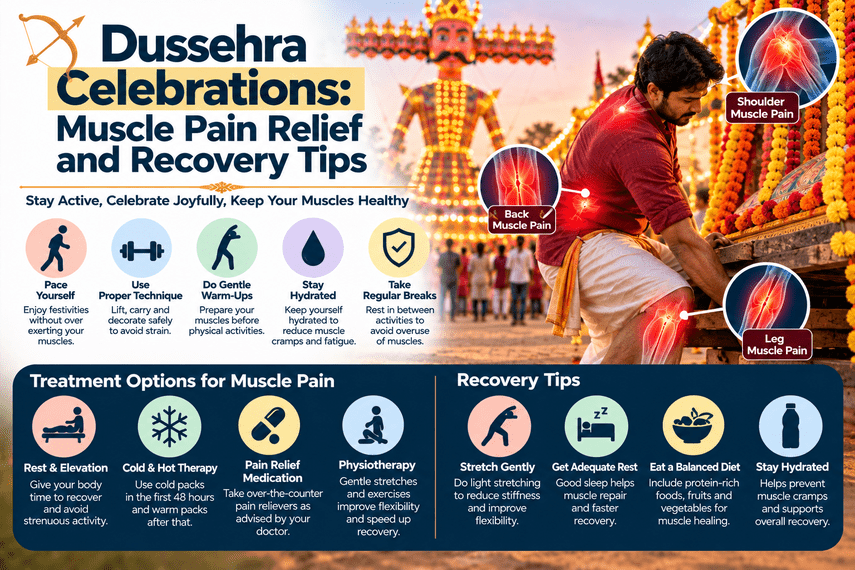
After Dussehra in Hinjewadi, Pune: Muscle Pain Relief and Recovery Tips
Introduction
The day after Dussehra can leave you feeling sore and tired. Your shoulders may ache after lifting decorations, your calves may feel heavy after hours of standing, and your back may feel uncomfortable after a long journey.
For many people in Hinjewadi and across Pune, this discomfort follows a week of more activity than usual. Walking between pandals, playing dandiya, cleaning, carrying shopping bags and spending long hours on your feet can place extra demands on your muscles.
Mild soreness often improves gradually, but a muscle strain or another medical condition may need different care. Knowing the difference can help you choose the right approach to muscle pain relief and avoid pushing through an injury.
Muscle Soreness or a Muscle Strain: How Can You Tell?
Muscle soreness and muscle strains can feel similar, but there are some differences to look out for. The symptoms below are general clues, not a diagnosis.
Delayed-onset muscle soreness commonly develops after unfamiliar exercise or activity. A strain involves injury to muscle fibres and may require a more structured recovery plan.
Do not assume that severe or localised pain is ordinary soreness. If you have significant swelling, bruising, marked weakness or difficulty walking, seek medical assessment.
How to Manage Ordinary Post-Festival Muscle Soreness
If the discomfort is mild, follows increased activity and is not accompanied by warning signs, these steps may help you feel more comfortable while your muscles recover.
1. Keep Moving Gently
Staying in bed all day is not usually necessary for ordinary muscle soreness. Short walks, comfortable daily movements and gentle joint mobility can help you manage stiffness.
Begin with activities that feel comfortable.
Take breaks if standing or walking increases your discomfort.
Avoid strenuous workouts, vigorous dancing or heavy lifting until your symptoms improve.
Do not force a movement that causes sharp pain.
Gentle movement may make stiffness feel better, but it does not guarantee faster recovery. Adjust your activity according to how you feel.
2. Use Warmth for Comfort
A warm shower or warm pack may help ease the feeling of muscle tightness. Use a comfortable temperature and protect your skin from direct heat.
Warmth is mainly for comfort. It is not a substitute for assessment if you have a suspected injury, significant swelling or worsening pain. If the pain began suddenly during activity, seek advice about suitable care rather than automatically applying heat.
3. Stretch Gently if It Feels Comfortable
Gentle stretching may help some people manage stiffness after prolonged sitting, standing or walking. Start slowly and avoid bouncing or forcing the muscle beyond a comfortable range.
If stretching increases pain, stop. A muscle strain may require a different approach, particularly during the early stages of recovery.
4. Eat Regularly and Stay Hydrated
Busy festival days can disrupt normal meals and drinking habits. Return to regular meals and drink water throughout the day, adjusting your intake for your activity level and the weather.
Normal hydration supports overall health, but dehydration is not the cause of every muscle ache or cramp. Avoid assuming that drinking excessive amounts of water or taking electrolyte supplements will resolve persistent symptoms.
5. Prioritise Sleep and Rest
A demanding festival schedule can leave you short on sleep. Give yourself enough time to rest and return to your usual routine.
Rest can support recovery, but it does not mean avoiding all movement. For ordinary soreness, comfortable daily activity may be appropriate. For a suspected strain, the type and amount of activity should depend on the injury.
How Long Should Post-Dussehra Muscle Pain Last?
There is no single recovery timeline for everyone. Ordinary muscle soreness often improves over several days, while a muscle strain may take longer depending on its severity and location.
Pay attention to how your symptoms change:
Improving soreness: Discomfort gradually becomes less noticeable and everyday movement gets easier.
Persistent pain: Symptoms that do not improve, keep returning or interfere with daily activities deserve assessment.
Worsening symptoms: Increasing pain, swelling, bruising or weakness may indicate an injury that needs medical attention.
Do not rely on a fixed number of days to decide whether an injury has healed. If the pain is severe, affects your ability to use the muscle or is not improving as expected, consult a healthcare professional.
Returning to Your Routine After Dussehra
After a busy festival, you may want to return to your usual exercise, work and household activities straight away. However, doing too much too soon can aggravate soreness or an existing injury.
Increase Activity Gradually
Start with manageable activities and increase the duration or intensity according to your comfort and recovery.
Begin with light walking or comfortable daily movement.
Avoid jumping straight into demanding workouts if you have been less active.
Increase exercise gradually instead of following a fixed percentage increase that may not suit your condition.
Reduce the workload if pain increases during or after activity.
Mild soreness can occur when you return to exercise, but sharp pain, significant weakness or worsening symptoms should not be ignored.
Resume Existing Rehabilitation Exercises Carefully
If you were already following a physiotherapy or rehabilitation programme before the festival, follow the advice provided by your physiotherapist. Do not automatically restart every exercise at the same intensity if your symptoms have changed.
If an old injury becomes painful again, or a particular joint hurts rather than the surrounding muscles feeling generally sore, seek professional guidance before increasing your workload.
When Is Muscle Pain More Than Ordinary Soreness?
Some symptoms need more attention than routine post-festival discomfort.
Arrange a medical assessment if:
Pain is concentrated in one area and does not improve.
You have significant swelling, bruising or muscle weakness.
You cannot walk normally or use the affected limb.
Back pain travels down the leg with numbness, tingling or weakness.
Symptoms are worsening rather than gradually improving.
The same pain keeps returning after similar activities.
Seek urgent medical care for new pain, swelling or warmth in one calf, especially following prolonged travel or immobility. Sudden breathlessness or chest pain requires emergency care.
Also seek urgent medical attention if you develop severe muscle pain or swelling with unusual weakness or dark, tea-coloured urine after intense activity. These can be warning signs of rhabdomyolysis, a serious condition that requires prompt assessment.
Muscle Strain Treatment: What Helps Recovery?
A muscle strain requires a different approach from ordinary post-exercise soreness. Treatment depends on the muscle involved, the severity of the injury and how much movement is affected.
Reduce Activities That Aggravate the Injury
Avoid or modify movements that cause significant pain, such as heavy lifting, jumping or forceful stretching. The amount of rest needed depends on the injury, and complete immobilisation is not necessary for every mild strain.
If you cannot bear weight comfortably, have marked swelling or suspect a serious tear, seek medical assessment before attempting exercises.
Restore Movement Gradually
As symptoms allow, gentle movement may help restore mobility. The appropriate starting point depends on the injury and may require guidance from a healthcare professional.
Do not force a stretch or continue an exercise that increases pain. A more serious injury may require a specific treatment plan.
Rebuild Strength Before Returning to Full Activity
Progressive strengthening can form an important part of rehabilitation for many muscle strains. The goal is to restore strength and function before returning to demanding activities.
A rehabilitation programme may include exercises for the affected muscle and surrounding areas, with the difficulty adjusted as recovery progresses. The exercises and progression should be appropriate for the injury rather than based on a fixed schedule.
Muscle Pain Treatment at FlexifyMe
FlexifyMe has a dedicated muscle strain treatment page describing care for muscle injuries. The published approach includes a physical examination and patient history, range-of-motion testing, controlled movement, physiotherapy exercises to restore strength, and pain-management techniques such as ice therapy and electrotherapy.
The page also notes that ultrasound or MRI may be considered when a strain is severe. Decisions about imaging should be made by an appropriate healthcare professional based on the clinical assessment.
FlexifyMe describes personalised physiotherapy options through clinic, home and online sessions. Its general physiotherapy website also outlines AI-assisted posture and movement analysis alongside expert clinical assessment. These tools may provide movement insights to support treatment planning, but they do not independently diagnose every cause of muscle pain.
The appropriate treatment depends on the individual's symptoms and assessment. Not every person with post-festival soreness needs physiotherapy, imaging or additional treatment modalities.
Frequently Asked Questions
How long should post-festival body aches last?
Ordinary muscle soreness often improves over several days, but the duration varies with the activity and the individual. If pain is severe, worsening, localised to one area or not improving, seek medical advice instead of relying on a fixed recovery timeline.
Should I rest completely or keep moving?
For mild muscle soreness, gentle movement and comfortable daily activities may help manage stiffness. A muscle strain may require temporary activity modification and a gradual return to movement. The right approach depends on the symptoms and the severity of the injury.
Does massage help with muscle pain?
Some people find gentle massage relaxing, but it is not necessary for every type of muscle pain and does not replace appropriate injury care. Avoid deep or forceful massage over a suspected injury, significant swelling or a painful, warm calf that has not been assessed.
Why am I more sore after Dussehra this year?
One possible reason is that you did more walking, standing, dancing or lifting than your body was accustomed to. However, recurring or unusually severe pain may have another cause. If the discomfort keeps returning or affects normal activities, consider getting it assessed.
How do I find a physiotherapist near me for muscle pain?
Search for physiotherapist near me or muscle pain treatment in Hinjewadi to explore local options. Choose a qualified professional who assesses your symptoms, movement and strength before recommending a treatment plan. Seek medical care first if you have warning signs of a serious injury or another medical condition.
Recover Well and Return to Your Routine Gradually
Post-Dussehra muscle soreness can follow long walks, prolonged standing, dancing and other activities that place more demand on your body than usual. Gentle movement, regular meals, hydration, adequate sleep and a gradual return to activity may help you manage ordinary discomfort.
A muscle strain or another medical condition may need a different approach. Do not push through severe or worsening pain, and seek assessment if symptoms persist or interfere with daily life.
If you need support with a muscle injury, review FlexifyMe's official muscle-strain treatment information and confirm service availability in your area before booking an appointment.
This article is for general information only and is not a substitute for personal medical advice. Seek urgent medical care for severe muscle pain with unusual weakness or dark urine, new pain and swelling in one calf, or muscle pain accompanied by sudden breathlessness or chest pain.