







 ₹https://clinics.flexifyme.com/flexifyme/-in-pune/-in-hinjewadi/flexifyme-advanced-physiotherapy-clinic-in-hinjewadi-pune--7gAsKd/articles/achilles-tendonitis-treatment-in-hinjewadi-pune-physiotherapy-for-heel-and-tendon-pain--4024c938-9f62-4361-a768-7674d96d47e9
FlexifyMe Advanced Physiotherapy Clinic, Hinjewadi, pune
Physiotherapy Clinic in Hinjewadi, Pune, Maharashtra
No 3/1, Second Floor, Hinjawadi Phase II, Rajiv Gandhi Infotech Park, Hinjewadi, pune, maharashtra - 411057Request A Call Back
FlexifyMe Advanced Physiotherapy Clinic Social Feeds in Hinjewadi, pune
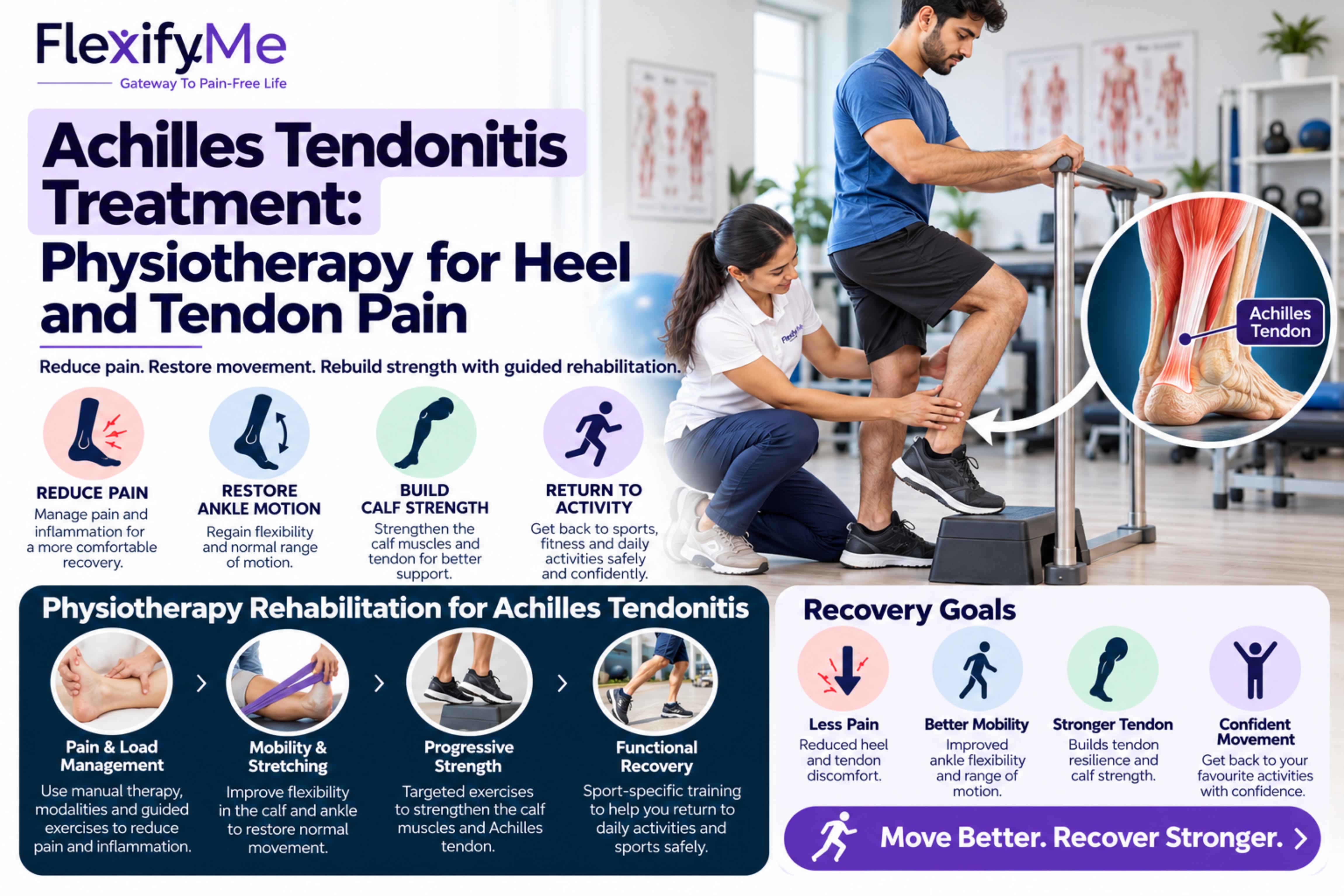
Achilles Tendonitis Treatment in Hinjewadi, Pune: Physiotherapy for Heel and Tendon Pain
Pain at the back of your heel can make everyday activities such as walking, climbing stairs, or getting out of bed uncomfortable. You may notice stiffness during your first few steps in the morning, discomfort after exercise, or tenderness around the tendon connecting your calf muscles to your heel.
Achilles tendon pain can develop when the tendon is exposed to more activity or loading than it can comfortably manage. This may happen after increasing your walking or running distance, returning to exercise after a break, or spending more time on your feet than usual.
If you are experiencing these symptoms in Hinjewadi, Pune, understanding the cause of your discomfort is an important first step. Achilles tendonitis treatment often involves adjusting aggravating activities, gradually rebuilding tendon strength, and following an exercise plan suited to your symptoms and physical goals. A physiotherapist can help assess your movement and guide your rehabilitation.
What Is Achilles Tendinopathy?
The Achilles tendon is a strong band of tissue that connects the calf muscles to the heel bone. It helps you push off the ground when walking, running, jumping, and climbing stairs.
The term Achilles tendonitis is commonly used to describe pain in this area. However, persistent Achilles tendon problems are often referred to as Achilles tendinopathy, which describes symptoms and changes associated with the tendon that may develop when its capacity does not match the demands placed on it.
Possible symptoms include:
Pain or tenderness along the Achilles tendon.
Stiffness around the back of the heel, particularly after rest.
Discomfort during walking, running, jumping, or climbing stairs.
Tenderness when touching the affected area.
Swelling or thickening around the tendon in some cases.
These symptoms can have different causes, so they should not automatically be attributed to Achilles tendinopathy. A suitable clinical assessment can help determine whether the tendon is responsible for your pain and whether further medical investigation is needed.
Mid-Portion and Insertional Achilles Tendinopathy
Achilles tendon pain can occur in different areas, and the location can influence the rehabilitation approach.
Mid-portion Achilles tendinopathy: Pain is generally felt along the tendon above the heel bone.
Insertional Achilles tendinopathy: Pain occurs where the tendon attaches to the heel bone. Activities or positions that compress the tendon against the heel may aggravate symptoms.
These conditions may require different exercise modifications. For example, an exercise involving a deep heel drop may not be suitable for someone with insertional pain during the early stages of rehabilitation. A physiotherapist can help determine which movements and loading levels are appropriate.
Why Does Achilles Tendon Pain Develop?
Achilles tendon pain can occur when the demands placed on the tendon increase faster than it can adapt. This does not necessarily mean that a single activity caused damage. Several factors may contribute.
Sudden Changes in Activity
Increasing running distance, adding hill training, starting jumping exercises, or returning to sport after a break can place additional demands on the tendon. Gradually adjusting activity levels may help reduce the risk of aggravating symptoms.
Repetitive Loading
Walking, running, and jumping repeatedly load the Achilles tendon. If recovery between demanding activities is insufficient, symptoms may develop or persist.
Calf Strength and Movement Capacity
The calf muscles and Achilles tendon work together during movement. A rehabilitation programme may include strengthening exercises and functional movement training to help improve the capacity needed for daily activities or sport.
Footwear and Training Habits
Changes in footwear, training surfaces, exercise frequency, or the amount of time spent standing may affect how comfortable activity feels. These factors should be considered alongside symptoms, strength, training history, and other possible causes of heel pain.
Why Complete Rest Is Not Always the Answer
When the Achilles tendon hurts, stopping every activity may seem like the safest option. Reducing activities that aggravate the pain can be helpful, particularly when symptoms are severe. However, prolonged inactivity may also reduce the strength and capacity needed for a gradual return to normal activities.
The aim is not to push through pain or ignore symptoms. Instead, activity modification and progressive loading can help rebuild the tendon’s ability to tolerate physical demands when Achilles tendinopathy has been appropriately assessed.
For example, a person who experiences pain while running may need to reduce running volume temporarily and choose activities that are more comfortable. As symptoms and strength improve, activities can be reintroduced gradually.
The appropriate level of activity varies from person to person. Severe pain, worsening symptoms, or uncertainty about the diagnosis should be assessed by a healthcare professional before starting a loading programme.
How Physiotherapy Can Help With Achilles Tendonitis Treatment
Physiotherapy can help people with Achilles tendon pain by assessing symptoms, identifying relevant movement or strength limitations, and developing a suitable rehabilitation plan.
1. Assessment of Pain and Movement
A physiotherapist may ask when the pain started, which activities aggravate it, and whether you have recently changed your exercise routine. The assessment may also consider ankle movement, calf strength, walking patterns, and the location of tenderness.
This helps guide the next steps and determine whether further medical assessment is necessary.
2. Managing Activities That Aggravate Symptoms
Temporarily modifying activities may help keep symptoms manageable while rehabilitation begins. Depending on your condition, this could involve adjusting running distance, reducing jumping exercises, limiting steep uphill routes, or spacing demanding workouts further apart.
The aim is to find an appropriate activity level rather than automatically stopping all movement. Any changes should be based on your symptoms and the advice of your treating professional.
3. Progressive Strengthening Exercises
Exercise-based rehabilitation is an important part of managing Achilles tendinopathy. A suitable programme may gradually increase the demands placed on the calf muscles and tendon.
Possible exercises include:
Calf raises with both legs: A starting option for some people who can perform the movement comfortably.
Single-leg calf raises: A progression that places more demand on one leg.
Calf strengthening with a bent knee: An exercise variation that changes the contribution of the calf muscles.
Progressive resistance exercises: Additional resistance may be introduced as strength and tolerance improve.
Not every exercise is appropriate for every person or stage of recovery. The starting position, range of movement, repetitions, resistance, and frequency should be adjusted to the individual.
4. Adapting Exercises for Insertional Pain
People with pain where the Achilles tendon attaches to the heel bone may find that deep ankle movements aggravate their symptoms.
In such cases, a physiotherapist may modify the exercise range and avoid positions that create excessive discomfort. For example, beginning calf raises on a level surface rather than lowering the heel below a step may be more suitable for some people.
Exercise selection should follow an assessment rather than a one-size-fits-all online routine.
5. Gradual Return to Walking, Running, and Sport
Returning to your usual activity level is an important part of rehabilitation. Increasing activity too quickly may aggravate symptoms, while avoiding movement indefinitely may make it harder to rebuild strength and tolerance.
A gradual return may involve increasing activity in manageable steps and monitoring how the tendon responds during exercise and afterwards. The pace will depend on symptom severity, strength, activity requirements, and progress over time.
What to Expect From an Achilles Tendinopathy Exercise Plan
An Achilles tendinopathy exercise plan should be tailored to your current symptoms, physical capacity, and goals. It may begin with manageable strengthening exercises and progress towards more demanding movements as your tolerance improves.
Some people may benefit from changes to their footwear or temporary use of a heel raise, but these measures are not necessary for everyone. A healthcare professional can help determine whether such adjustments are appropriate.
Consistency matters, but progression should not come at the expense of worsening symptoms. If an exercise causes sharp pain, substantially increases discomfort, or leaves you struggling to walk normally, stop that exercise and seek guidance.
Recovery can take time, particularly when symptoms have been present for a while. There is no single timeline that applies to everyone. The diagnosis, duration of symptoms, activity demands, and response to rehabilitation all influence progress.
How FlexifyMe Approaches Physiotherapy Assessment
FlexifyMe offers physiotherapy through online consultations and clinic locations. Its assessment process may include AI-assisted posture analysis, gait and movement analysis, foot and pressure analysis, and expert clinical evaluation. Treatment plans are tailored to individual needs and assessment findings.
For someone experiencing heel or ankle discomfort, understanding movement patterns and foot loading may form part of a broader assessment. However, these assessments alone do not establish a diagnosis of Achilles tendinopathy.
FlexifyMe also lists physiotherapy services and therapies such as therapeutic exercise, manual therapy, dry needling, ultrasound therapy, IFT and TENS, cryotherapy, and kinesiology taping on selected service. Their availability and suitability for Achilles tendon pain should be confirmed with the treating physiotherapist. These therapies should not be presented as a guaranteed or Achilles-specific treatment programme.
If you are looking for ankle pain treatment in Hinjewadi, Pune, check FlexifyMe’s official clinic listings to confirm the locations and services currently available to you. A physiotherapist can discuss your symptoms, assessment findings, and suitable next steps.
When Should You Seek Medical Assessment?
Pain at the back of the heel can have several causes, and some require prompt attention.
Seek urgent medical assessment if you experience a sudden snap or popping sensation at the back of the ankle, especially if it is followed by sudden pain, difficulty pushing off, or an inability to walk normally. These symptoms may indicate an Achilles tendon rupture.
Arrange a medical assessment if you have persistent or worsening pain, substantial swelling, redness or warmth, pain at rest, or symptoms that interfere with normal walking. Do not begin strenuous calf-loading exercises until a serious injury has been ruled out when these warning signs are present.
Frequently Asked Questions
What is the best Achilles tendonitis treatment?
Treatment depends on the cause and severity of the symptoms. For confirmed Achilles tendinopathy, activity modification and a progressive strengthening programme are commonly used. A physiotherapist or other qualified healthcare professional can help determine the appropriate approach.
Can Achilles tendinopathy exercises help with heel pain?
Appropriately selected exercises can help improve calf strength and the tendon’s ability to tolerate loading. However, heel pain can have other causes, and exercises should be chosen after an appropriate assessment.
Should I stretch my Achilles tendon?
Gentle mobility exercises may be suitable for some people, but aggressive stretching can aggravate symptoms, particularly when pain occurs at the tendon’s attachment to the heel bone. The right approach depends on the diagnosis and your response to movement.
Can I continue walking or running with Achilles tendon pain?
It depends on the severity and cause of the pain. Some people can continue modified activities, while others need to reduce or temporarily stop particular movements. Avoid pushing through sharp or worsening pain, and seek assessment if walking becomes difficult.
How long does Achilles tendonitis take to improve?
There is no universal recovery timeline. Progress depends on factors such as symptom duration, the severity of the problem, activity demands, and response to treatment. Persistent cases may require a longer period of rehabilitation and gradual progression.
How can I find a physiotherapist near me for Achilles tendon pain?
Search for physiotherapist near me or physiotherapy near me and look for a qualified professional who can assess your heel and ankle symptoms, explain the rehabilitation options, and tailor exercises to your needs. If you are considering FlexifyMe, check its official website for current clinic locations and available services.
Take the Next Step Towards Managing Achilles Tendon Pain
Achilles tendon pain can interfere with walking, exercise, and everyday routines. Understanding the cause of the symptoms and choosing an appropriate rehabilitation approach can help you work towards better movement and function.
If you are experiencing heel or tendon pain in Hinjewadi, Pune, consider arranging an assessment with a qualified physiotherapist. FlexifyMe offers online physiotherapy and in-clinic services at listed locations. Visit the official website www.flexifyme.com to check clinic availability and discuss whether its services are suitable for your needs.
This article is for general information only and is not a substitute for individual medical advice. Sudden pain with a snap at the back of the ankle or difficulty pushing off requires urgent medical assessment.