







 ₹https://clinics.flexifyme.com/flexifyme/pune/hinjewadi/flexifyme-advanced-physiotherapy-clinic-in-hinjewadi-pune--7gAsKd/articles/slipped-disc-treatment-without-surgery-in-hinjewad--a777634d-442f-47b0-8f99-7014d012b93b
FlexifyMe Advanced Physiotherapy Clinic, Hinjewadi, pune
Physiotherapy Clinic in Hinjewadi, Pune, Maharashtra
No 3/1, Second Floor, Hinjawadi Phase II, Rajiv Gandhi Infotech Park, Hinjewadi, pune, maharashtra - 411057Request A Call Back
FlexifyMe Advanced Physiotherapy Clinic Social Feeds in Hinjewadi, pune
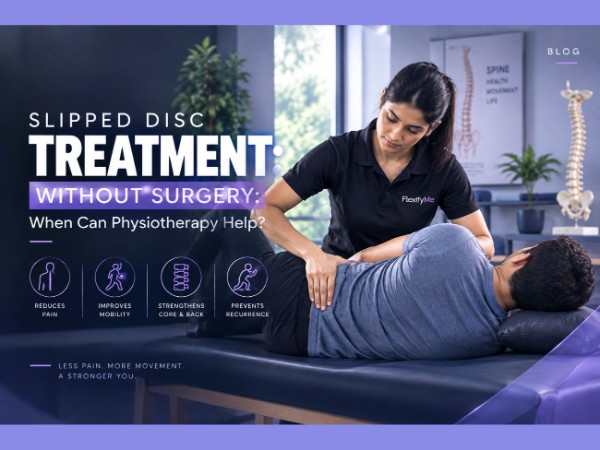
Slipped Disc Treatment Without Surgery in Hinjewadi, Pune: When Can Physiotherapy Help?
Few back problems create as much anxiety as being told you have a "slipped disc". The name itself can make people imagine surgery, prolonged bed rest and months away from normal activities.
The reality is usually less dramatic.
A spinal disc does not literally slip out of place. A disc can bulge or herniate, allowing some of its inner material to extend through a weakened area of the outer layer. Depending on the location and severity, this can irritate nearby nerves and cause back pain, leg pain or symptoms commonly described as sciatica.
For many people, slipped disc treatment without surgery is possible. Conservative care may include staying appropriately active, managing symptoms, gradually restoring movement and rebuilding strength. Physiotherapy can form part of this approach when it is appropriate for the individual's symptoms.
FlexifyMe's official website lists back pain, sciatica and disc bulge-related conditions among the problems addressed through its physiotherapy services. Its approach includes assessment, personalised exercises and rehabilitation under physiotherapist guidance.
When is a slipped disc an emergency?
Most cases do not require emergency treatment. However, certain symptoms need immediate medical assessment.
Seek emergency medical care if back pain is accompanied by:
New difficulty passing urine or loss of bladder control
Loss of bowel control
Numbness around the groin, genitals, buttocks or inner thighs
Significant or worsening weakness in both legs
Rapidly progressing weakness in one or both legs
These symptoms can indicate serious nerve compression, including cauda equina syndrome, and should not be managed by waiting for a physiotherapy appointment.
You should also seek prompt medical assessment if back pain follows significant trauma or is accompanied by fever, unexplained weight loss or other symptoms that concern you.
What does a herniated or bulging disc feel like?
Symptoms vary depending on the location and degree of nerve irritation.
Common symptoms can include:
Lower back pain
Pain travelling from the lower back into the buttock, thigh, calf or foot
Burning, tingling or pins and needles in the leg
Numbness in part of the leg or foot
Pain that becomes worse with certain positions or activities
Difficulty sitting for long periods
Weakness affecting particular movements in more significant cases
When nerve irritation causes pain that travels down the leg, it is often referred to as sciatica.
Importantly, a disc bulge seen on an MRI does not automatically mean it is the source of your pain. Disc changes can also occur in people who have no symptoms. This is why an assessment should consider your symptoms and physical findings rather than relying on an imaging report alone.
When can physiotherapy help with a slipped disc?
Physiotherapy may be appropriate when symptoms are stable and there are no emergency warning signs or significant progressive neurological problems.
When back pain is affecting everyday movement
Pain can make you avoid bending, walking, sitting or lifting. Avoiding movement completely can make it harder to regain normal function.
A physiotherapist can help identify movements and activities that are currently tolerated and gradually build your capacity.
When sciatica is limiting activity
If a disc problem is irritating a nerve, the focus may be on managing symptoms while maintaining appropriate movement and gradually restoring function.
Sciatica physiotherapy is not about forcing the nerve or spine into painful positions. The programme should be based on your symptoms and response to movement.
When symptoms have stopped improving
Some people improve initially but then reach a point where progress stalls. At this stage, a structured rehabilitation programme can help address movement restrictions, strength and activity tolerance.
When disc problems keep returning
Repeated episodes can affect confidence as much as they affect the back.
Once the acute symptoms have settled, rehabilitation can focus on improving strength, movement capacity and tolerance for the activities that matter to you.
When surgery is not currently indicated
For many people, non-surgical management is the initial approach. Physiotherapy can be part of that process, alongside appropriate medical care when required.
FlexifyMe's official website describes its physiotherapy approach as personalised care based on assessment, therapeutic exercises, movement-based rehabilitation and progress monitoring.
What does non-surgical disc treatment involve?
There is no single exercise or technique that fixes every disc problem. Treatment depends on your symptoms, examination findings and stage of recovery.
Early stage: reduce irritation and keep moving
The first objective is usually to find a manageable level of activity rather than staying in bed.
Depending on your symptoms, this may involve:
Short, comfortable walks
Changing positions regularly
Avoiding activities that sharply increase leg symptoms
Finding comfortable sitting and sleeping positions
Gentle movements within your tolerated range
Gradually returning to normal daily activities
Extended bed rest is generally not the goal. Too much inactivity can contribute to stiffness, reduced strength and loss of confidence in movement.
Middle stage: restore movement and strength
As symptoms become more manageable, rehabilitation can progress.
A physiotherapist may work on:
Gradual return to bending and lifting
Trunk and hip strengthening
Movement control
Functional activities
Activity tolerance
Nerve-related movement where appropriate
The objective is to move from simply managing symptoms to building the capacity needed for everyday life.
Later stage: rebuild physical capacity
Once normal movement is becoming easier, rehabilitation can become more demanding.
This may involve progressively strengthening the muscles around the trunk and hips and practising movements relevant to your work, exercise or daily activities.
For someone who sits at a desk, that might mean improving tolerance for prolonged sitting and regular movement. For someone who lifts at work, the focus may eventually include progressive lifting and movement practice.
The right rehabilitation programme is individual rather than based only on the level of the disc mentioned on an MRI report.
Can physiotherapy treat an L4-L5 disc problem?
The L4-L5 level is one of the commonly discussed areas of the lower spine. However, knowing that a scan shows an L4-L5 disc bulge or herniation does not by itself determine the treatment.
Symptoms, neurological findings, functional limitations and the relationship between the imaging and your symptoms all matter.
If you have been given an L4-L5 diagnosis, a physiotherapy assessment can help determine what movements and activities are appropriate for your current condition.
FlexifyMe's official website lists disc bulge, back pain and sciatica-related care within its physiotherapy offering.
How long does a herniated disc take to improve?
Recovery varies considerably.
Some people experience meaningful improvement within several weeks, while others need longer, particularly when symptoms have been present for a long time or nerve symptoms are involved.
A few points are important:
Pain may improve before numbness or weakness
Leg symptoms can take longer to settle than back pain
Returning to heavy lifting or sport may require more rehabilitation than returning to normal walking
Recovery should be judged by symptoms and function, not just by what a future scan might show
A scan does not need to look "normal" for you to feel and function better.
Do you need an MRI for a slipped disc?
Not necessarily.
An MRI may be appropriate when there are significant neurological symptoms, concerning clinical findings, persistent symptoms that are not improving, or when a specialist is considering further treatment.
However, getting an MRI does not automatically mean you need surgery.
Imaging findings need to be interpreted alongside your symptoms and clinical examination.
This is particularly important because disc bulges and other age-related spinal changes can appear on scans in people without significant back pain.
When might surgery be considered?
Physiotherapy can be appropriate for many people, but it should not delay necessary medical or surgical assessment.
A spine specialist may consider surgery when there is:
Significant or progressive neurological weakness
Cauda equina syndrome
Persistent, severe symptoms that have not responded adequately to appropriate conservative treatment
Significant functional impairment where further intervention may provide a benefit
The decision depends on the individual's symptoms, examination, imaging and response to treatment.
Non-surgical treatment is not about avoiding surgery at any cost. It is about using the appropriate treatment for the person's actual condition.
Can you exercise with a slipped disc?
In many cases, appropriate exercise is part of recovery. The important word is appropriate.
A movement that helps one person may aggravate another person's symptoms. Early rehabilitation therefore usually focuses on movements that are tolerated and then progresses gradually.
Depending on your presentation, rehabilitation may eventually include:
Walking
Gentle mobility exercises
Core and trunk strengthening
Hip strengthening
Functional movement exercises
Progressive resistance training
Avoid using pain as a competition. More exercise is not automatically better exercise.
If a particular movement causes a significant increase in leg pain, numbness or weakness, stop and seek professional guidance.
What happens during physiotherapy for a disc problem?
A physiotherapy assessment can help establish what is contributing to your symptoms and what activities you can safely perform.
FlexifyMe describes its online physiotherapy process as beginning with a guided assessment, followed by a personalised plan using therapeutic exercises and movement-based rehabilitation. It also describes one-to-one sessions and ongoing progress monitoring.
Depending on your presentation, the assessment may consider:
Your pain pattern
How symptoms started
Whether symptoms travel into the leg
Movement limitations
Strength and functional ability
Your work and daily activities
Previous episodes
Your goals for recovery
The resulting rehabilitation plan can then be adjusted as your symptoms and function change.
Frequently Asked Questions
Can a slipped disc heal without surgery?
Yes, many people with disc herniation improve without surgery. Symptoms can settle with time and appropriate conservative management. The right approach depends on the individual's symptoms and clinical findings.
Is physiotherapy good for a slipped disc?
Physiotherapy can be useful for appropriate disc-related presentations. Treatment may focus on symptom management, maintaining movement, progressive strengthening and returning to normal activities. FlexifyMe lists back pain, sciatica and disc bulge-related problems among its physiotherapy services.
Is walking good for a slipped disc?
For many people, comfortable walking is a useful way to stay active during recovery. Start with a manageable duration and increase gradually if symptoms remain stable. If walking significantly increases leg pain or neurological symptoms, seek professional guidance.
Which exercises should I avoid with a slipped disc?
There is no universal list of exercises that everyone with a disc problem must avoid. Activities that significantly aggravate your symptoms should generally be modified, particularly during an acute flare. A physiotherapist can help determine which movements are appropriate for you.
Does a disc bulge always cause pain?
No. Disc bulges can occur in people without back pain. This is why an MRI finding should be considered alongside symptoms and clinical examination rather than treated as the diagnosis by itself.
Can I get non-surgical slipped disc treatment in Hinjewadi?
Look for a physiotherapy service that begins with an assessment, considers your neurological symptoms and functional limitations, and provides a progressive rehabilitation plan. FlexifyMe provides physiotherapy for back pain and disc-related conditions, with personalised rehabilitation guided by physiotherapists.
Non-surgical treatment can be a genuine path to recovery
Being told you have a slipped disc does not automatically mean that surgery is next.
For many people, recovery involves managing symptoms, staying appropriately active, restoring movement and progressively rebuilding strength. Physiotherapy can support this process when the presentation is suitable for conservative care.
If back pain is travelling into your leg, symptoms keep returning, or a disc diagnosis has left you unsure about what to do next, an individual assessment is more useful than simply following a generic exercise list.
FlexifyMe offers personalised physiotherapy for back pain and disc-related conditions, with assessment, guided exercises and rehabilitation designed around individual recovery needs.
If you are searching for slipped disc treatment without surgery in Hinjewadi, Pune, speak with a qualified physiotherapist to understand whether conservative rehabilitation is appropriate for you and what your next step should be.
This article is for general information and is not a substitute for personal medical advice. Seek emergency medical care for new bladder or bowel problems, numbness around the groin or significant/progressive weakness in the legs.