







 ₹https://clinics.flexifyme.com/flexifyme/pune/hinjewadi/flexifyme-advanced-physiotherapy-clinic-in-hinjewadi-pune--7gAsKd/articles/post-fracture-rehabilitation-in-hinjewadi-pune-phy--d3bbfd95-d615-4e45-8006-23145bbee0e3
FlexifyMe Advanced Physiotherapy Clinic, Hinjewadi, pune
Physiotherapy Clinic in Hinjewadi, Pune, Maharashtra
No 3/1, Second Floor, Hinjawadi Phase II, Rajiv Gandhi Infotech Park, Hinjewadi, pune, maharashtra - 411057Request A Call Back
FlexifyMe Advanced Physiotherapy Clinic Social Feeds in Hinjewadi, pune
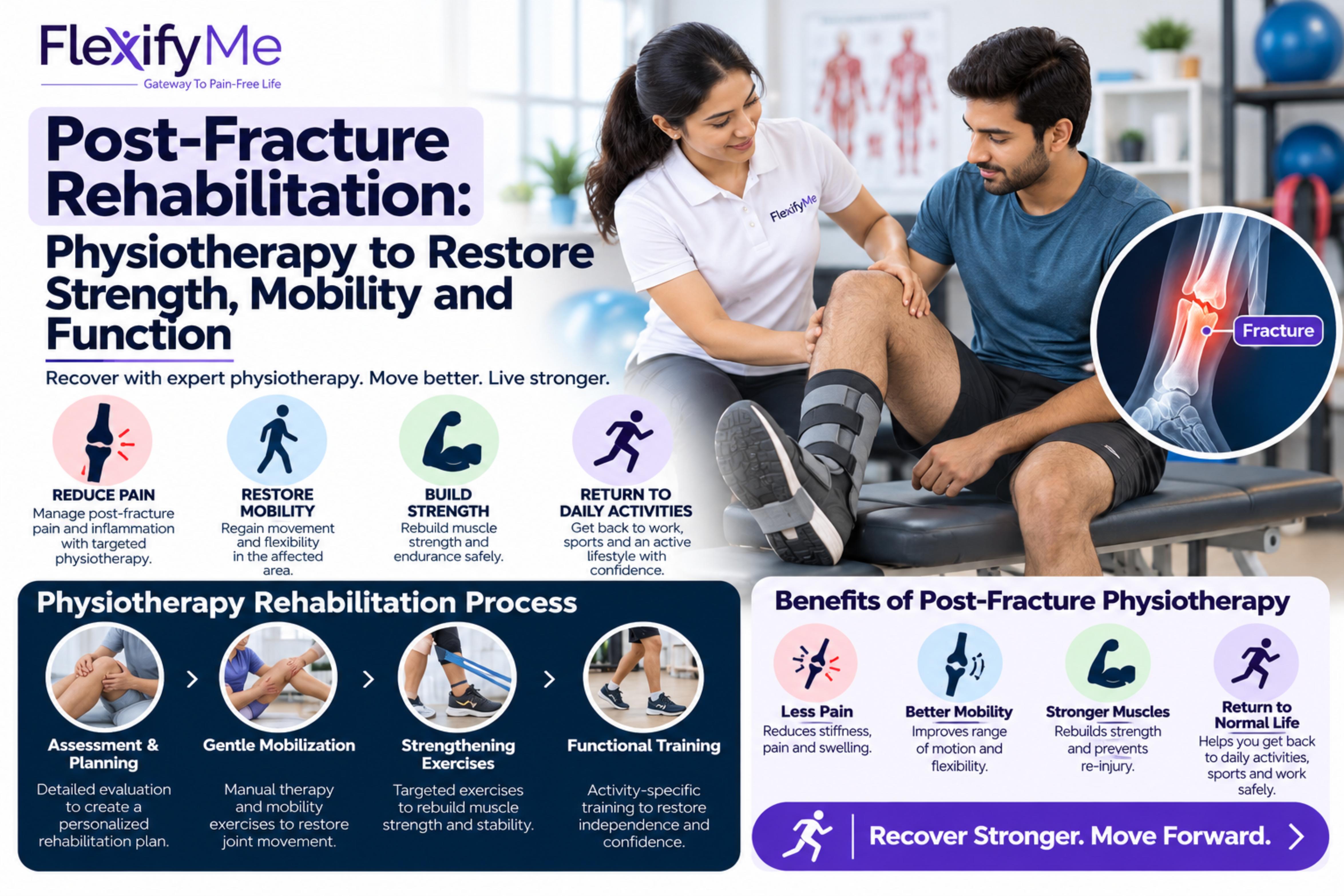
Post-Fracture Rehabilitation in Hinjewadi, Pune: Physiotherapy to Restore Strength, Mobility and Function
Having a cast removed can feel like a major milestone after a fracture. However, the affected limb may still feel stiff, weak, swollen, or unfamiliar. Moving a joint, gripping a cup, climbing stairs, or putting weight through a leg may be more difficult than expected.
These changes can occur after a period of immobilisation. Although the bone may be healing well, the surrounding muscles, joints, and soft tissues may need time and appropriate rehabilitation to regain movement and strength.
If you are looking for post-fracture rehabilitation in Hinjewadi, Pune, understanding what happens after a cast or splint is removed can help you prepare for the next stage of recovery. The right approach depends on the fracture, the treatment received, and the restrictions set by your treating doctor.
Why Movement and Strength Can Be Affected After a Fracture
A fracture affects the bone, but the period of reduced movement can also affect the surrounding limb. The extent of these changes varies depending on the bone involved, the severity of the injury, the duration of immobilisation, and the person's overall health.
Common challenges include:
Muscle weakness: Reduced use of a limb can lead to loss of strength and endurance.
Joint stiffness: Joints may feel restricted after being held in a cast or splint.
Swelling: Some swelling can persist after immobilisation, depending on the injury and stage of healing.
Reduced movement control: A limb may feel less coordinated when you begin using it again.
Changes in daily function: Activities such as walking, gripping, reaching, or climbing stairs may require practice.
Reduced confidence: Fear of pain or reinjury may make it difficult to resume normal activities.
These difficulties do not automatically mean that the fracture has healed incorrectly. However, persistent or worsening symptoms should be discussed with your treating healthcare professional.
What to Confirm Before Starting Post-Fracture Rehabilitation
Rehabilitation needs to match the stage of bone healing and any restrictions associated with the injury or surgery. Your treating doctor or surgeon's instructions take priority over general exercise advice.
Before beginning or progressing rehabilitation, confirm the following.
1. Your Fracture and Healing Status
Ask your treating clinician whether the fracture is healing as expected and which activities are appropriate at this stage. The fact that a cast has been removed does not necessarily mean that the bone is ready for unrestricted loading.
2. Your Weight-Bearing Instructions
If the fracture involves the leg, ankle, or foot, find out whether you can put full weight on the affected limb or need to follow partial or non-weight-bearing restrictions.
Do not start walking exercises or increase weight through the limb beyond the level your clinician has approved.
3. Any Movement Restrictions
Some fractures require limits on particular movements or ranges of motion. These restrictions may also apply after surgery, depending on the injury and treatment.
Your rehabilitation plan should respect these instructions and progress only when appropriate.
4. Follow-Up Appointments
Your treating clinician may recommend follow-up assessments to review healing and function. Attend these appointments and ask when it is appropriate to increase your activity or begin specific strengthening exercises.
If you are unsure what you are allowed to do, seek clarification before starting a new exercise routine.
What Does Post-Fracture Rehabilitation Involve?
The rehabilitation process is individualised. It may involve improving movement, managing swelling, rebuilding strength, and practising activities that matter to your daily life. Not everyone follows the same sequence, and progress depends on the fracture and medical restrictions.
Phase 1: Gradually Restore Movement
After immobilisation, the affected joints may feel stiff and movement may be limited. Once your treating clinician confirms which movements are permitted, rehabilitation may include gentle range-of-motion exercises.
Depending on the fracture, the plan may focus on the joint near the injury, the joints above and below it, or other areas affected by reduced movement.
Exercises should stay within the permitted range and should not force the joint through sharp or worsening pain. Some injuries require more cautious progression than others.
Phase 2: Manage Swelling and Sensitivity
Swelling or sensitivity may remain after a cast or splint is removed. Your clinician may recommend appropriate movement, positioning, or other measures depending on the injury and medical advice.
Skin that has been covered for several weeks may also feel dry or sensitive. Handle the area gently and follow any wound-care instructions if surgery was involved.
New or increasing swelling, redness, warmth, or fever should not be treated as routine recovery symptoms without medical advice.
Phase 3: Rebuild Strength
Reduced activity can affect the muscles around the injured area and throughout the limb. Once loading and strengthening are permitted, a rehabilitation plan may gradually introduce exercises to rebuild strength and endurance.
Depending on the fracture, this may include:
Gentle muscle activation exercises.
Progressive resistance exercises.
Exercises for grip strength or arm function after an upper-limb fracture.
Leg strengthening after an approved lower-limb fracture.
Exercises that improve control during everyday movements.
The exercises, resistance, and progression should reflect the type of fracture, healing status, symptoms, and instructions from the treating clinician.
Phase 4: Practise Everyday Activities
Strength and joint movement are important, but recovery also involves regaining the ability to carry out daily tasks.
For an upper-limb fracture, rehabilitation may focus on activities such as gripping, carrying light objects, reaching, or performing suitable hand movements.
For a lower-limb fracture, functional rehabilitation may involve practising transfers, walking, stairs, and balance exercises when these activities have been cleared by the treating clinician.
The goal is to build the capacity needed for everyday life without exceeding the limits of the healing injury.
Phase 5: Rebuild Confidence and Activity Tolerance
Even when movement starts to improve, you may feel cautious about using the injured limb. This can be particularly noticeable when returning to longer walks, uneven surfaces, work tasks, or recreational activities.
Gradual, supervised practice can help you become more comfortable with activities that are appropriate for your stage of recovery. The pace should be based on healing, strength, balance, and your response to activity rather than a fixed timetable.
How Physiotherapy Can Support Recovery After a Fracture
Physiotherapy may help address stiffness, weakness, movement limitations, and functional difficulties after a fracture, once the treating clinician has confirmed which activities are safe.
A physiotherapist can assess your current movement and strength, consider your medical restrictions, and help develop an appropriate rehabilitation plan.
Movement and Mobility Exercises
Suitable exercises may help improve joint movement and support the return to daily activities. The approach depends on the injured area and any restrictions that remain in place.
Progressive Strengthening
Strengthening exercises can be introduced when permitted and progressed according to your ability and the requirements of the injury. The aim is to improve the function of the affected limb without placing it under an unsuitable load.
Gait and Functional Training
After certain lower-limb fractures, a person may need guidance to improve walking technique, balance, or the use of prescribed walking aids. Gait training should be introduced only when it is consistent with the treating clinician's weight-bearing and movement instructions.
Personalised Home Exercises
A home exercise plan may help you continue appropriate rehabilitation between supervised sessions. It should clearly explain which movements are permitted and how to perform them safely.
If an exercise causes sharp pain, a sudden change in function, or a noticeable worsening of symptoms, stop and seek advice from your treating professional.
How FlexifyMe Approaches Physiotherapy and Rehabilitation
FlexifyMe offers post-surgery rehabilitation with personalised treatment plans based on assessment findings, symptoms, medical history, and recovery goals. Assessment may include clinical evaluation and AI-assisted posture and movement analysis.
If you are considering FlexifyMe for rehabilitation in Hinjewadi, Pune, check the official website for current clinic locations and available services. Ask whether the clinic can accommodate your specific injury, any surgical precautions, and your current weight-bearing or movement restrictions before booking.
FlexifyMe also lists physiotherapy at home and online physiotherapy options in selected service areas. Confirm local availability and suitability, particularly if travel is difficult or your mobility remains restricted.
How Long Does Post-Fracture Rehabilitation Take?
There is no single recovery timeline that applies to every fracture. Bone healing and the return of normal movement, strength, and function are related but separate parts of recovery.
The time needed depends on several factors, including:
The bone and type of fracture.
The severity of the injury.
Whether surgery was required.
The duration of immobilisation.
Your age, general health, and other medical factors.
The movement and weight-bearing restrictions that remain in place.
Your progress with rehabilitation.
Some people regain everyday function relatively quickly after restrictions are lifted, while others need a longer period of rehabilitation. More complex injuries and fractures involving major joints may require additional support to restore function.
Rather than comparing your progress with someone else's recovery, discuss your movement, strength, symptoms, and activity goals with your treating clinician. These factors can help guide the next stage of rehabilitation.
When Should You Contact Your Doctor?
Some discomfort and stiffness may occur during recovery, but certain symptoms need prompt medical attention.
Contact your treating clinician if you experience:
Increasing or worsening pain rather than gradual improvement.
New or increasing swelling, redness, or warmth.
Fever or other signs that may indicate infection.
A sudden reduction in movement you previously had.
New numbness or tingling.
A limb that becomes unusually cold, pale, or changes colour.
A sudden loss of function or a feeling that something has given way.
Seek urgent medical care for severe symptoms, significant changes in circulation or sensation, or any sudden deterioration that concerns you. Do not attempt to push through these symptoms with additional exercises.
Frequently Asked Questions
Why is my joint stiff after the cast comes off?
Reduced movement during immobilisation can contribute to joint stiffness and weakness. The extent varies with the injury and the duration of immobilisation. Appropriate movement exercises may help once your treating clinician confirms that they are safe.
Should physiotherapy after a fracture hurt?
Some discomfort may occur when movement and strength are being rebuilt, but sharp or escalating pain should not be ignored. The appropriate exercise intensity depends on the injury, healing status, and medical restrictions. Ask your treating professional how to respond to pain during rehabilitation.
Is it too late to start rehabilitation if I waited several months?
It is not necessarily too late to seek help. The appropriate approach depends on the fracture, current healing status, symptoms, and any complications. A clinical assessment can help determine what rehabilitation may still be useful and whether further medical review is needed.
Do I need physiotherapy if my fracture has healed?
Not everyone needs the same level of rehabilitation. Some people regain function with routine movement and guidance from their treating clinician, while others continue to experience stiffness, weakness, balance difficulties, or problems with everyday activities. Discuss persistent limitations with your healthcare professional.
How do I find a physiotherapist near me after a fracture?
Search for physiotherapist near me or physiotherapy near me in Hinjewadi, Pune. Choose a qualified professional who is willing to follow your treating clinician's instructions and adapt rehabilitation to your injury and current restrictions. Confirm that the provider can manage your particular needs before booking.
Take the Next Step Towards Regaining Function
A fracture is only one part of the recovery process. Depending on the injury, you may also need to rebuild movement, strength, coordination, and confidence before returning to your usual activities.
The safest approach is to follow your treating clinician's restrictions and progress rehabilitation at a pace suited to your healing and function.
If you need post-fracture rehabilitation in Hinjewadi, Pune, consider discussing your current limitations with your treating clinician and asking whether physiotherapy is appropriate. FlexifyMe offers general physiotherapy and post-surgery rehabilitation services at listed locations, but you should confirm that the available service is suitable for your specific fracture before booking.
This article is for general information only and is not a substitute for individual medical advice. Follow your treating doctor's instructions regarding movement and weight-bearing. Increasing pain, fever with new swelling, or changes in sensation or limb colour require prompt medical assessment.