







 ₹https://clinics.flexifyme.com/flexifyme/pune/hinjewadi/flexifyme-advanced-physiotherapy-clinic-in-hinjewadi-pune--7gAsKd/articles/hip-pain-treatment-in-hinjewadi-pune-effective-way--8e55dc40-aa1e-46cc-994f-f6b5411dc7ed
FlexifyMe Advanced Physiotherapy Clinic, Hinjewadi, pune
Physiotherapy Clinic in Hinjewadi, Pune, Maharashtra
No 3/1, Second Floor, Hinjawadi Phase II, Rajiv Gandhi Infotech Park, Hinjewadi, pune, maharashtra - 411057Request A Call Back
FlexifyMe Advanced Physiotherapy Clinic Social Feeds in Hinjewadi, pune
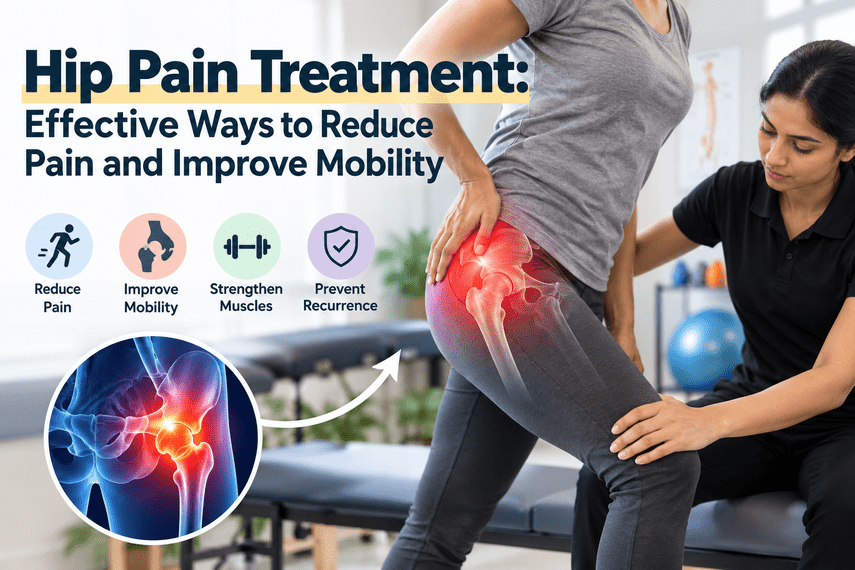
Hip Pain Treatment in Hinjewadi, Pune: Effective Ways to Reduce Pain and Improve Mobility
Hip pain can affect how you walk, sit, exercise, climb stairs or even sleep. But not every type of hip-area pain has the same cause. Discomfort may come from the hip joint, surrounding muscles and tendons, or structures in nearby areas such as the lower back.
That is why identifying the pattern of your symptoms matters before choosing hip pain treatment.
If you are searching for hip pain treatment in Hinjewadi or elsewhere in Pune, understanding when the pain occurs, where you feel it and what movements aggravate it can help you decide when professional assessment may be appropriate.
What Can Cause Hip Pain?
Hip pain can have several possible causes. The location and pattern of symptoms can provide useful clues, but they cannot confirm a diagnosis on their own.
Pain in the Groin or Front of the Hip
Pain felt deep in the groin or front of the hip can sometimes be associated with the hip joint.
Conditions such as hip osteoarthritis can cause pain, stiffness and difficulty with certain movements. Some people may also notice discomfort during walking, getting up from a chair or other everyday activities.
Other hip conditions can produce pain in the front or groin area, particularly during activities involving bending, rotation or repeated loading.
A clinical assessment is important because similar symptoms can have different causes.
Pain on the Outer Side of the Hip
Pain on the outside of the hip can involve the muscles, tendons or other soft tissues around the joint.
Some people experience tenderness when lying on the affected side or discomfort during activities such as walking, climbing stairs or standing for extended periods.
Outer hip pain is sometimes described as bursitis, but several conditions can cause similar symptoms. A physiotherapist or doctor can help determine what is contributing to the pain.
Pain Around the Buttock
Pain around the buttock does not always originate from the hip joint.
The lower back, surrounding muscles or nerves can sometimes contribute to pain in this area. If symptoms extend into the thigh or leg, particularly with numbness, tingling or weakness, assessment is important to determine the source.
Pain After Sport or a Sudden Movement
Hip-area pain that begins after running, jumping, changing direction or another sudden movement may involve a muscle, tendon or other soft tissue.
The appropriate treatment depends on the severity of the injury and the structures involved. Continuing an activity that clearly increases pain may not be appropriate until the injury has been assessed.
Hip Pain While Walking
Hip pain while walking can have several causes, including joint problems, muscle or tendon issues, previous injuries and changes in movement patterns.
If walking distance is gradually becoming more limited, or pain is affecting everyday activities, consider getting the problem assessed rather than repeatedly changing your walking routine without knowing the cause.
When Should You Seek Medical Assessment?
Some types of hip pain require more than a home exercise programme.
Seek prompt medical attention if you experience:
Severe hip pain following a significant fall or trauma
An inability to bear weight after an injury
A hot, swollen joint accompanied by fever
Sudden or severe worsening of symptoms
Significant weakness, numbness or loss of function
Hip pain accompanied by other concerning symptoms
Children and adolescents with persistent hip pain should also receive appropriate medical assessment because the causes can differ from those commonly seen in adults.
If you are unsure whether your symptoms require urgent care, consult an appropriate healthcare professional.
What Can Help Reduce Hip Pain?
Treatment depends on the underlying cause, severity and individual circumstances. There is no single exercise or treatment that is suitable for every person with hip pain.
Stay Active Within Your Tolerance
Complete inactivity is not always necessary for hip pain.
Depending on the condition, maintaining comfortable movement can help you continue everyday activities while avoiding movements that significantly aggravate your symptoms.
For example, you may temporarily reduce:
Long walks if walking increases your symptoms
Repetitive movements that repeatedly trigger pain
Heavy lifting or high-impact activity during an acute injury
Positions that consistently increase your discomfort
The right level of activity should depend on your symptoms and diagnosis.
Strengthening Exercises
Strengthening can be an important part of physiotherapy for many musculoskeletal conditions affecting the hip.
Depending on your assessment, a physiotherapist may prescribe exercises that work the muscles around the hip, pelvis and trunk.
Common exercise categories may include:
Hip strengthening
Gluteal strengthening
Sit-to-stand exercises
Step-based exercises
Controlled mobility exercises
Functional movement training
However, an exercise that is appropriate for one hip condition may not be appropriate for another. If an exercise significantly increases your pain, stop and discuss it with your healthcare professional rather than repeatedly pushing through it.
Mobility Exercises
Stiffness can make everyday movements more difficult.
Where appropriate, a physiotherapist may include mobility exercises as part of a personalised treatment programme. The specific movements should depend on the cause of the stiffness and your current range of motion.
Mobility work is not necessarily the same as stretching aggressively. If a particular movement consistently increases pain, it should be reassessed.
Movement and Posture Assessment
The way you move can provide useful information when investigating musculoskeletal pain.
FlexifyMe currently describes an assessment approach that combines AI-assisted posture and movement analysis with expert physiotherapy. Its website highlights AI posture analysis, gait and movement analysis and clinical assessment as part of its approach to understanding factors that may contribute to pain.
This can help a physiotherapist consider posture, movement patterns, alignment and functional limitations alongside your symptoms and medical history.
How Can Physiotherapy Help With Hip Pain?
Physiotherapy for hip pain is not limited to treating the painful area.
A physiotherapist may assess:
Your symptoms and medical history
Hip mobility
Muscle strength
Movement patterns
Functional activities such as walking or getting up from a chair
Posture and alignment where relevant
How your symptoms affect daily activities
Based on the assessment, your treatment plan may include therapeutic exercises, mobility training, manual therapy, posture correction, movement-based rehabilitation or other appropriate physiotherapy techniques.
FlexifyMe states that its physiotherapy plans are personalised according to the individual's condition, symptoms and recovery goals. Its current treatment information also lists therapeutic exercises, posture correction, mobility training, manual therapy and other evidence-based techniques among possible treatment approaches.
FlexifyMe's current website also includes physiotherapists with hip pain among their areas of expertise.
Hip Pain and Arthritis: Can Physiotherapy Help?
Hip osteoarthritis can cause pain, stiffness and difficulty with movement.
Physiotherapy may form part of conservative management by helping address strength, mobility and functional movement. The specific programme depends on the individual's symptoms and assessment.
Exercise-based rehabilitation does not mean that every person with hip arthritis will avoid surgery. Some people may eventually require additional medical or surgical treatment depending on the severity of their condition.
An assessment can help determine which treatment options are appropriate for your situation.
How Long Does Hip Pain Treatment Take?
There is no reliable single recovery timeline for all types of hip pain.
The time required can vary depending on:
The underlying cause
Severity and duration of symptoms
Whether an injury is acute or long-standing
Your general health and activity level
Your response to treatment
How consistently you follow the recommended rehabilitation plan
FlexifyMe's current treatment information similarly states that recovery varies between individuals, with some people noticing improvement within a few sessions while complex or long-standing conditions may take longer.
Rather than expecting a fixed number of weeks, focus on whether pain, mobility, strength and everyday function are improving over time.
Frequently Asked Questions
Is walking good or bad for hip pain?
Walking may be appropriate for many people with hip pain, but the right amount depends on the underlying condition and your symptoms.
If walking consistently increases your pain or limits your normal activities, reduce the aggravating activity and consider getting the problem assessed.
Why does my hip hurt at night?
Hip pain at night can have several possible causes. It may be affected by your sleeping position, joint symptoms or irritation of surrounding tissues.
If night pain is persistent, severe or accompanied by other concerning symptoms, seek professional medical assessment rather than assuming it is simply a muscle problem.
Should I stretch a painful hip?
Not necessarily.
Some people with hip stiffness may benefit from appropriate mobility exercises, while certain soft-tissue problems can become more uncomfortable with particular stretches.
The right approach depends on what is causing your symptoms. A physiotherapist can help determine which movements are appropriate.
Does an X-ray showing arthritis mean I need surgery?
No.
Imaging findings are considered alongside symptoms, physical examination and functional limitations. The presence of changes on an X-ray does not by itself determine whether surgery is required.
Your doctor or physiotherapist can help explain what your imaging means in the context of your symptoms.
Can physiotherapy help hip pain without surgery?
Physiotherapy can be part of conservative treatment for many musculoskeletal conditions.
FlexifyMe states that physiotherapy may help reduce pain, improve strength, mobility and function, although not every condition can be managed without surgery.
Whether conservative treatment is appropriate depends on the underlying diagnosis and individual assessment.
How do I find a physiotherapist near me for hip pain?
When searching for a physiotherapist near me, look for a provider that assesses your symptoms, movement and functional limitations before recommending treatment.
You can search for physiotherapy near me in and around Hinjewadi and check whether the provider offers the type of assessment and care you require.
FlexifyMe currently provides physiotherapy through selected physical clinics as well as online consultations. Clinic availability varies by location.
Get the Right Assessment for Hip Pain
Hip pain can have different causes, and the location of discomfort alone cannot confirm which structure is responsible.
If pain is affecting your walking, exercise, sleep or everyday activities, getting an appropriate assessment can help you understand the possible cause and choose a suitable treatment approach.
FlexifyMe combines AI-assisted posture and movement analysis with physiotherapy assessment and personalised recovery planning. Its current approach can include posture and movement assessment, expert physiotherapy, therapeutic exercise and movement correction based on individual needs.
For people looking for hip pain treatment in Hinjewadi, Pune, FlexifyMe offers online physiotherapy and physical clinic services in selected locations. The appropriate care format depends on your location, symptoms and assessment.
This article is for general information and is not a substitute for personal medical advice. Severe pain after trauma, inability to bear weight, a hot swollen joint with fever, significant weakness or other concerning symptoms requires prompt medical assessment.