







 ₹https://clinics.flexifyme.com/flexifyme/pune/hinjewadi/flexifyme-advanced-physiotherapy-clinic-in-hinjewadi-pune--7gAsKd/articles/ganesh-chaturthi-travel-tips-for-hinjewadi-pune-ho--a4411027-09e7-4cca-93ab-aaf8eb7cdf98
FlexifyMe Advanced Physiotherapy Clinic, Hinjewadi, pune
Physiotherapy Clinic in Hinjewadi, Pune, Maharashtra
No 3/1, Second Floor, Hinjawadi Phase II, Rajiv Gandhi Infotech Park, Hinjewadi, pune, maharashtra - 411057Request A Call Back
FlexifyMe Advanced Physiotherapy Clinic Social Feeds in Hinjewadi, pune
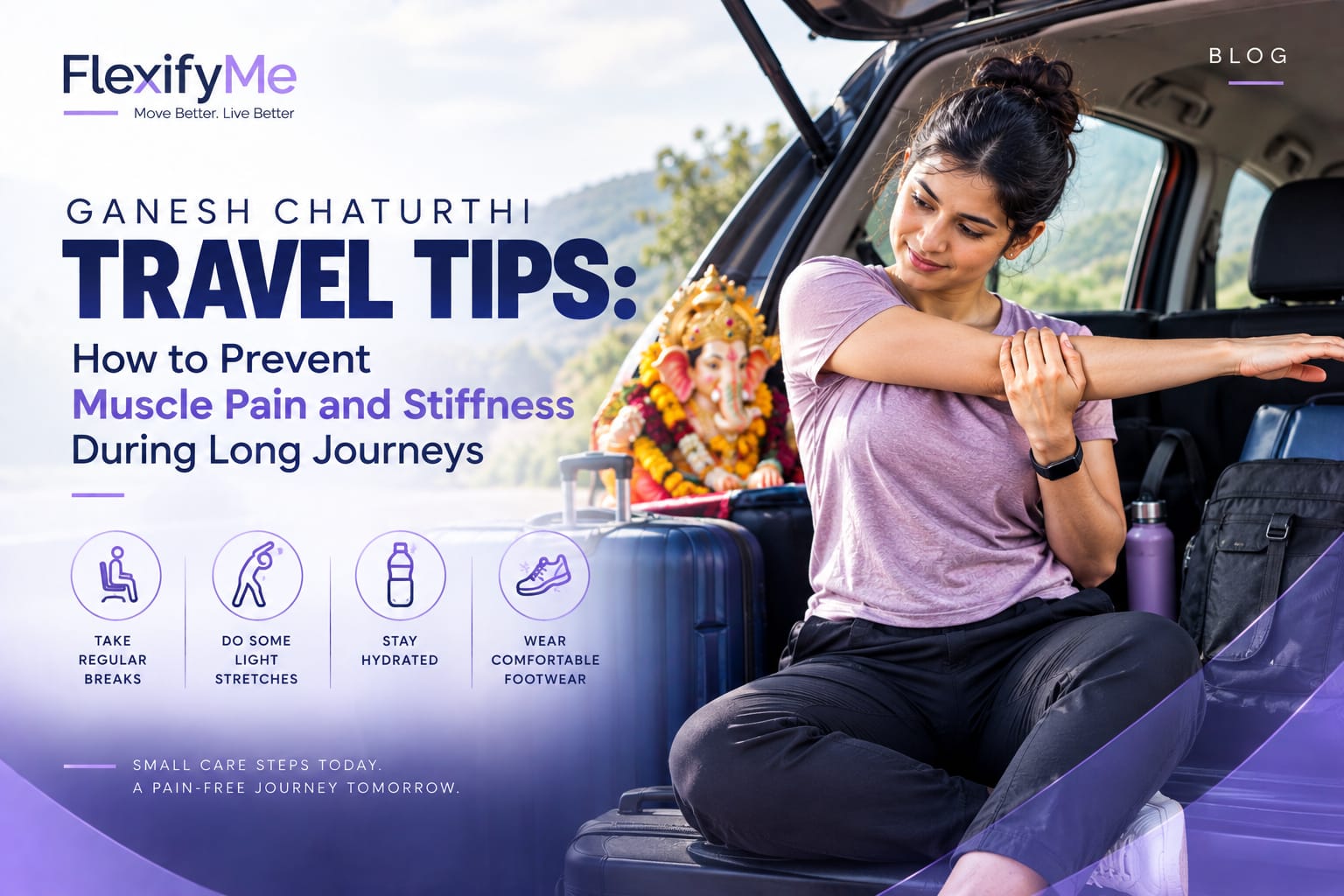
Ganesh Chaturthi Travel Tips for Hinjewadi, Pune: How to Prevent Muscle Pain and Stiffness on Long Journeys
Ganesh Chaturthi often means travelling to meet family, returning home for celebrations or making long journeys between cities. A journey that lasts several hours can leave you with stiff hips, an aching back, tight shoulders or tired legs.
The problem can become more noticeable when you arrive and immediately start decorating, cleaning, lifting, walking or standing for long periods.
Long periods of sitting followed by sudden physical activity can put extra stress on muscles and joints. Planning movement into your journey and easing back into activity after you arrive can help make the transition more comfortable.
If you are travelling during Ganesh Chaturthi from Hinjewadi or around Pune, these practical tips can help you manage muscle stiffness during and after a long journey.
Why Do Long Journeys Cause Muscle Stiffness?
Sitting in the same position for several hours can make the body feel stiff, particularly around the hips, lower back, shoulders and legs.
Several factors can contribute to discomfort during a long journey:
Prolonged sitting: Remaining in one position for an extended period can make muscles and joints feel stiff.
Limited movement: Long bus, car, train or flight journeys may reduce opportunities to change position.
Awkward posture: A seat that does not support your body comfortably can contribute to neck, shoulder or back discomfort.
Fatigue: Travelling overnight or sleeping poorly can make physical activity feel more difficult after arrival.
Sudden increase in activity: Going directly from several hours of sitting to lifting or other strenuous work can place additional demands on the body.
Reduced hydration: Not drinking enough fluids during travel can contribute to feeling tired and uncomfortable.
The solution is not to remain perfectly still or search for one ideal sitting position. Regular movement and sensible breaks are more useful than staying in one posture for the entire journey.
Before You Start Your Journey
A little preparation can make a long trip easier.
Move Before You Leave
If you have time, take a short walk before beginning a long journey. The aim is simply to get your body moving rather than perform a demanding workout.
Gentle movement can be especially useful if you know you will spend several hours sitting afterwards.
Carry Water
Keep water within easy reach during the journey and drink regularly according to your needs.
You may be tempted to avoid drinking to reduce toilet stops, but going for many hours without adequate fluids can leave you feeling tired and uncomfortable.
Wear Comfortable Clothing
Choose clothing that allows your hips, knees and shoulders to move comfortably.
Avoid packing bags or objects around your feet that force your legs into an awkward position.
Plan Your Arrival
Think about what you need to do after reaching your destination.
If you have spent eight or ten hours travelling, going immediately from a cramped seat to heavy lifting may not be the most sensible way to start the day.
Where possible, allow some time to walk around, eat, hydrate and settle in before taking on demanding physical tasks.
How to Reduce Stiffness During a Long Journey
You do not need a gym or special equipment to keep your body moving during travel.
While Sitting
Depending on the available space, try simple movements such as:
Ankle pumps
Gentle ankle circles
Alternating knee movements
Gentle shoulder rolls
Shoulder-blade movements
Changing your sitting position regularly
Gentle leg movements within the available space
The movements should remain comfortable. You do not need to force a stretch or continue an exercise that causes pain.
Take Movement Breaks
Whenever the journey allows it, stand up and walk for a few minutes.
On a train, you may be able to walk through the coach. During car or bus travel, use appropriate rest stops where available. On flights, follow the crew's instructions and move when it is safe to do so.
Short, regular movement breaks are more practical than waiting until the end of the journey to stretch everything at once.
Adjust Your Position
There is no single sitting position that works perfectly for everyone for several hours.
Instead:
Avoid remaining in exactly the same position for too long.
Keep frequently used items within comfortable reach.
Avoid repeatedly leaning or twisting to one side.
Change your leg and shoulder position periodically.
Use available seat support comfortably.
What to Do When You Reach Your Destination
Arriving after a long journey does not mean your body is immediately ready for heavy physical work.
Start With Gentle Movement
Take a short walk after reaching your destination if you feel comfortable doing so.
This gives you an opportunity to move after prolonged sitting before starting more demanding activities.
Do Not Rush Into Heavy Lifting
If possible, avoid making heavy lifting the first task after a very long journey.
This is particularly relevant during Ganesh Chaturthi, when people may need to move decorations, furniture or other heavy objects shortly after travelling.
Ask for help with heavier items and use appropriate lifting technique rather than trying to prove that you can manage everything yourself.
Eat and Hydrate
Travel can disrupt normal meals and drinking habits. Have an appropriate meal and fluids before taking on a physically demanding day.
Break Festival Tasks Into Smaller Blocks
Instead of cleaning, decorating and lifting continuously for several hours, alternate demanding tasks with lighter activities and rest breaks.
This can help you manage fatigue more effectively.
Managing Muscle Stiffness After Travel
Some stiffness after prolonged sitting can improve as you return to normal movement.
You can try:
Gentle walking
Comfortable range-of-motion movements
A warm shower if it feels soothing
Changing position regularly
Getting adequate sleep
Returning gradually to normal physical activity
Avoid forcing stiff muscles into painful stretches.
If a particular movement makes your symptoms significantly worse, stop and consider getting professional advice.
When Is Travel Pain More Than Ordinary Stiffness?
Not every ache after a long journey should be dismissed as travel stiffness.
Consider professional assessment if:
Pain is severe or worsening.
Pain is concentrated in one specific area.
You develop significant weakness or numbness.
Back pain travels into the leg along with neurological symptoms.
Your movement remains noticeably restricted.
Symptoms interfere with normal activities.
The same problem keeps returning after long journeys.
After prolonged travel, one-sided calf pain, swelling, warmth or tenderness deserves prompt medical assessment because a blood clot can sometimes cause these symptoms.
Sudden breathlessness, chest pain or coughing up blood after prolonged travel requires urgent medical attention.
How Physiotherapy Can Help With Persistent Muscle Pain and Stiffness
If muscle pain or stiffness continues after your journey, a physiotherapist can assess your symptoms and movement rather than assuming that every case is simply caused by travel.
FlexifyMe's official website describes personalised physiotherapy that combines assessment with guided rehabilitation. Its services include movement and posture assessment, therapeutic exercises, posture correction strategies, mobility training and progress monitoring.
The current FlexifyMe treatment information also lists manual therapy, targeted exercises, posture correction and mobility training among approaches that may be included in physiotherapy treatment, depending on the individual's condition.
FlexifyMe also offers AI-assisted posture and movement analysis as part of its assessment approach. The official website describes this technology as providing movement insights that can help physiotherapists understand posture and movement patterns and personalise care.
For people who cannot conveniently travel to a clinic, FlexifyMe also offers online physiotherapy with one-on-one sessions and personalised care plans. Suitability depends on individual assessment, and situations requiring hands-on examination or urgent medical attention may require in-person evaluation.
Frequently Asked Questions
Why do I feel stiff after a long bus or train journey?
Long periods of sitting can reduce normal movement and leave the hips, lower back, shoulders and legs feeling stiff. An uncomfortable posture, fatigue and limited opportunities to move can add to the discomfort.
Changing position regularly and taking movement breaks can make long journeys more comfortable.
How often should I move during a long journey?
Move whenever it is safe and practical to do so. During journeys where you can leave your seat, take regular opportunities to stand and walk rather than remaining seated for the entire trip.
When you cannot get up, gentle movements such as ankle pumps and shoulder movements can help you avoid remaining completely still.
Should I stretch during a long journey?
Gentle movement is usually more practical than trying to perform deep stretches in a confined seat.
You can move your ankles, shoulders and legs within a comfortable range and take walking breaks when possible. Avoid forcing a stretch that causes pain.
Why do my legs feel heavy after travelling?
Several factors can contribute to tired or heavy-feeling legs after a long journey, including prolonged sitting, limited movement, fatigue and inadequate hydration.
Regular movement and appropriate breaks can help make the journey more comfortable.
Can I exercise immediately after a long journey?
It depends on how you feel and what type of activity you plan to perform. Gentle movement may be comfortable after travelling, while demanding exercise or heavy lifting may require more caution, particularly if you feel very tired or stiff.
If you have an existing injury or health condition, seek appropriate professional advice before strenuous activity.
Where can I find a physiotherapist near me for persistent stiffness?
Search for physiotherapist near me or physiotherapy near me and look for a provider that assesses the underlying movement problem rather than treating every episode of stiffness in the same way.
FlexifyMe offers personalised physiotherapy for a range of pain and mobility conditions, with online physiotherapy also available. Physical clinic availability varies by location.
Travel Smart and Start the Festival Comfortably
A long Ganesh Chaturthi journey does not have to leave you too stiff or tired to enjoy the celebrations.
Move regularly during the journey, change your position, stay hydrated and take appropriate breaks. After arriving in Hinjewadi or Pune, give your body some time to transition from prolonged sitting to physical activity, especially before lifting or other demanding tasks.
If muscle pain or stiffness continues, keeps returning or starts affecting normal movement, consider professional assessment. For those searching for physiotherapy near me or physiotherapist near me, FlexifyMe provides personalised physiotherapy and online care options, depending on your location and individual needs. (flexifyme.com)
This article is intended for general information and does not replace an individual medical assessment. Seek urgent medical attention for sudden breathlessness, chest pain, coughing up blood, or concerning one-sided calf pain and swelling after prolonged travel.