


 ₹https://clinics.flexifyme.com/flexifyme/pune/hinjewadi/flexifyme-advanced-physiotherapy-clinic-in-hinjewadi-pune--7gAsKd/articles/ganesh-chaturthi-fitness-guide-for-hinjewadi-pune---672791f0-2410-4c82-b42a-98d7ee86ff30
FlexifyMe Advanced Physiotherapy Clinic, Hinjewadi, pune
Physiotherapy Clinic in Hinjewadi, Pune, Maharashtra
No 3/1, Second Floor, Hinjawadi Phase II, Rajiv Gandhi Infotech Park, Hinjewadi, pune, maharashtra - 411057Request A Call Back
FlexifyMe Advanced Physiotherapy Clinic Social Feeds in Hinjewadi, pune
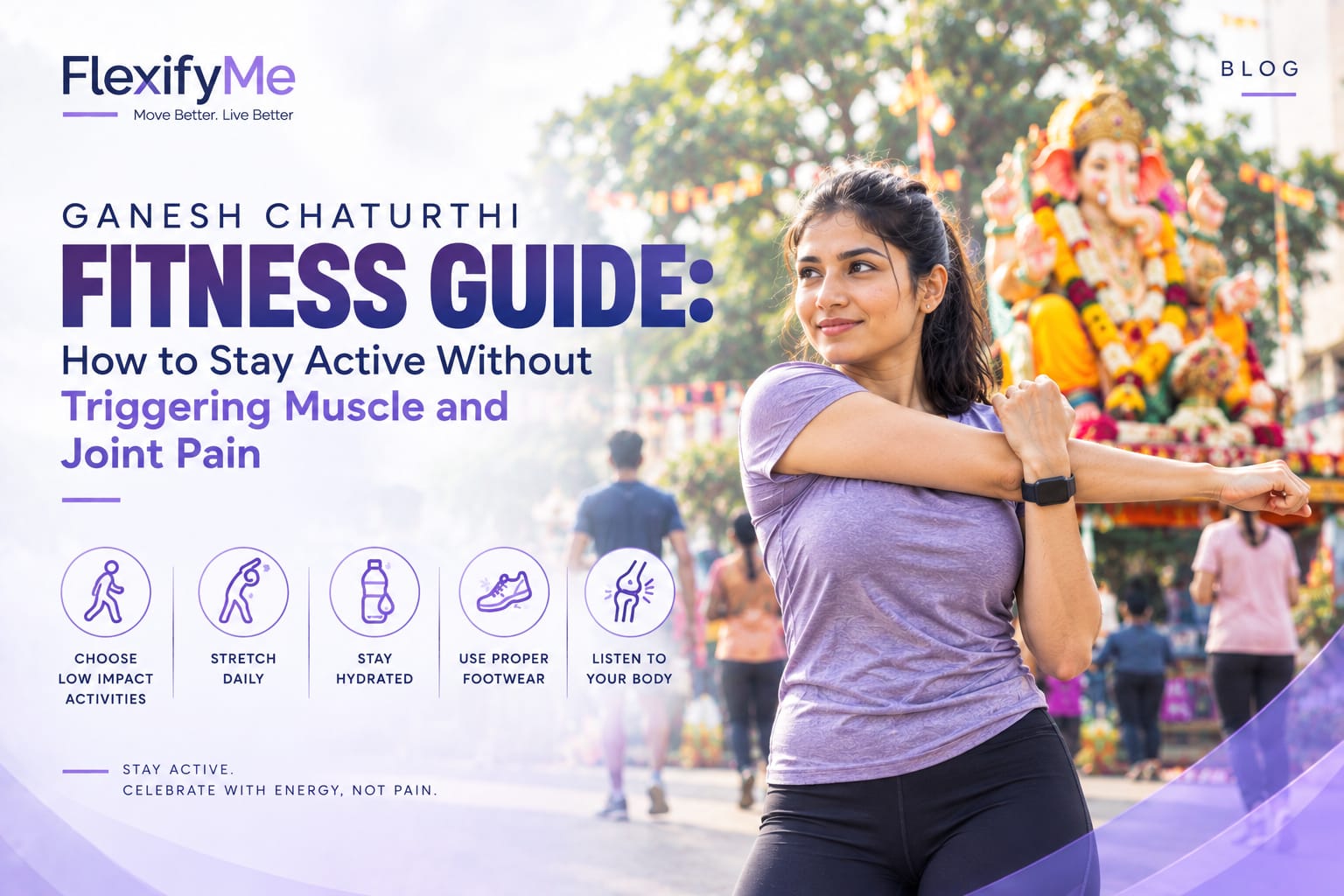
Ganesh Chaturthi Fitness Guide for Hinjewadi, Pune: How to Stay Active Without Triggering Muscle and Joint Pain
Ganesh Chaturthi can change your normal activity routine. You may spend more time walking between pandals across Hinjewadi and Pune, standing for long periods, helping with preparations, carrying items and staying up later than usual.
At the same time, your regular gym or exercise routine may become less consistent.
That does not necessarily mean you need to stop exercising completely or try to maintain your usual training schedule at any cost. A better approach is to adjust your activity according to your energy, sleep, existing pain and festival commitments.
The goal during the festival is simple: stay active without unnecessarily increasing muscle or joint pain, then return to your normal routine gradually.
Understand How Festival Activity Changes Your Routine
Festival activity can feel different from structured exercise.
You may spend several hours standing, walk more than usual, sit for long periods during travel or events, and occasionally perform activities such as lifting or carrying objects. These changes can place different demands on your muscles and joints.
Other factors can also affect how you feel:
Longer days and later nights can reduce your usual sleep.
Walking and standing may increase your overall physical activity.
Irregular meals can make it harder to maintain your normal routine.
Hot or crowded environments can make hydration more important.
A sudden return to intense exercise after several days away can feel more demanding than expected.
The important point is that festival activity should not automatically be treated as a substitute for your normal strength or rehabilitation programme. At the same time, you do not need to force a full workout when your body is already fatigued.
A Practical Festival Fitness Plan: Maintain Rather Than Push
During a busy festival period, maintaining a reasonable level of activity can be more practical than trying to make major fitness gains.
If your normal schedule is disrupted, consider shorter sessions and lower-intensity movement rather than abandoning activity altogether.
Keep exercise sessions shorter
If you usually spend an hour exercising, a shorter session may be easier to fit around festival activities.
The purpose is not to complete your full programme at any cost. It is to keep movement consistent while allowing enough recovery for the additional activities you are already doing.
Prioritise an existing rehabilitation programme
If a physiotherapist has already given you exercises for a knee, back, shoulder or another condition, follow the programme and any modifications they have recommended.
Do not add new exercises simply because you want to compensate for missed gym sessions.
If an exercise causes significant or unusual pain, speak with your physiotherapist rather than repeatedly pushing through it.
Adjust intensity when you are tired
If you have had a late night or feel unusually fatigued, consider reducing the intensity of your workout.
You can focus on controlled movement, mobility or exercises that are already familiar to you rather than attempting a demanding session.
There is no benefit in treating every festival day as a normal training day when your sleep and routine are significantly different.
Simple Movement Options for Busy Festival Days
You do not need a complicated workout to stay active during Ganesh Chaturthi.
Depending on your current fitness level and whether you have any existing injury or medical condition, you can consider familiar movements such as:
Comfortable walking
Gentle mobility exercises
Bodyweight movements you already perform regularly
Light strengthening exercises from your existing programme
Short movement breaks after prolonged sitting
Gentle stretching where appropriate
If you have ongoing joint pain, an injury or are recovering from surgery, do not start a new exercise routine based only on general online advice. The right movements depend on the condition and your individual assessment.
FlexifyMe's official physiotherapy approach includes personalised care plans, therapeutic exercises, posture correction strategies and movement-based rehabilitation based on individual assessment.
How to Protect Existing Knee, Back and Shoulder Problems
Festival activities do not automatically cause an injury, but changes in your normal routine can make existing symptoms more noticeable.
If you already experience pain, plan your activities around your current tolerance.
If you have knee pain
Try to avoid spending unnecessarily long periods in positions that increase your discomfort.
You can:
Take regular sitting breaks during long periods of standing.
Avoid suddenly increasing squatting, stair climbing or other demanding activities.
Continue appropriate strengthening exercises recommended for you.
Choose comfortable footwear for extended walking.
Pay attention to swelling, instability or pain that is getting worse.
FlexifyMe lists knee pain among the conditions it treats and offers personalised physiotherapy based on assessment and individual needs.
If you have back pain
Long periods of sitting, standing, travel or lifting can aggravate some types of back pain.
Helpful habits include:
Change position regularly instead of staying in one position for prolonged periods.
Use proper lifting technique and ask for help with heavier objects.
Avoid twisting your body while carrying a load.
Take comfortable walking or movement breaks when appropriate.
Continue exercises that have already been recommended for your condition.
FlexifyMe's lower back pain information highlights clinical evaluation, assessment of movement and posture, and personalised physiotherapy as part of its approach to lower back pain.
If you have shoulder pain
Be careful with repeated overhead activity or carrying loads that are more demanding than you are used to.
You can:
Keep loads manageable.
Avoid holding heavy objects for prolonged periods.
Take breaks during repetitive activities.
Continue appropriate shoulder exercises recommended by your physiotherapist.
Stop and seek assessment if pain, weakness or restricted movement becomes worse.
The right exercise plan depends on the cause of shoulder pain, so avoid copying exercises from another person's rehabilitation programme.
Do Not Ignore Sleep, Meals and Hydration
Fitness during a festival is not only about exercise.
Your recovery is also affected by how well you manage the rest of your routine.
Get enough sleep when possible
Late-night celebrations can disrupt your normal sleep schedule. If you are tired the next day, adjust your workout rather than trying to compensate by exercising harder.
Stay hydrated
Keep fluids available during long days, especially when you are spending significant time outdoors or in warm conditions.
Hydration is important for general wellbeing, but it should not be presented as a guarantee against muscle cramps or injuries.
Do not let exercise replace proper meals
Festival meals may be different from your normal diet. Instead of trying to follow your regular nutrition plan perfectly, focus on maintaining reasonably regular meals and including a balanced range of foods.
You do not need to compensate for festival meals by performing extra exercise.
Returning to Exercise After Ganesh Chaturthi
The transition back to your normal routine deserves attention.
If your exercise schedule has been inconsistent for several days, do not assume that you need to immediately perform your previous maximum workout.
Instead:
Start with familiar exercises.
Use a manageable intensity rather than testing your limits.
Pay attention to how your body responds during and after exercise.
Increase your training gradually if you are tolerating it well.
Give existing injuries or painful joints appropriate attention rather than training through worsening symptoms.
There is no single percentage of your previous workout that is appropriate for everyone. Your starting point should depend on your fitness level, how much activity you maintained during the festival, your sleep, and whether you have an existing condition.
If pain persists or interferes with normal movement, an assessment can help determine whether you need rehabilitation or another form of medical care.
When Should You Consider Physiotherapy?
A temporary ache after an unusually active day does not necessarily mean that you need treatment.
However, consider professional assessment if:
Pain continues or keeps returning.
An existing condition becomes noticeably worse.
Joint pain is affecting your normal activities.
You have difficulty returning to your usual movement or exercise routine.
You experience ongoing weakness or restricted movement.
The same problem repeatedly returns when your activity level changes.
A physiotherapist can assess your movement, symptoms and functional limitations before recommending an appropriate rehabilitation plan.
FlexifyMe's official website states that its physiotherapy services use individual assessment to create personalised treatment plans. Depending on the condition, its approach may include therapeutic exercises, posture correction, mobility training, manual therapy and other evidence-based techniques.
How FlexifyMe Can Support Your Return to Movement
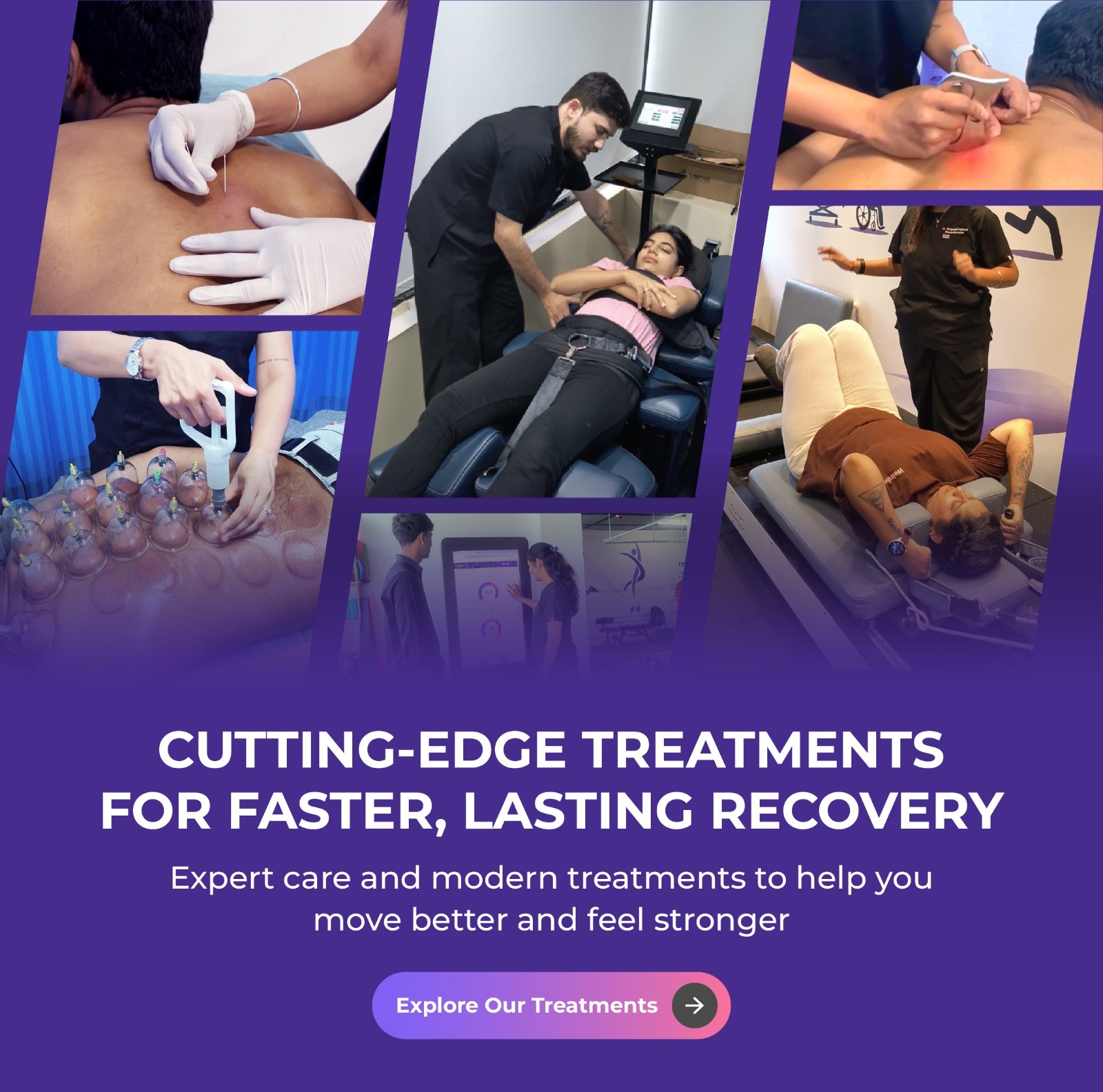
If muscle or joint pain continues after the festival, FlexifyMe provides personalised physiotherapy options for a range of pain, injury and mobility conditions.
Its current services include care for conditions such as back pain, knee pain, shoulder pain, neck pain, ankle pain, wrist pain, muscle strain and sports injuries.
For online physiotherapy, FlexifyMe describes a process that begins with an assessment followed by one-on-one sessions with a physiotherapist. Its online approach can include therapeutic exercises, posture correction, movement-based rehabilitation and progress monitoring.
FlexifyMe also uses AI-assisted posture and movement analysis as part of its assessment approach. The technology is intended to provide movement insights that physiotherapists can use alongside their clinical assessment.
Whether online or in-person physiotherapy is appropriate depends on the individual's condition and assessment. FlexifyMe's website also notes that cases requiring hands-on examination or urgent medical attention may need in-person evaluation.
Frequently Asked Questions
Will I lose my fitness if I exercise less during Ganesh Chaturthi?
A short disruption to your normal routine does not mean that you have lost all your fitness. However, your ability to return to your previous training intensity can vary depending on your fitness level, activity during the break, sleep and other factors.
Instead of worrying about a few missed workouts, focus on returning to regular exercise gradually.
Can I exercise if I already have muscle soreness from festival activities?
It depends on the type and severity of the soreness.
Gentle movement may be appropriate for general post-activity soreness, but significant, worsening or localised pain should not simply be ignored. If you have an existing injury or joint condition, follow the advice given by your healthcare professional.
Is walking between pandals enough exercise?
Walking contributes to your overall physical activity, but it does not necessarily replace every part of a structured exercise programme.
If strength training is part of your normal routine, you can consider shorter sessions during the festival when your schedule allows.
Should I stop my rehabilitation exercises during the festival?
Do not automatically stop a prescribed rehabilitation programme. If your schedule is disrupted, speak with your physiotherapist about how to modify the programme rather than making major changes yourself.
For some conditions, continuing appropriate exercises can be an important part of rehabilitation.
How can I find a physiotherapist near me after the festival?
Search for physiotherapist near me and look for a provider that offers an assessment rather than simply giving you a generic exercise routine.
If you are considering FlexifyMe, its website provides both online physiotherapy options and information about its physical clinic locations. Availability depends on your location and the type of care required.
Stay Active During the Festival and Return Gradually
Ganesh Chaturthi does not have to mean choosing between complete rest and intense workouts.
A more practical approach is to stay reasonably active, adjust exercise according to your energy and existing conditions, continue appropriate rehabilitation, and avoid suddenly pushing your body when you return to your regular routine.
If pain continues after the celebrations, affects your daily activities or keeps returning whenever your activity level changes, consider getting it assessed instead of waiting for the next festival.
For people looking for physiotherapy near me or personalised physiotherapy support after Ganesh Chaturthi, FlexifyMe offers online physiotherapy and physical clinic services in selected locations. Its treatment approach is based on assessment and personalised care rather than a one-size-fits-all exercise plan.
This article is for general information and is not a substitute for personal medical advice.