







 ₹https://clinics.flexifyme.com/flexifyme/pune/hinjewadi/flexifyme-advanced-physiotherapy-clinic-in-hinjewadi-pune--7gAsKd/articles/foot-pain-treatment-how-to-prevent-foot-and-heel-p--a0b910f2-f102-42f4-a166-4e8421ca6d5f
FlexifyMe Advanced Physiotherapy Clinic, Hinjewadi, pune
Physiotherapy Clinic in Hinjewadi, Pune, Maharashtra
No 3/1, Second Floor, Hinjawadi Phase II, Rajiv Gandhi Infotech Park, Hinjewadi, pune, maharashtra - 411057Request A Call Back
FlexifyMe Advanced Physiotherapy Clinic Social Feeds in Hinjewadi, pune
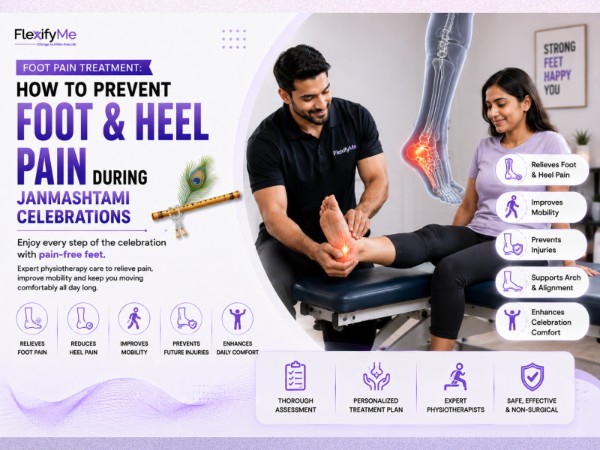
Foot Pain Treatment: How to Prevent Foot and Heel Pain During Janmashtami Celebrations
Janmashtami is a day spent on your feet. Long hours of standing through the puja, extra walking to the temple, dancing to bhajans, and for many, the pull of Dahi Handi. By the time the celebrations wind down, sore feet and aching heels are one of the most common after-effects, and they are usually treated as something to simply push through.
They do not have to be. Most festival-related foot pain and heel pain comes from a predictable mix of long standing hours, hard surfaces and sudden bursts of activity, all of which can be planned for. If you are celebrating in Hinjewadi or anywhere across Pune, a little preparation goes a long way toward a pain-free morning after.
Why your feet take a beating during Janmashtami
The load on your feet on this one day is very different from a normal day at home or work. Common triggers include:
Standing barefoot on hard marble or tile floors for long stretches
Walking further than usual during temple visits and processions
Dancing and jumping on unforgiving surfaces
Dahi Handi participation, where the heels absorb repeated impact on landing
Fasting (vrat), which can leave you dehydrated and low on energy, so balance and form slip late in the day
None of these is a problem in isolation. It is the combination, repeated over several hours, that leaves the foot overloaded.
What foot and heel pain actually is
The plantar fascia is a thick band of tissue that runs along the sole, from the heel to the base of the toes, and helps support your arch. When it is loaded heavily for long periods, especially on hard surfaces, the heel and arch can become sore and inflamed. Sharp pain in the first few steps in the morning is a classic pattern. Pain under the arch or the ball of the foot is also common.
An important point: pain does not always mean damage. Very often festival foot pain is an overloaded, fatigued tissue rather than an injury, which is exactly why sensible loading and recovery matter more than worry.
How to prevent foot and heel pain this Janmashtami
Before the day
Warm up your feet and calves with ankle circles and gentle calf stretches
Wear cushioned, supportive footwear whenever you are not required to be barefoot, and keep supportive slippers on at home rather than walking on bare tile
During the celebrations
Take standing breaks, shift your weight, and sit down when you can
Pace your dancing and any Dahi Handi activity, and try to land softly rather than flat and heavy
Where your vrat allows, take small sips of water through the day so fatigue does not creep in
After the day
Do gentle calf and foot stretches, and roll the sole of the foot over a cool bottle
Elevate and rest tired feet before bed
When foot or heel pain is more than tiredness
Most festival foot soreness settles with rest. Seek a proper assessment, and do not simply push through, if you notice:
Pain that stops you putting weight on the foot after a fall or hard landing
Numbness, tingling, or a cold or pale foot
Severe swelling, bruising, or an obvious change in shape
Heel or foot pain that keeps returning for weeks despite rest
How physiotherapy helps foot and heel pain
A physiotherapist does more than hand you a stretch. The starting point is an assessment of how you stand, walk and load the foot, followed by a personalised recovery plan built around your symptoms and daily routine. This can include therapeutic exercise to build strength and tolerance in the foot and calf, hands-on manual therapy, and movement-based rehabilitation, with your progress tracked and the plan adjusted as you improve.
The aim is not a quick fix that fades, but to reduce pain, restore comfortable movement and help stop the problem returning the next time you are on your feet all day.
Foot and heel pain support in Hinjewadi
FlexifyMe Advanced Physiotherapy Clinic offers assessment and personalised physiotherapy for people in Hinjewadi and across Pune, with online, home-visit and in-clinic options so you can get help in the way that suits you. If the festival has left you with foot or heel pain that is not settling, you can book an assessment rather than waiting it out.
Frequently Asked Questions
Is festival foot pain serious? Usually not. Most of it is an overloaded, tired foot that settles with rest and gentle movement. It is worth an assessment if the pain follows a fall, stops you bearing weight, or keeps returning.
Should I stop celebrating if my feet start to hurt? You do not have to stop, but ease off. Take breaks, sit when you can, and avoid pushing through sharp pain, especially during Dahi Handi or dancing.
Can I do physiotherapy for foot pain online in Pune? Yes. FlexifyMe offers online physiotherapy alongside home-visit and in-clinic options, so people across Pune can be assessed and guided through a plan from home.
How long does heel pain take to settle? There is no single timeline. Simple festival fatigue can ease within days, while more stubborn heel pain that has built up over time can take longer and benefits from a structured plan.
Do insoles or cushioned slippers help? They can reduce load on the heel and arch, which helps comfort, but they work best alongside the right exercises and sensible activity rather than on their own.
Enjoy the day, mind your feet
Foot and heel pain is not the price you have to pay for celebrating Janmashtami properly. A little preparation before the day, a few breaks during it, and gentle recovery after will spare most people the worst of it.
If you are carrying foot pain or heel pain that is not easing, an assessment can identify what actually needs attention. For foot pain treatment or heel pain treatment in Hinjewadi or Pune, explore whether FlexifyMe's physiotherapy is right for you.
This article is for general information and is not a substitute for personal medical advice. Seek prompt medical care for an inability to bear weight, numbness, a cold or pale foot, or foot pain following a fall or accident.