







 ₹https://clinics.flexifyme.com/flexifyme/pune/hinjewadi/flexifyme-advanced-physiotherapy-clinic-in-hinjewadi-pune--7gAsKd/articles/dussehra-walking-in-hinjewadi-pune-calf-pain-cause--0010339d-8a82-4ded-b9c4-b4709a399be4
FlexifyMe Advanced Physiotherapy Clinic, Hinjewadi, pune
Physiotherapy Clinic in Hinjewadi, Pune, Maharashtra
No 3/1, Second Floor, Hinjawadi Phase II, Rajiv Gandhi Infotech Park, Hinjewadi, pune, maharashtra - 411057Request A Call Back
FlexifyMe Advanced Physiotherapy Clinic Social Feeds in Hinjewadi, pune
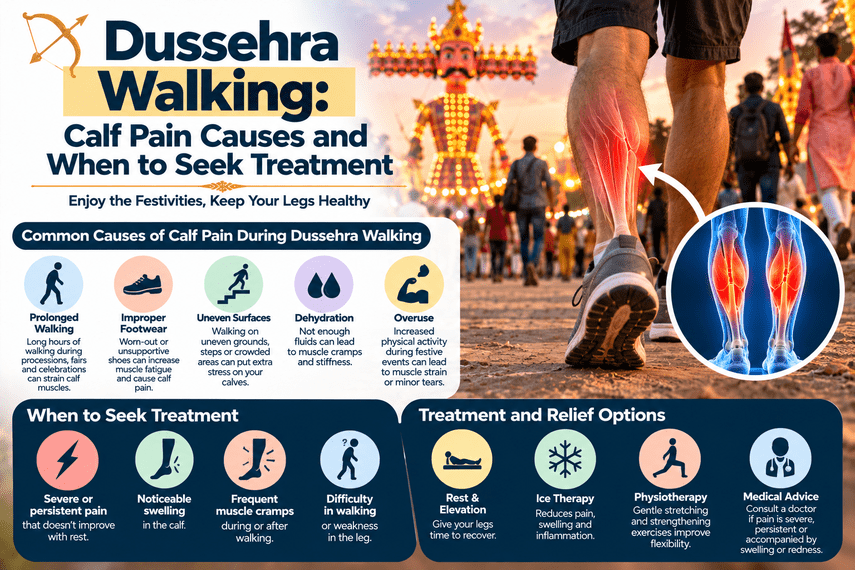
Dussehra Walking in Hinjewadi, Pune: Calf Pain Causes and When to Seek Treatment
Introduction
During Dussehra, your legs may work harder than usual. Walking between pandals across Hinjewadi, standing for long periods, climbing stairs, attending dandiya or garba events and travelling to celebrations can all increase the demands on your calf muscles.
After several busy days, you may notice tight calves after walking, muscle soreness or cramps at night. These symptoms can result from increased activity, but not every type of calf pain has the same cause.
Recognising calf pain warning signs is important. Ordinary muscle soreness often improves with appropriate rest and gradual movement, while certain symptoms may need urgent medical attention.
This guide explains common calf pain causes, practical ways to manage mild discomfort and when to seek professional help.
First, Know the Warning Signs of Calf Pain
Before treating calf pain at home, check for symptoms that could indicate a more serious condition.
Seek urgent medical assessment if you experience pain, swelling, warmth or tenderness in one calf, especially if the symptoms are new or unexplained. These can be signs of deep vein thrombosis (DVT), a blood clot in a deep vein. Risk may be higher after prolonged immobility, including some long journeys, or following surgery and certain medical conditions.
Do not assume that one painful calf is simply tired from walking. A healthcare professional needs to assess the symptoms.
Call emergency services immediately if calf symptoms occur with sudden shortness of breath, chest pain, coughing up blood or fainting. These may indicate a potentially life-threatening complication, such as a pulmonary embolism.
Both calves aching after an unusually active day may be consistent with muscle fatigue, but symptoms alone cannot rule out a serious condition. If you are unsure about the cause, seek medical advice rather than relying on a home remedy.
Common Calf Pain Causes During Dussehra
If there are no warning signs, several common problems may explain calf discomfort after festival activities.
1. Calf Cramps
A calf cramp is a sudden, involuntary muscle contraction that can cause intense pain and tightness. It may occur during activity or at night.
Cramps can be associated with muscle fatigue, strenuous or unfamiliar exercise, prolonged positions, certain medications and some medical conditions. Dehydration or an electrolyte imbalance may contribute in some cases, but they are not the explanation for every cramp.
After a long day of walking or dancing, a cramp may ease within a short time. Frequent, severe or persistent cramps deserve medical assessment, particularly if they interfere with sleep or occur alongside other symptoms.
2. Muscle Soreness After Unusual Activity
If you spend more time walking, dancing or climbing stairs than usual, your calf muscles may become sore afterwards.
Delayed-onset muscle soreness often develops several hours after unfamiliar or strenuous activity. It can cause tenderness, stiffness and discomfort when moving, commonly reaching its peak within the following day or two before gradually improving.
However, severe pain, significant swelling or difficulty walking should not automatically be attributed to normal soreness.
3. Calf Muscle Strain
A calf strain occurs when muscle fibres are overstretched or torn. It may happen during a sudden push-off, a quick change of direction, a jump or an unexpected movement while dancing.
Possible symptoms include:
Sudden pain or a pulling sensation in the calf.
Local tenderness and difficulty walking comfortably.
Pain when pushing off the foot or rising onto the toes.
Swelling or bruising in some cases.
A severe strain can make weight-bearing difficult. If you felt a sudden snap, cannot walk normally or have significant swelling, seek prompt medical assessment.
4. Achilles Tendon Pain
The Achilles tendon connects the calf muscles to the heel bone. Pain from an Achilles tendon problem is usually felt towards the back of the ankle or just above the heel rather than throughout the calf muscle.
Symptoms may include stiffness after rest, tenderness around the tendon and discomfort during walking or pushing off the foot. These symptoms can develop when activity increases too quickly, but other conditions and injuries can cause similar pain.
Sudden severe pain near the Achilles tendon, especially with a popping sensation or difficulty pushing off, needs prompt assessment to rule out a tear.
5. Calf Tightness After Prolonged Standing
Standing for extended periods at pandals, event grounds or crowded celebrations can leave your legs feeling tired and heavy. Long periods in one position, unfamiliar walking distances and footwear that feels uncomfortable may contribute to discomfort.
Take opportunities to change position, sit when needed and use comfortable footwear. Persistent pain, one-sided swelling or symptoms that do not fit ordinary muscle fatigue should be assessed rather than attributed to standing alone.
How to Manage Mild Calf Discomfort During the Festival
If your symptoms are mild and there are no warning signs, a few practical adjustments may help you manage everyday muscle fatigue.
Keep Moving Without Overdoing It
Avoid remaining in one position for long periods. When it is comfortable, change your stance, take a short walk or gently move your ankles.
If your calves become increasingly sore during dandiya, garba or long walks, reduce the intensity or take a break. Do not continue through sharp or worsening pain.
Drink Water Regularly
Carry water and drink regularly throughout the day, especially when the weather is warm or you are physically active. Fluid needs vary with the weather, activity level and individual health.
Hydration is important, but drinking extra water does not treat every type of calf cramp. If cramps recur frequently, discuss possible causes with a healthcare professional rather than taking electrolyte supplements or other products without appropriate advice.
Choose Comfortable Footwear
Wear footwear that fits well and feels comfortable for the amount of walking you plan to do. If you will be standing for long periods, avoid shoes that cause pain or make walking difficult.
Comfortable footwear may help you manage activity, but it cannot prevent every cause of calf pain.
Break Up Long Journeys
During long journeys, change position and move your legs when it is safe to do so. On road trips, take suitable breaks to get out and walk around. During air travel, follow travel safety guidance and move your ankles and legs regularly when possible.
Movement during prolonged sitting can support circulation, but it does not eliminate the risk of blood clots. If you develop one-sided calf pain or swelling after a journey, seek urgent medical assessment rather than trying to walk it off.
What Should You Do If Your Calf Cramp Occurs?
If you experience a typical muscle cramp without warning signs, try to relax the affected leg and gently stretch the muscle if you can do so comfortably.
For a cramp in the calf, you can try straightening the knee and gently drawing the toes towards your shin. Avoid bouncing or forcing the stretch. Stop if it causes sharp pain or if you are unsure whether the symptoms are a cramp or an injury.
Once the cramp eases, resume movement gradually if comfortable. If cramps are frequent, unusually severe or associated with weakness, swelling or other symptoms, arrange a medical assessment.
Do not massage a calf that is newly painful, swollen or warm on one side until a blood clot has been ruled out by a healthcare professional.
Calf Muscle Strain Treatment: What Helps?
If you suspect a calf strain, the appropriate treatment depends on its severity. A mild strain may be managed with temporary activity modification and a gradual return to movement, while a more serious injury may require medical evaluation and a supervised rehabilitation plan.
Reduce Activities That Aggravate the Pain
For the first stage of recovery, reduce activities such as jumping, running, vigorous dancing and forceful push-offs if they increase your pain.
Avoid forcing the calf to stretch or continuing an activity that makes you limp. Complete immobilisation is not necessary for every mild strain, but the right level of movement depends on the injury.
Return to Movement Gradually
As symptoms improve, comfortable walking and gentle ankle movements may help restore normal movement. Do not progress if pain increases or your walking becomes more difficult.
A healthcare professional can advise when it is appropriate to begin strengthening exercises and return to higher-impact activities.
Build Strength and Function
Rehabilitation for calf muscle and Achilles tendon problems may include progressive strengthening, ankle mobility exercises and balance or functional training, depending on the diagnosis.
Exercises such as calf raises may be suitable for some people, but the starting position, number of repetitions and progression should match their symptoms and abilities. They are not appropriate for every acute injury, and you should not begin demanding exercises before a significant tear or other serious condition has been assessed.
When Should You Seek Physiotherapy for Calf Pain?
Consider an assessment if:
Calf pain continues or interferes with your normal walking.
You felt a sudden pull or snap during activity.
Pain returns whenever you increase walking or dancing.
You repeatedly experience calf cramps.
Pain around the Achilles tendon persists.
Your calf strength or balance has changed.
You are unsure how to return to exercise safely.
A physiotherapist may assess your symptoms, movement, strength and walking pattern when appropriate. This can help guide a rehabilitation plan once serious causes requiring medical care have been considered.
Remember that suspected DVT, a possible Achilles rupture, a significant muscle injury or other urgent symptoms need appropriate medical assessment rather than routine physiotherapy alone.
Physiotherapy Assessment and Gait Training at FlexifyMe
FlexifyMe's official website describes an assessment process that combines AI-assisted posture and movement analysis with an expert clinical assessment. Its listed assessment methods include gait and movement analysis and foot and pressure analysis, which can provide information about walking patterns, balance and how the body loads the feet.
These assessments may be relevant when a clinician is evaluating walking or lower-limb movement concerns, but they do not independently diagnose the cause of calf pain or rule out a blood clot.
FlexifyMe also lists gait training among its physiotherapy therapies at selected clinic locations. Depending on the individual's assessment and recovery needs, physiotherapy may include guided movement, therapeutic exercise and a personalised rehabilitation plan.
Not every person with calf pain needs gait training or foot pressure analysis. The appropriate approach depends on the symptoms, the clinical findings and whether medical evaluation is needed first.
Frequently Asked Questions
Why do I get calf cramps at night after a long day?
Night-time cramps can be associated with muscle fatigue, unfamiliar activity, prolonged positions, certain medications or medical conditions. Dehydration may contribute in some cases, but it is not always the cause. Gentle stretching may help a typical cramp, while frequent or severe episodes should be assessed.
How can I tell the difference between a cramp and a calf strain?
A cramp is an involuntary muscle contraction that often eases after a short period. A strain involves injury to muscle fibres and may leave persistent tenderness, pain with movement or difficulty walking. The symptoms can overlap, so seek assessment if pain is severe, continues or affects your ability to bear weight.
Is it normal for both calves to ache after Dussehra celebrations?
Both calves may feel sore after unusually long walks, prolonged standing or dancing. However, severe or persistent symptoms should not automatically be considered normal. New pain, swelling or warmth in one calf needs urgent assessment, particularly after prolonged immobility or a long journey.
Should I stretch or strengthen tight calves?
The right approach depends on the cause. Gentle stretching may help some cramps, while progressive strengthening can form part of rehabilitation for certain muscle and tendon problems. Stretching or strengthening an acute injury without appropriate guidance may aggravate it, so seek advice if you have persistent pain or difficulty walking.
How do I find a physiotherapist near me for calf pain?
Search for physiotherapist near me or physiotherapy near me to explore local services. Look for a qualified professional who assesses your symptoms, walking pattern, strength and function before recommending treatment. If you have one-sided calf swelling or warmth, or other possible blood clot symptoms, seek urgent medical care instead of booking routine physiotherapy first.
Look After Your Legs This Dussehra
Long walks between pandals, hours of standing and energetic dandiya sessions can leave your calves tired. Comfortable footwear, regular movement breaks, appropriate hydration and a gradual return to activity may help you manage ordinary muscle fatigue.
However, not all calf pain is caused by overuse. One-sided pain with swelling or warmth needs urgent medical assessment, and sudden breathlessness or chest pain requires emergency care. Persistent pain, difficulty walking or a suspected muscle or tendon injury also deserves professional attention.
If you need help returning to normal walking after a calf or lower-limb problem, a suitable physiotherapy assessment can help determine the next steps. Review FlexifyMe's official service information and confirm local availability before booking.
This article is for general information only and is not a substitute for personal medical advice. New pain, swelling, warmth or tenderness in one calf may indicate a blood clot and needs urgent medical assessment. Calf symptoms with sudden breathlessness or chest pain are an emergency.