







 ₹https://clinics.flexifyme.com/flexifyme/pune/hinjewadi/flexifyme-advanced-physiotherapy-clinic-in-hinjewadi-pune--7gAsKd/articles/dussehra-in-hinjewadi-pune-knee-pain-treatment-for--bfce8c3b-5d15-4c92-824c-4f5c79b26e16
FlexifyMe Advanced Physiotherapy Clinic, Hinjewadi, pune
Physiotherapy Clinic in Hinjewadi, Pune, Maharashtra
No 3/1, Second Floor, Hinjawadi Phase II, Rajiv Gandhi Infotech Park, Hinjewadi, pune, maharashtra - 411057Request A Call Back
FlexifyMe Advanced Physiotherapy Clinic Social Feeds in Hinjewadi, pune
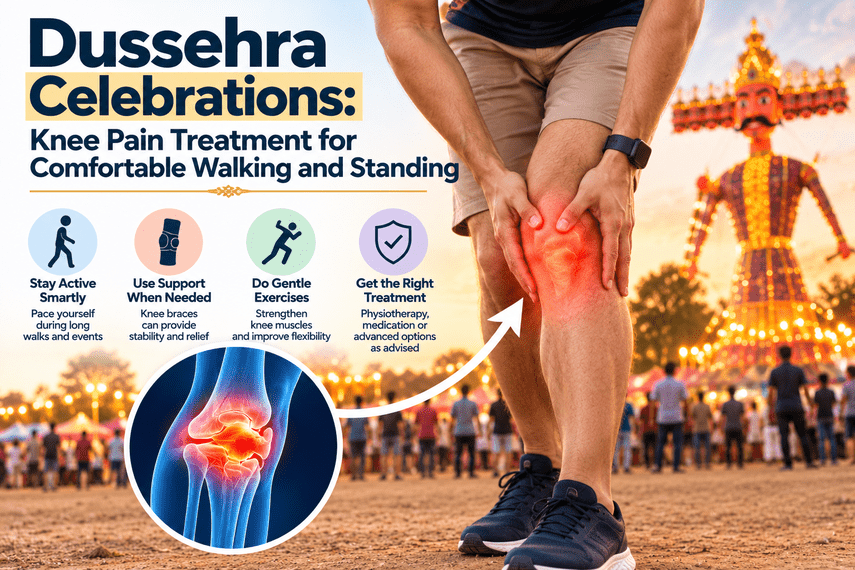
Dussehra in Hinjewadi, Pune: Knee Pain Treatment for Comfortable Walking and Standing
Dussehra often means long hours on your feet, walking between pandals, waiting in queues, attending puja and helping with celebrations at home. These activities may feel manageable at first, but spending more time standing or walking than usual can aggravate existing knee pain or cause discomfort.
For people celebrating in Hinjewadi and Pune, a little planning can make it easier to manage the demands of the day. Understanding what triggers your knee pain, knowing when to take a break and seeking appropriate treatment when needed can help you stay active more comfortably.
This guide covers practical knee pain relief tips, treatment options and ways to manage walking, standing and stairs during the festive season.
Why Can Your Knees Hurt During Dussehra?
Knee pain during festivals can have several causes. The discomfort may be related to increased activity, an existing joint condition, an injury or the demands of prolonged standing.
Common contributors include:
Prolonged standing: Staying in one position for a long time may aggravate knee discomfort, particularly if you already have joint pain.
More walking than usual: Walking between venues, shopping areas and pandals can increase the load on your knees.
Repeated stair use: Going up and down stairs can aggravate symptoms in people with certain knee conditions.
Deep bending or floor sitting: Squatting, kneeling or sitting cross-legged may be uncomfortable for people with sensitive or painful knees.
Existing osteoarthritis: People with knee osteoarthritis may experience increased pain or stiffness when their usual activity level changes.
Unsupportive or uncomfortable footwear: Shoes that do not feel stable or comfortable may make a long day on your feet more difficult.
The reason for knee pain varies from person to person. Persistent or recurring symptoms should not automatically be attributed to tired muscles or festive activity alone.
How to Manage Knee Pain During the Festival
A few practical changes can help you manage the physical demands of a long Dussehra celebration.
1. Change Position Regularly
If you need to stand in a queue, avoid remaining in one fixed position for longer than necessary. Shift your stance, take a few comfortable steps when possible and sit down when you need a break.
There is no single break schedule that works for everyone. Adjust your activity according to your symptoms and the length of the event.
2. Choose Comfortable Footwear
Wear footwear that fits well and feels stable when walking and standing. If you already use prescribed footwear or orthotic insoles, follow your healthcare professional's advice about using them during the event.
Comfortable footwear may make a long day easier, but it does not eliminate every cause of knee pain.
3. Plan Walking Distances
If you are visiting several pandals or attending events across Hinjewadi, plan your route to avoid unnecessary walking where practical.
Allow time to rest between activities, and reduce the distance or pace if your knee becomes increasingly uncomfortable. If walking causes substantial pain or difficulty bearing weight, do not force yourself to continue.
4. Modify Painful Bending and Floor Sitting
Puja and family rituals may involve kneeling, squatting or sitting cross-legged. If these positions aggravate your knee, consider using a chair or stool where appropriate.
You do not need to force a deep bend to complete a ritual. Choose a comfortable position that allows you to participate without unnecessarily aggravating your symptoms.
5. Use Stairs Carefully
If stairs trigger knee pain, use a handrail and take your time. Avoid rushing, especially when moving down steps.
If you have significant pain, instability or difficulty bearing weight, seek medical advice rather than repeatedly testing the knee on stairs.
6. Take Breaks Before Discomfort Becomes Severe
You do not have to wait until your knee hurts significantly before sitting down. Alternating activities and taking breaks can help you manage the day's demands.
If your knee becomes swollen or symptoms continue to worsen, reduce the activity and consider getting it assessed.
Knee Pain Treatment After Dussehra
If knee pain continues after the celebrations, the right treatment depends on the underlying cause, symptoms and clinical assessment.
1. Modify Activities and Manage Symptoms
Temporarily reduce activities that clearly aggravate your knee, such as prolonged standing, repeated stairs or deep squatting. Gentle movement within your comfort level may help you maintain mobility.
If swelling develops after activity, resting the knee from aggravating tasks and applying a cold pack wrapped in a cloth may help with comfort. Avoid applying ice directly to the skin.
Do not assume that every swollen knee is simply tired from walking. Significant, unexplained or persistent swelling needs medical assessment.
2. Physiotherapy and Strengthening
Physiotherapy can help address knee pain by assessing joint mobility, muscle strength, movement patterns and functional limitations.
Depending on the cause of the pain, a programme may include:
Exercises to strengthen muscles around the knee
Hip and lower-limb strengthening where appropriate
Mobility and flexibility exercises
Balance and movement training
Guidance on managing everyday activities
A personalised home exercise plan
The aim is to improve movement and function according to your needs rather than follow the same exercise plan for every knee condition.
3. Additional In-Clinic Therapies
Some people may benefit from additional physiotherapy techniques as part of a wider rehabilitation plan.
FlexifyMe's official knee pain treatment information lists manual therapy and strengthening, mobility and balance exercises. It also describes cupping, taping and dry needling as possible adjuncts for selected cases.
These techniques are not necessary for everyone. A qualified physiotherapist should determine whether they are appropriate for your condition and how they fit into your rehabilitation plan.
The availability of specific therapies depends on the clinic. Confirm the services offered at your selected location before booking.
4. Assessment for Persistent or Recurrent Knee Pain
Consider consulting a healthcare professional if knee pain keeps returning, affects your walking or sleep, or makes everyday activities increasingly difficult.
An assessment may help identify whether the symptoms are associated with osteoarthritis, an injury, a tendon problem or another condition. Imaging may be recommended when the clinical findings indicate that it is needed.
If you are repeatedly experiencing knee pain while standing, knee pain after walking or stairs knee pain, do not rely only on temporary relief. Understanding the cause can help guide appropriate treatment.
When Should You Get Knee Pain Assessed?
Arrange a medical assessment if:
Pain or swelling persists or repeatedly returns.
Your knee locks, catches or gives way.
You are having increasing difficulty walking, climbing stairs or bending the knee.
Pain is beginning to interfere with everyday activities.
Knee discomfort occurs during each festive season or after similar activities.
Seek urgent medical care if you cannot bear weight on the knee, the knee appears deformed, there is substantial swelling after an injury, or the joint is hot and swollen with fever.
These symptoms may require prompt evaluation rather than routine physiotherapy alone.
Frequently Asked Questions
Should I stop walking if my knees hurt?
Not necessarily. Some people can continue with shorter, comfortable walks, while others need to reduce their activity depending on the cause and severity of the pain. Avoid pushing through significant or worsening symptoms. If walking becomes difficult or the knee feels unstable, seek medical assessment.
Can knee supports or knee caps help during Dussehra?
Some supports may provide comfort or a feeling of stability for certain conditions. However, the appropriate type depends on the problem, and a support does not replace assessment or rehabilitation. Ask a qualified healthcare professional whether a knee support is suitable for you.
Is sitting cross-legged bad for the knees?
Not for everyone. However, deep knee bending can aggravate symptoms in some people, including those with certain joint conditions. If sitting cross-legged causes pain, try a chair or stool instead of forcing the position.
Why do my knees hurt after standing for a long time?
Prolonged standing may aggravate knee symptoms, but the underlying reason varies. Existing osteoarthritis, previous injuries, muscle weakness and other conditions may contribute. If the pain is persistent or recurrent, a clinical assessment can help determine the cause.
Where can I find a physiotherapist near me for knee pain?
If you search for physiotherapist near me or physiotherapy near me in Hinjewadi, look for a qualified provider who assesses your symptoms, checks your movement and strength, and explains a personalised treatment plan.
FlexifyMe offers physiotherapy through online consultations and physical clinics in selected locations. Check its official website to confirm current clinic locations, appointment options and available services.
Enjoy Dussehra With More Comfortable Movement
Walking between pandals, standing in queues and attending family celebrations can place extra demands on your knees. Comfortable footwear, sensible activity planning, regular position changes and breaks may help you manage these demands.
If your knee pain persists after Dussehra, keeps returning or affects your ability to walk and climb stairs, consider a professional assessment instead of repeatedly ignoring the symptoms.
For those looking for knee pain treatment in Hinjewadi, Pune, FlexifyMe provides assessment-led physiotherapy that can include movement analysis, strengthening, mobility work and personalised rehabilitation. Physical clinic availability and specific treatment options vary by location, and online physiotherapy is also available.
Visit the official FlexifyMe website to explore its current services and confirm the most suitable appointment option for your needs.
This article is for general information and is not a substitute for individual medical advice. A knee that cannot bear weight, appears deformed, has substantial swelling after an injury, or is hot and swollen with fever needs prompt medical assessment.