







 ₹https://clinics.flexifyme.com/flexifyme/pune/hinjewadi/flexifyme-advanced-physiotherapy-clinic-in-hinjewadi-pune--7gAsKd/articles/dussehra-activities-in-hinjewadi-pune-elbow-pain-t--39087d50-aa2b-423e-a37c-40e10b740856
FlexifyMe Advanced Physiotherapy Clinic, Hinjewadi, pune
Physiotherapy Clinic in Hinjewadi, Pune, Maharashtra
No 3/1, Second Floor, Hinjawadi Phase II, Rajiv Gandhi Infotech Park, Hinjewadi, pune, maharashtra - 411057Request A Call Back
FlexifyMe Advanced Physiotherapy Clinic Social Feeds in Hinjewadi, pune
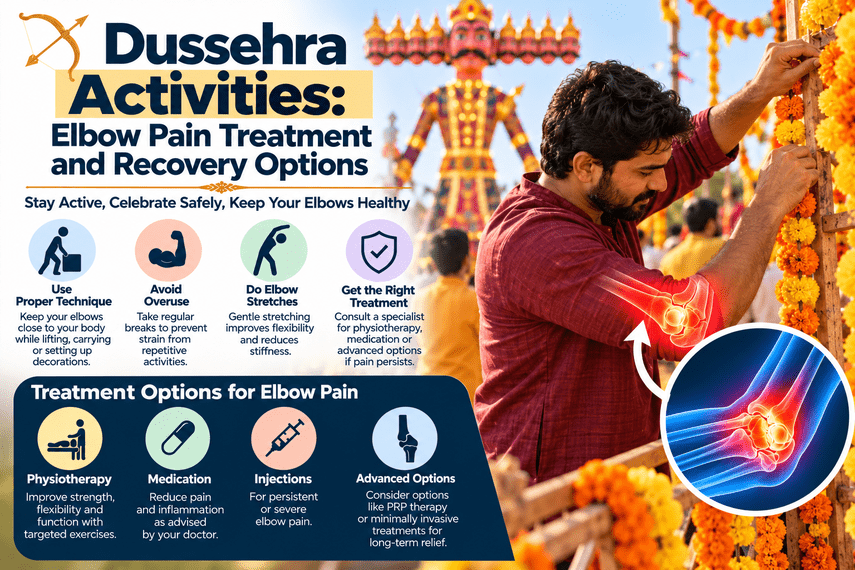
Dussehra Activities in Hinjewadi, Pune: Elbow Pain Treatment and Recovery Options
Introduction
Elbow pain can develop after several days of festival preparation, even when there has been no obvious injury. Cleaning, carrying shopping bags, hammering decorations, stringing garlands and playing dandiya all involve repeated movements of the arms and hands.
During Dussehra in Hinjewadi and across Pune, these activities may put more demand on the muscles and tendons around the elbow than usual. You might notice discomfort when lifting a cup, carrying a bag, turning a door handle or gripping a dandiya stick.
The cause is not always the same. Pain on the outside or inside of the elbow may be related to tendon problems, while swelling at the back of the joint or tingling in the fingers can have other causes.
Understanding your symptoms can help you decide when to modify activities and when to seek professional care. The right elbow pain treatment depends on the underlying problem, its severity and how it affects your daily activities.
What Type of Elbow Pain Are You Experiencing?
The location of the pain can offer clues, but it cannot confirm a diagnosis. A healthcare professional can assess your symptoms and determine the appropriate next steps.
1. Pain on the Outside of the Elbow
Pain on the outer side of the elbow may be associated with tennis elbow, also known as lateral epicondylalgia or lateral epicondylitis. It affects the tendons involved in extending the wrist and fingers.
You may notice:
Pain when gripping a cup, bag or tool.
Discomfort when lifting objects or turning a handle.
Tenderness around the outside of the elbow.
Reduced grip strength because of pain.
Despite its name, tennis elbow can affect people who do not play tennis. Repeated gripping and wrist movements during household work, sports or other activities may contribute to the problem.
2. Pain on the Inside of the Elbow
Pain around the inner side of the elbow may be related to golfer's elbow, also called medial epicondylalgia or medial epicondylitis. This condition affects tendons involved in bending the wrist and fingers.
Activities that involve repeated gripping, wrist movements or forceful carrying may aggravate symptoms. If you notice pain while holding objects, using tools or performing repetitive tasks, consider reducing the activity that triggers it and getting assessed if the discomfort persists.
3. Pain or Swelling at the Back of the Elbow
Pain and swelling around the bony point at the back of the elbow may have several causes, including irritation of the bursa, a direct injury or another joint problem.
Avoid repeatedly leaning on the affected area. If swelling is marked, the area is red or hot, or the pain follows a fall or direct blow, seek medical assessment rather than assuming it is a simple strain.
4. Elbow Pain With Tingling in the Fingers
Tingling or numbness that travels from the elbow into the ring and little fingers may be associated with irritation or compression of the ulnar nerve.
Do not treat persistent tingling as ordinary muscle soreness. Arrange an assessment, particularly if the symptoms are recurring or accompanied by hand weakness or difficulty holding objects.
Why Can Elbow Pain Develop After Dussehra Activities?
Many festival tasks involve repeated gripping, wrist movements and carrying. If you suddenly do much more of these activities than usual, the muscles and tendons around the elbow may struggle to tolerate the increased workload.
For example, cleaning for long periods, repeatedly cutting materials, carrying shopping bags or using tools can place repeated demands on the forearm muscles and their tendons.
However, not all elbow pain is caused by overuse. A fall, sudden twist, joint condition or nerve problem may also cause symptoms. Identifying the likely cause is important because treatment for a tendon problem may differ from care for an injury or nerve-related condition.
Elbow Pain Treatment: What Can Help?
Treatment depends on the diagnosis and the severity of your symptoms. For many tendon-related problems, managing aggravating activities and following an appropriate rehabilitation plan can help improve function over time.
1. Adjust Activities Instead of Pushing Through Pain
You may not need to stop every activity, but continuing the same movements at the same intensity can aggravate symptoms.
Spread demanding household tasks across several days.
Alternate repetitive gripping tasks with activities that use different movements.
Reduce forceful gripping, twisting and lifting when these trigger pain.
Use tools and handles that feel comfortable to hold.
Take breaks during prolonged cleaning, decoration work or dandiya practice.
Return to demanding tasks gradually as symptoms allow.
Avoid both extremes: repeatedly provoking pain and assuming that complete rest is always the answer. The appropriate level of activity depends on the cause of the pain and whether an injury needs specific treatment.
2. Use Gentle Exercises Only When Appropriate
Exercises can be part of elbow rehabilitation, but the right starting point depends on the condition.
A physiotherapist may recommend gentle wrist or forearm movements, isometric exercises or other exercises selected for your symptoms. These can help maintain movement and support a gradual return to activity when appropriate.
Do not start heavy strengthening or forceful stretching simply because the elbow hurts. Stop an exercise if it causes sharp pain, increases tingling or noticeably worsens your symptoms. After an injury, seek advice before beginning a rehabilitation programme.
3. Build Strength Gradually
For many cases of tennis elbow or golfer's elbow, a progressive exercise programme may form an important part of rehabilitation. Exercises can target the wrist and forearm muscles and may be adjusted as strength and tolerance improve.
A suitable programme should account for your pain, daily workload and current strength. Progression should be gradual rather than based on a fixed number of repetitions or a predetermined recovery week.
Shoulder and grip function may also be considered during assessment, depending on the person's symptoms and activity demands. Not everyone needs the same exercises, and strengthening should be tailored to the condition.
4. Consider Support or Bracing if Recommended
A brace, splint or counterforce strap may help some people manage discomfort during certain activities. Its suitability depends on the diagnosis, how it fits and which movements aggravate the pain.
Support devices should not replace assessment or a suitable rehabilitation plan. If a brace increases pain, causes numbness or feels too tight, stop using it and seek professional advice.
5. Understand the Role of Physiotherapy
Physiotherapy may help address elbow pain by assessing movement, strength and the activities that aggravate symptoms. Depending on the findings, a treatment plan may include:
Therapeutic exercises: Exercises selected to improve strength, movement and function.
Manual therapy: Hands-on techniques or joint mobilisation when appropriate.
Activity and ergonomic guidance: Adjustments to gripping, lifting and repetitive tasks.
Progressive rehabilitation: Gradually adapting exercise and activity demands as symptoms and function change.
Selected physical therapy modalities: Techniques such as ultrasound or electrical stimulation may be considered in some cases, depending on the assessment and treatment goals.
These options are not necessary for everyone, and no single technique guarantees recovery. A clinician should explain the purpose of the recommended treatment and how it fits into the overall plan.
Elbow Pain Treatment at FlexifyMe
FlexifyMe's official website describes physiotherapy services for pain and musculoskeletal conditions, including assessment-led, personalised treatment planning. Its published elbow pain guidance discusses activity modification, exercise-based rehabilitation, manual therapy and selected treatment modalities.
Depending on the assessment, a physiotherapist may recommend exercises and changes to everyday activities, with additional techniques considered where suitable. FlexifyMe's general therapies pages also describe services such as dry needling and kinesiology taping for certain musculoskeletal conditions. Their suitability for an individual case should be decided by a qualified professional rather than assumed from the symptoms alone.
Elbow Pain Recovery Time: What Should You Expect?
There is no single recovery timeline for all types of elbow pain. Recovery depends on the underlying cause, how severe the symptoms are, how long they have been present and whether the recommended treatment addresses the problem.
Some mild symptoms may improve after reducing the activities that aggravate them. Tendon-related problems can take longer and may require a gradual rehabilitation programme. Pain caused by a fracture, significant injury, nerve problem or another medical condition may need different care.
Keep these points in mind:
Improvement may be gradual. Changes in pain and function do not always happen at the same rate.
A flare-up does not automatically mean treatment has failed. It may mean that the recent workload exceeded what your elbow could tolerate.
Do not stop rehabilitation solely because pain has reduced. Ask your physiotherapist how and when to progress or finish the programme.
Seek reassessment if symptoms worsen or do not improve. The diagnosis or treatment plan may need to be reviewed.
A physiotherapist or doctor can discuss a more appropriate recovery estimate after assessing your condition. Avoid relying on a fixed number of weeks or months without considering the cause.
Practical Ways to Reduce Elbow Strain During Dussehra
Small changes to how you prepare for the festival may help reduce repeated strain on the elbow and forearm.
Use comfortable grips: Choose tools with handles that are easy to hold and avoid gripping harder than necessary.
Keep items close to your body: This can make carrying and lifting more manageable.
Share demanding tasks: Avoid doing all the cleaning, cutting or decoration work in one long session.
Take regular breaks: Change tasks before fatigue builds up.
Adjust your technique: Avoid repeatedly twisting your wrist or lifting in a way that triggers elbow pain.
Build up activity gradually: If you are returning to dandiya or other physical activities after a break, increase the duration and intensity according to your comfort and ability.
If a particular movement causes sharp or increasing pain, do not keep repeating it to test the elbow.
When Should You See a Physiotherapist or Doctor?
Arrange an assessment if elbow pain continues, returns repeatedly or affects your ability to work, grip objects or complete daily activities. Persistent pain, noticeable weakness or tingling in the fingers also deserves attention.
Seek prompt medical assessment if you experience:
Severe pain after a fall or direct blow.
Visible deformity or substantial swelling.
An elbow that becomes locked or is difficult to move.
New or worsening numbness or weakness in the hand.
A red, hot or swollen elbow, especially if you also have a fever.
These symptoms may indicate a problem that needs medical evaluation rather than routine self-care.
Frequently Asked Questions
Can I continue working if I have elbow pain?
It may be possible to continue some activities with modifications, depending on the cause and severity of the pain. Reduce movements that aggravate symptoms, adjust your grip and take breaks. If pain is increasing or affecting normal function, seek professional advice.
Do cortisone injections cure tennis elbow?
Corticosteroid injections may be considered in selected cases, but they are not a guaranteed cure and may not provide the best long-term outcome for everyone. The benefits and risks depend on the individual situation. Discuss the available options with a doctor who has assessed your elbow.
Why did my elbow start hurting after the festival?
Symptoms can become noticeable after repeated activity rather than during a single task. However, delayed pain does not confirm a tendon problem. If the pain persists, worsens or affects your grip, get it assessed.
Can tennis elbow or golfer's elbow return?
Symptoms can recur, especially if the activities that aggravate them increase quickly or rehabilitation is not suited to the person's needs. Gradual changes to workload, appropriate strengthening and guidance on activity can help manage the demands placed on the elbow.
How do I find a physiotherapist near me for elbow pain?
Search for physiotherapist near me or elbow pain treatment in Hinjewadi to explore local options. Look for a qualified physiotherapist who assesses your symptoms, movement, strength and everyday activities before recommending a treatment plan. Confirm the clinic's location and service availability before booking.
Take Care of Your Elbows This Dussehra
Festival preparation can involve more repeated gripping, lifting and wrist movement than your arms are used to. Adjusting your workload, taking breaks and returning to demanding activities gradually may help reduce unnecessary strain.
If elbow pain persists, affects your grip or comes with tingling or weakness, do not rely on home remedies alone. A proper assessment can help identify the cause and guide appropriate treatment.
For people exploring elbow pain treatment, FlexifyMe provides information about physiotherapy services and treatment approaches on its official website. Review the published guidance and confirm the availability of relevant services in your area before booking an appointment.
This article is for general information only and is not a substitute for personal medical advice. Seek prompt medical assessment for elbow pain following a significant injury, a locked or deformed elbow, marked swelling, or numbness and weakness in the hand.