







 ₹https://clinics.flexifyme.com/flexifyme/pune/hinjewadi/flexifyme-advanced-physiotherapy-clinic-in-hinjewadi-pune--7gAsKd/articles/diwali-shopping-2026-in-hinjewadi-pune-how-to-avoi--84cd7071-8b7a-4f29-8c9b-9efb77683d77
FlexifyMe Advanced Physiotherapy Clinic, Hinjewadi, pune
Physiotherapy Clinic in Hinjewadi, Pune, Maharashtra
No 3/1, Second Floor, Hinjawadi Phase II, Rajiv Gandhi Infotech Park, Hinjewadi, pune, maharashtra - 411057Request A Call Back
FlexifyMe Advanced Physiotherapy Clinic Social Feeds in Hinjewadi, pune
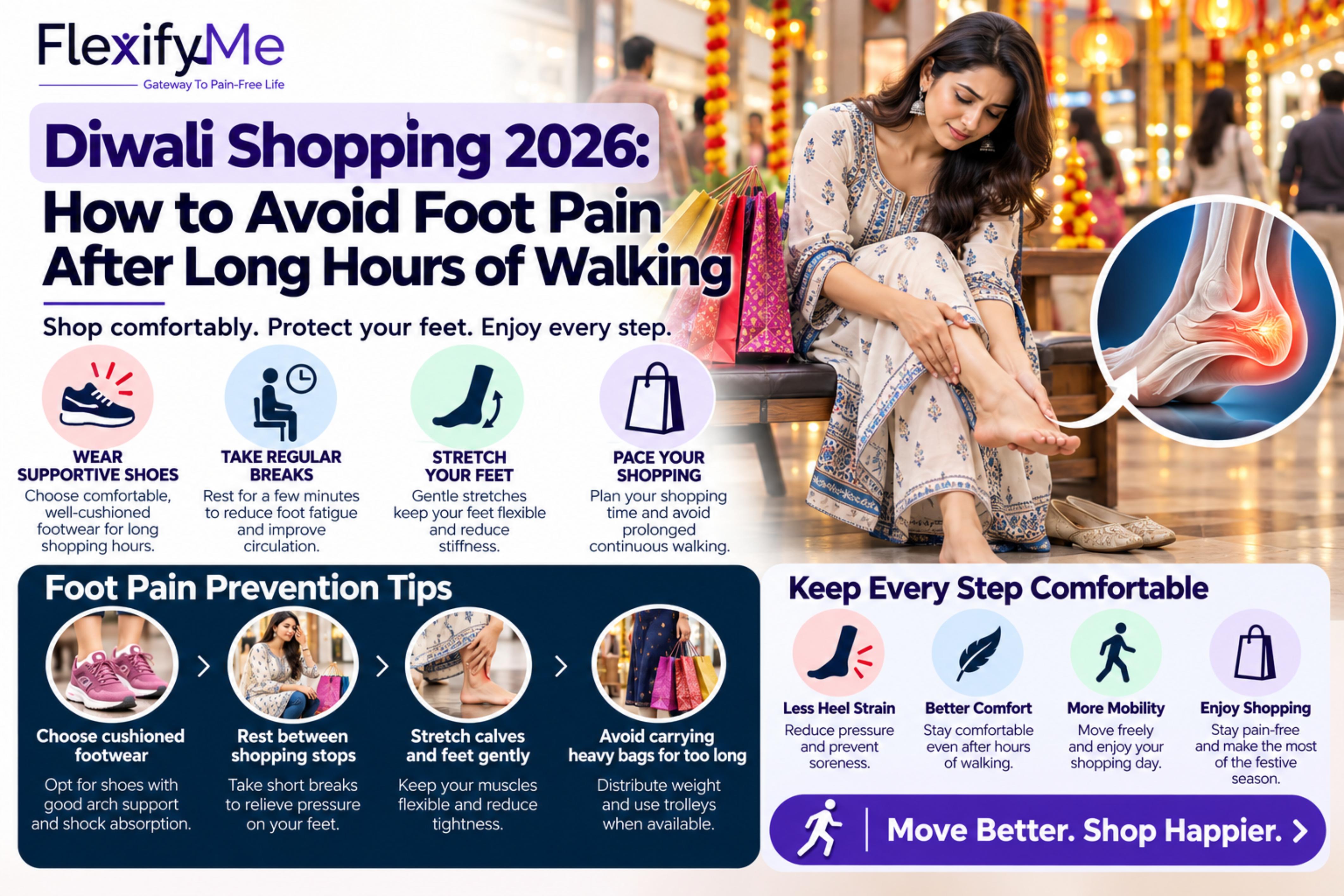
Diwali Shopping 2026 in Hinjewadi, Pune: How to Avoid Foot Pain After Long Hours of Walking
Diwali shopping often means visiting several markets, walking through malls, standing in billing queues and carrying shopping bags for hours. By the end of the day, your feet may feel tired, sore or swollen, making it difficult to enjoy the rest of your festive plans.
Foot pain after walking for long periods can be influenced by footwear, the time spent standing, walking surfaces and the amount of activity your feet are used to. A few practical changes before and during your shopping trip can help make the day more comfortable.
If you are planning a long shopping trip in Hinjewadi or elsewhere in Pune, here are some ways to look after your feet and recognise when discomfort may need professional attention.
Why can Diwali shopping cause foot pain?
Walking outdoors, browsing in shops and standing in queues place different demands on your feet. Several factors can contribute to discomfort during a long shopping day.
Hard floors: Spending hours walking or standing on tile, marble or other firm surfaces can make your feet feel tired.
Long periods of standing: Waiting at billing counters or browsing without sitting down can increase discomfort, particularly if you are not used to standing for extended periods.
Unsuitable footwear: Thin soles, poor fit, limited cushioning or shoes that rub against the skin can make walking uncomfortable.
High heels: Heels can increase pressure on the front of the foot and may become uncomfortable during prolonged standing or walking.
Heavy shopping bags: Carrying bags for a long time may affect your posture and make it harder to walk comfortably.
A sudden increase in activity: If your usual routine involves little walking, several hours of shopping can place more demand on your feet than they are accustomed to.
These factors do not explain every case of foot pain. Persistent, severe or recurring discomfort may have another cause and should not automatically be attributed to shopping.
Common types of foot discomfort during shopping
Knowing where your feet hurt and when the discomfort occurs can help you decide what to do next. However, symptoms alone cannot confirm a diagnosis.
Arch and heel pain
Pain around the heel or arch may become noticeable after prolonged walking or standing. Some people also experience heel discomfort during their first steps in the morning.
One possible cause is plantar fasciitis, a condition involving the plantar fascia, the tissue along the bottom of the foot. Other conditions can also cause heel pain, so recurring or persistent symptoms deserve assessment.
Supportive footwear, appropriate activity adjustments and professional guidance may help depending on the cause.
Forefoot pain from heels
The forefoot is the area around the ball of the foot, just behind the toes. High heels and narrow shoes can increase pressure in this area, potentially causing aching, burning or discomfort.
For a long shopping trip, choose footwear that fits properly, gives your toes enough room and feels comfortable while walking. Save less practical festive footwear for occasions involving less walking.
Blisters and skin irritation
Blisters commonly develop when footwear repeatedly rubs against the skin. New shoes, poorly fitting sandals, damp socks and long walking distances may increase friction.
If you notice a hot spot or rubbing, stop and check the area rather than continuing until the skin becomes painful. A suitable blister dressing may help protect intact skin.
General foot fatigue and swelling
Your feet may feel tired or appear slightly swollen after prolonged activity. Tight footwear can make this more noticeable.
Choose shoes with enough room for your feet and avoid footwear that becomes uncomfortable during the day. If swelling is significant, persistent or affects only one foot without an obvious explanation, seek medical advice.
Ankle and calf discomfort
Long periods of walking or standing can also cause tiredness around the ankles and calves. Footwear, activity levels and the way you move may contribute.
If the discomfort keeps returning, becomes severe or affects your ability to walk normally, consider a professional assessment rather than assuming it is ordinary fatigue.
Before you leave: Prepare your feet for a long shopping day
A little preparation can help you avoid common sources of discomfort.
Wear comfortable, well-fitting footwear
Do not make a long shopping trip the first outing for a new pair of shoes or sandals. Wear new footwear for shorter periods beforehand to check for rubbing, pressure points and fit problems.
For extended walking, choose shoes with comfortable cushioning, a secure fit and enough room for your toes. The best footwear for long walking is the pair that fits your feet and feels suitable for your needs.
Save high heels for shorter occasions
High heels may be part of your festive outfit, but they can place additional pressure on the forefoot. Consider wearing comfortable shoes while travelling and shopping, then changing into festive footwear for a shorter event.
If you prefer heels, choose a height and fit that you can manage comfortably without increasing pain.
Plan your route and breaks
Visiting every market in one continuous trip may not be practical if you are not used to long periods of walking. Group nearby shops together, plan places where you can sit and leave enough time for breaks.
If possible, split shopping across more than one day instead of trying to complete everything at once.
Carry bags comfortably
Use a bag that is easy to carry and avoid keeping heavy shopping bags in one hand for long periods. A well-fitted backpack or crossbody bag may help distribute the load more comfortably, depending on its weight and fit.
You can also arrange deliveries where suitable or return to your vehicle between shopping stops to reduce the amount you carry.
Choose socks that fit well
If you are wearing closed shoes, comfortable socks that fit without bunching may help reduce friction. Keep your feet dry and check that seams or folds are not rubbing against the skin.
During shopping: Simple ways to reduce foot fatigue
Once you are out, small adjustments can help you manage the demands of the day.
Take regular sitting breaks
Avoid standing in one position for long periods whenever possible. Sit down periodically, especially if your feet begin to ache.
There is no single break schedule that works for everyone. Adjust the frequency according to your comfort, activity level and any existing foot or joint condition.
Change position regularly
While waiting in queues, avoid locking your knees or remaining in one position for too long. Gently shifting your weight or moving your ankles may make standing more comfortable.
If an activity increases your pain, stop or change position rather than repeatedly pushing through it.
Keep your walking pace manageable
You do not need to rush between every shop. Allow enough time to walk at a comfortable pace and take breaks when needed.
If your feet become increasingly painful, shorten the trip or return home. Continuing for several more hours may aggravate the discomfort.
Check your footwear when discomfort starts
If a shoe begins rubbing or pressing against a particular area, stop to check the fit. Adjust the footwear or change pairs if possible.
A blister dressing may help protect an area of intact skin that is rubbing. Avoid popping blisters yourself, especially if you have diabetes, reduced sensation or circulation problems.
Drink water and plan meals
Stay hydrated during your outing and take breaks for food as needed. Hydration supports general health, but drinking extra water should not be considered a specific treatment for foot pain.
After shopping: Help tired feet recover
After several hours on your feet, give yourself time to recover instead of immediately planning another demanding activity.
Rest and elevate your feet
Sit comfortably and elevate your feet if they feel tired or mildly swollen. This may help relieve discomfort associated with prolonged standing.
If swelling does not improve, becomes more pronounced or is accompanied by other symptoms, seek medical advice.
Try gentle movement if comfortable
Gentle ankle movements and comfortable foot movement may help you return to your usual routine. Avoid forceful stretching or exercises that increase pain.
Complete rest is not necessary for every episode of ordinary foot fatigue, but the right level of activity depends on the cause and severity of your symptoms.
Use a cool pack for temporary comfort
A cool pack wrapped in a towel may help ease discomfort for a short period. Do not place ice directly on the skin, and avoid cold treatment if you have reduced sensation or a condition that makes it unsuitable.
Stop if your skin becomes unusually painful, numb or irritated.
Choose comfortable footwear the next day
If your feet are still tired, wear shoes that fit well and avoid unnecessary long walks until you feel more comfortable. Gradually return to your usual activity rather than forcing yourself to complete another demanding day.
Do not assume that persistent or worsening pain is normal simply because you spent a long time shopping.
When should you seek professional help for foot pain?
Occasional tiredness after an unusually long day may settle with appropriate rest and changes to your activity. Some symptoms, however, require medical attention.
Consider consulting a healthcare professional if:
Heel pain keeps returning, particularly if it is pronounced during your first steps in the morning.
Pain is concentrated in one specific area rather than feeling like general tiredness.
Foot pain repeatedly occurs after ordinary walking or affects your daily activities.
Swelling does not settle or keeps returning.
You have difficulty walking normally or the discomfort is getting worse.
Seek prompt medical assessment if you cannot bear weight, have a hot, red and swollen foot, develop new numbness or suspect a significant injury. If you have diabetes, seek advice promptly about foot wounds, blisters or skin changes.
These symptoms can have different causes. A healthcare professional can determine whether you need medical investigation, footwear advice, physiotherapy or another form of treatment.
How can FlexifyMe help assess foot pain?
Foot pain can be affected by several factors, including mobility, movement patterns, foot alignment and the demands placed on the feet. A suitable assessment can help identify relevant issues rather than focusing only on the area that hurts.
FlexifyMe's official website describes an assessment approach that includes foot and pressure analysis, gait and movement analysis, and expert clinical assessment. AI-assisted assessment tools can provide additional information about foot loading and movement patterns, while a physiotherapist considers your symptoms, history and functional needs.
Depending on the assessment, physiotherapy may involve therapeutic exercises, movement guidance and manual therapy. The appropriate approach varies according to the cause of the pain and the individual's needs.
These assessment tools do not independently diagnose every cause of foot pain. If symptoms suggest a condition requiring medical investigation, further assessment may be necessary.
If you are looking for foot pain treatment in Hinjewadi, Pune, check FlexifyMe's official website for current clinic locations and available services. Online physiotherapy consultations are also listed as an option, although an online consultation may not replace an in-person examination when one is needed.
Frequently Asked Questions
Are flat sandals better than heels for shopping?
Not necessarily. Very thin soles or poorly fitting flat sandals may be uncomfortable during prolonged walking. Choose footwear that fits well, provides suitable cushioning and feels stable. High heels may increase pressure on the forefoot, so they may be less comfortable for long shopping trips.
Why do my feet hurt after walking around a mall?
Long periods of walking and standing, firm floors, unsuitable footwear and an increase in activity can all contribute to foot discomfort. If the pain is severe, recurring or persistent, it is worth investigating rather than assuming the floor is the only cause.
Should I use arch support insoles?
Some people find supportive insoles helpful, depending on their footwear, symptoms and foot condition. They are not necessary for everyone and do not address every cause of foot pain. If you have persistent discomfort, ask a healthcare professional whether an insole may be suitable.
How long should foot soreness last after shopping?
Mild fatigue may improve after you reduce activity and rest. There is no universal timeframe because recovery depends on the cause and severity of the discomfort. Seek professional advice if the pain persists, worsens, keeps returning or interferes with normal walking.
How do I find a physiotherapist near me for foot pain?
When searching for a physiotherapist near me or physiotherapy near me, look for a qualified professional who assesses your symptoms, movement and functional limitations before recommending treatment. Ask whether your symptoms need medical assessment first.
If you are considering FlexifyMe, confirm clinic locations and service availability on its official website.
Enjoy Diwali Shopping Without Ignoring Your Feet
Diwali shopping should be about finding gifts, enjoying the festive atmosphere and spending time with family, not struggling with avoidable discomfort. Comfortable footwear, manageable shopping plans, regular breaks and attention to early signs of rubbing can help make long outings easier.
If you experience recurring foot pain after walking, do not rely on footwear changes alone to solve the problem. The cause may need professional assessment.
FlexifyMe offers physiotherapy services that include expert clinical assessment, AI-assisted movement analysis and personalised treatment planning. If you are exploring foot pain treatment in Hinjewadi, Pune, visit the official FlexifyMe website to check available locations and services or enquire about an appropriate assessment.
This article is for general information only and is not a substitute for professional medical advice, diagnosis or treatment. Seek prompt medical assessment if you cannot bear weight, develop a hot, red and swollen foot, experience new numbness or have a foot wound and diabetes.