







 ₹https://clinics.flexifyme.com/flexifyme/pune/hinjewadi/flexifyme-advanced-physiotherapy-clinic-in-hinjewadi-pune--7gAsKd/articles/diwali-2026-travel-from-hinjewadi-pune-staying-com--f2d29f85-9ac3-4098-8f85-a5b7c32372d3
FlexifyMe Advanced Physiotherapy Clinic, Hinjewadi, pune
Physiotherapy Clinic in Hinjewadi, Pune, Maharashtra
No 3/1, Second Floor, Hinjawadi Phase II, Rajiv Gandhi Infotech Park, Hinjewadi, pune, maharashtra - 411057Request A Call Back
FlexifyMe Advanced Physiotherapy Clinic Social Feeds in Hinjewadi, pune
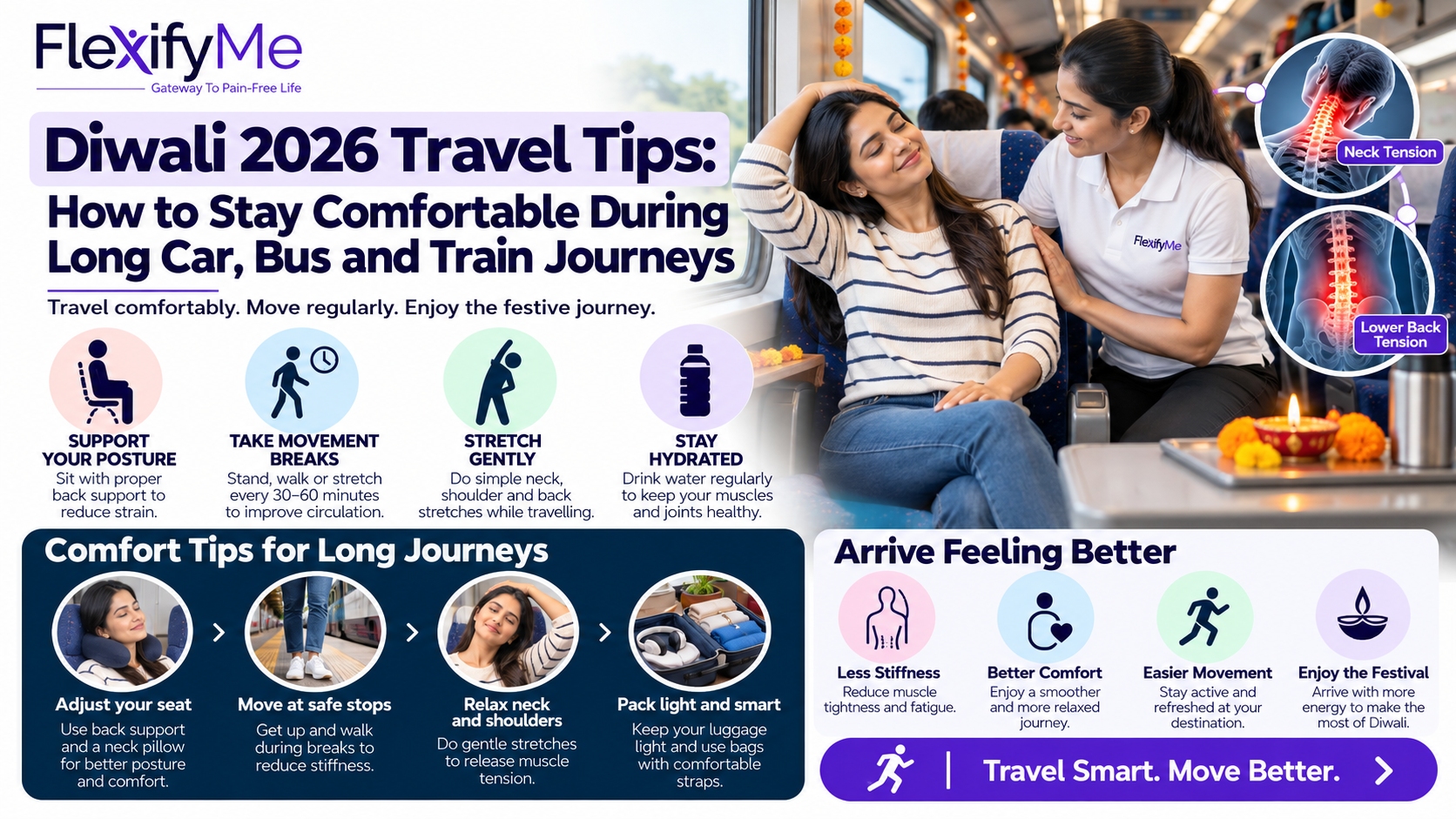
Diwali 2026 Travel from Hinjewadi, Pune: Staying Comfortable on Long Car, Bus and Train Journeys
Prepare for a More Comfortable Diwali Journey
Diwali often means travelling to meet family, attend celebrations and spend time away from home. Whether you are driving from Hinjewadi, taking a bus across Pune, or travelling by train or flight, a long journey can leave you feeling stiff and tired.
Extended sitting, limited opportunities to move, uncomfortable positions and handling heavy luggage can all contribute to travel-related discomfort. Your journey may also involve lifting bags when you are tired after several hours of travel.
A little preparation can help you manage these demands more comfortably. These long journey travel tips cover luggage handling, seating positions, movement breaks and precautions for different modes of transport.
Handle Your Luggage Without Unnecessary Strain
Luggage can be difficult to manage at railway stations, airports, bus stops and hotel entrances. Heavy or awkward bags may place extra demands on your back, shoulders and arms, especially when you lift them in a hurry.
Choose Bags You Can Manage
Before leaving home, consider how much you really need to carry.
Divide your belongings between manageable bags instead of overloading one bag.
Use a suitcase with wheels when the surface allows it.
Keep essential items in a smaller bag that is easy to reach.
Avoid carrying several heavy bags at the same time.
Ask for assistance with luggage that is too heavy or awkward to handle safely.
Use a Comfortable Lifting Technique
When lifting a bag from the floor, move close to it and establish a stable position before lifting. Bend your hips and knees as comfortable, keep the load close to your body, and straighten up smoothly without jerking.
Avoid lifting a heavy bag while twisting your back. Turn your feet and body together if you need to change direction.
For overhead luggage racks, do not attempt to lift a heavy suitcase above shoulder height if you cannot control it comfortably. Ask for help instead.
Take Care When Lifting After Sitting
After a long period of sitting, stand up carefully and allow yourself to move around before handling heavy luggage if circumstances permit. There is no universal waiting period that everyone needs to follow, but rushing straight into a demanding lift when you feel stiff or tired may make the task harder.
Long Journey Travel Tips for Car Passengers and Drivers
Car journeys offer flexibility, but sitting for several hours without a break can contribute to back discomfort and stiffness. Drivers also need to maintain a comfortable position while remaining alert and in control of the vehicle.
Adjust Your Seat Before Leaving
A suitable driving position helps you reach the pedals and steering wheel without unnecessary stretching.
Adjust the seat so you can reach the pedals comfortably while keeping your knees slightly bent.
Keep your back supported by the seat.
Adjust the backrest so you can maintain a comfortable, upright position without feeling rigid.
Keep your shoulders relaxed and your elbows slightly bent while holding the steering wheel.
If you use a small lumbar cushion, make sure it supports your back without pushing you into an uncomfortable position.
Avoid keeping a thick wallet or other bulky object in a back pocket while sitting for long periods, as it may make your sitting position uneven.
Plan Stops During Long Drives
Where possible, schedule regular stops to get out of the car, walk briefly and change your position. The appropriate frequency depends on the journey, road conditions, your comfort and your individual needs.
Drivers should never delay a necessary rest when tired or uncomfortable. Take breaks in safe, designated places and never compromise driving attention to perform stretches or exercises.
Share the Driving When Possible
If another eligible and rested driver is available, sharing the driving may reduce fatigue. Do not continue driving when you are sleepy, distracted or struggling to maintain a safe driving position.
For passengers, changing position and moving around during suitable stops can help reduce the discomfort associated with prolonged sitting.
How to Stay Comfortable During Bus Travel
Bus journeys may offer fewer opportunities to move, particularly when the vehicle is crowded or travelling overnight. Seat space, road conditions and journey duration can also affect how comfortable you feel.
Choose a Comfortable Seat
If you can select your seat, consider your personal comfort and how easily you can get in and out. An aisle seat may make it easier to stand when the bus stops, but only move around when it is safe and permitted.
Use a small cushion or travel pillow if it helps support your neck comfortably. Avoid forcing your head into a fixed position that feels unnatural.
Keep Essential Items Within Reach
Store frequently used items in an accessible bag rather than repeatedly reaching for luggage overhead. Keep bags and personal belongings secured so they do not obstruct the aisle or create a tripping hazard.
Follow the bus operator's instructions for storing luggage, and do not attempt to lift a heavy bag into an overhead compartment if you cannot manage it safely.
Change Position When Possible
During longer journeys, make small, comfortable movements while seated. You can gently move your ankles, change your leg position and relax your shoulders, provided the movement does not cause pain.
If the bus stops and it is safe to get off, use the opportunity to stand and walk briefly. Do not move around a moving bus if doing so could affect your balance or safety.
Train Journey Comfort Tips for Diwali
Trains can offer opportunities to stand and walk when the layout, crowding and railway rules allow it. However, movement may be restricted during busy festive travel, so plan around the conditions rather than assuming you can always walk freely.
Make Your Seating and Sleeping Position Comfortable
Use the available seat or berth in a way that supports a comfortable posture. A suitable travel pillow may help support your neck during rest.
Avoid remaining in one position for the entire journey if you can safely change positions. If you are travelling overnight, arrange your belongings so you do not have to reach awkwardly for essentials.
Move Safely Around the Coach
When conditions allow, stand up or walk a short distance periodically. Hold suitable supports when moving through the carriage, especially if the train is moving.
Be careful near doors, steps and the gaps between coaches. Avoid walking through the carriage when it is crowded or when your movement could put you or other passengers at risk.
Manage Your Luggage Carefully
Keep luggage in the designated storage area and avoid blocking walkways. Ask for assistance with heavy bags rather than attempting an awkward lift in a crowded carriage.
Staying Comfortable During Long Flights
Although the main focus of this guide is car, bus and train travel, similar principles apply to long flights. Limited space and extended sitting can contribute to stiffness and discomfort.
Change Position When Safe
If you are able to do so, change your sitting position periodically. Gentle ankle movements and comfortable leg movements while seated may help you avoid remaining completely still for long periods.
When the seatbelt sign is off and conditions permit, you can walk briefly along the aisle if it is safe to do so.
Stay Hydrated
Drink water regularly according to your needs and any medical advice you have been given. Avoid relying on caffeinated or alcoholic drinks as a substitute for water.
Understand Your Risk of Blood Clots
Long periods of immobility can increase the risk of blood clots in some travellers, particularly those with additional risk factors. If you have a history of blood clots, recent surgery, limited mobility or another relevant medical condition, ask a healthcare professional about suitable precautions before travelling.
Seek urgent medical care if you develop swelling, pain, tenderness or warmth in one leg, particularly after prolonged travel. Sudden breathlessness or chest pain requires emergency medical attention.
Simple Movements for Long Journeys
You do not need an elaborate exercise routine to change your position during travel. Gentle movements may help you remain more comfortable, provided they are suitable for your health and do not cause pain.
Try the following while seated and when it is safe to do so:
Ankle movements: Gently point your toes away from you and bring them back towards you.
Shoulder rolls: Roll your shoulders slowly within a comfortable range.
Gentle knee movements: Move your knees or straighten and bend your legs as the available space allows.
Posture adjustments: Relax your shoulders, change your sitting position and avoid holding your neck in one position for too long.
When you have a safe opportunity to stand, take a short walk and allow your body to move naturally.
The aim is to avoid prolonged immobility when possible, not to push through pain or perform strenuous exercises in a confined space. These movements are not a guarantee against blood clots or other travel-related health problems.
What to Do When You Reach Your Destination
After a long journey, you may feel stiff, tired or uncomfortable. You might also be tempted to unload every bag, unpack your belongings and begin preparing for the festivities immediately.
Instead, give yourself time to settle in and assess how you feel.
Move Gently Before Starting Demanding Tasks
If you feel comfortable, begin with a short walk around your destination. Change position, get some rest and avoid rushing into heavy lifting while tired.
There is no fixed waiting period that suits everyone. Your next activity should depend on your comfort, fatigue and ability to move safely.
Ask for Help With Heavy Items
Avoid carrying all your luggage in one trip simply to finish quickly. Make several manageable trips or ask someone to help with bulky or heavy items.
Use a trolley where available and avoid lifting bags overhead if you cannot control the movement safely.
Allow Time for Rest and Recovery
Eat regularly, drink water and get sufficient rest after travelling. If you experience discomfort, avoid activities that aggravate it and monitor how your symptoms develop.
Mild stiffness can occur after prolonged sitting, but persistent, severe or worsening pain should not automatically be attributed to travel.
When Should You Seek Professional Advice?
Travel-related discomfort can have different causes. Consider speaking with a qualified healthcare professional if pain persists, repeatedly returns, interferes with daily activities or limits your movement.
Seek prompt medical assessment if you develop new numbness, tingling or weakness travelling into an arm or leg, or if your pain is severe or follows an injury.
Seek emergency medical attention for back pain accompanied by new bladder or bowel control problems, numbness around the groin or saddle area, or significant weakness in both legs.
After long travel, one-sided calf swelling, pain, tenderness or warmth may indicate a blood clot and needs urgent assessment. Sudden breathlessness or chest pain requires emergency care.
Do not assume that severe symptoms are simply the result of sitting for too long.
How Physiotherapy May Help With Travel-Related Discomfort
If back pain, neck stiffness or movement difficulties continue after your journey, a physiotherapist can assess your symptoms, movement and functional needs. The appropriate approach depends on the cause of your discomfort and your individual circumstances.
FlexifyMe describes a physiotherapy approach that combines AI-assisted posture and movement analysis, expert clinical assessment and personalised treatment planning. Depending on the assessment, a plan may include physiotherapy sessions, therapeutic exercises and other suitable interventions.
FlexifyMe lists both in-clinic physiotherapy and online support on its website. Availability depends on the services and locations offered, and an online consultation may not be appropriate for every condition or urgent symptom.
If you are searching for physiotherapy near me or travel body pain in Hinjewadi, Pune, check the FlexifyMe website for its current services, consultation options and available locations.
Frequently Asked Questions
Which type of journey can cause back pain?
Back discomfort can occur during car, bus, train or air travel. The effect depends on factors such as journey duration, sitting position, opportunities to move, existing health conditions and individual comfort. No single mode of transport is necessarily the hardest on everyone's body.
How can I reduce back pain during a car journey?
Adjust your seat to support a comfortable position, avoid remaining still for too long and plan safe stops during longer drives. Drivers should prioritise road safety and take breaks whenever fatigue or discomfort affects their ability to drive safely.
What can I do about stiffness after bus or train travel?
Change your position when possible, perform gentle movements while seated and walk briefly when it is safe to do so. If stiffness becomes severe, persists or is accompanied by other symptoms, seek professional advice.
Should I take painkillers before a long journey?
Do not start a medicine solely for travel discomfort without checking whether it is suitable for you with a qualified healthcare professional or pharmacist. If you already use prescribed medication, follow your prescriber's instructions and plan ahead for your trip.
How can I find a physiotherapist near me after travelling?
Search for physiotherapist near me to explore services in your area. You can also visit the FlexifyMe website to review its listed physiotherapy services, clinic locations and online consultation options. Choose an option appropriate for your symptoms and location.
Arrive Ready to Enjoy Diwali
A comfortable Diwali journey starts with a few practical decisions. Choose manageable luggage, adjust your seat, change positions when possible and take safe movement breaks during long periods of travel.
Once you arrive, avoid rushing into heavy lifting or demanding household tasks if you are tired or uncomfortable. Give yourself time to rest, and ask for help when you need it.
If back pain, neck stiffness or movement difficulties continue after your journey, consider a professional assessment instead of assuming that the symptoms will resolve on their own.
Explore FlexifyMe's physiotherapy services: Visit the FlexifyMe website to review its current services, available locations and consultation options. If you are looking for physiotherapy near Hinjewadi, Pune, confirm availability before booking.
This article is for general information only and is not a substitute for professional medical advice, diagnosis or treatment. Seek emergency care for sudden breathlessness or chest pain, new bladder or bowel control problems with back pain, numbness around the groin, or significant weakness in both legs.