







 ₹https://clinics.flexifyme.com/flexifyme/pune/hinjewadi/flexifyme-advanced-physiotherapy-clinic-in-hinjewadi-pune--7gAsKd/articles/chronic-pain-treatment-in-hinjewadi-pune-physiothe--61090498-4fd9-4158-b277-e35642ee97b7
FlexifyMe Advanced Physiotherapy Clinic, Hinjewadi, pune
Physiotherapy Clinic in Hinjewadi, Pune, Maharashtra
No 3/1, Second Floor, Hinjawadi Phase II, Rajiv Gandhi Infotech Park, Hinjewadi, pune, maharashtra - 411057Request A Call Back
FlexifyMe Advanced Physiotherapy Clinic Social Feeds in Hinjewadi, pune
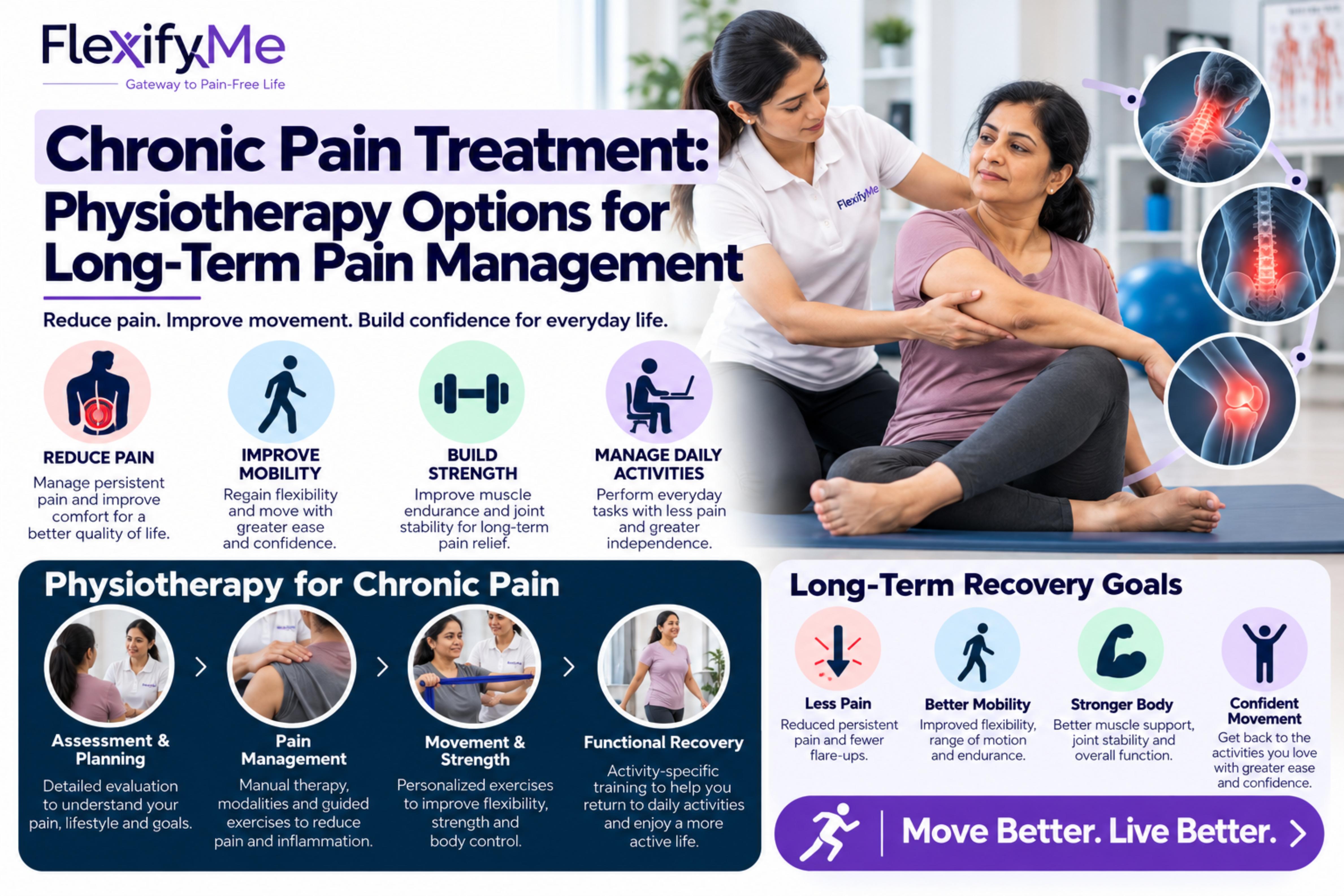
Chronic Pain Treatment in Hinjewadi, Pune: Physiotherapy Options for Long-Term Pain Management
If you have been experiencing pain for months or years, you may have tried different treatments, changed your routine or undergone investigations without finding lasting relief. Persistent pain can affect sleep, movement, work and everyday activities, leaving you unsure about what to try next.
Pain that continues for a long time deserves proper assessment and a plan tailored to your needs. Chronic pain treatment is not simply about reducing discomfort during a session. It can also involve improving movement, building physical capacity and finding practical ways to manage everyday activities.
If you are looking for chronic pain treatment in Hinjewadi, Pune, understanding how persistent pain can affect the body and how physiotherapy may help is a useful starting point.
Why long-term pain can be different
Acute pain often occurs after an injury or illness and may improve as the underlying problem heals. Persistent pain, commonly described as pain lasting longer than three months, can be more complex. It may continue alongside an ongoing health condition or remain even when the original injury has healed.
The nervous system can also become more sensitive to signals associated with pain. This means pain intensity does not always correspond directly to the extent of tissue damage. However, persistent pain should not automatically be assumed to be harmless or unrelated to an underlying condition.
Several factors may influence how pain affects daily life:
Movement and physical capacity: Reduced activity can lead to lower strength, flexibility or endurance, making everyday tasks more difficult.
Sleep: Poor sleep can affect energy, recovery and the way pain is experienced.
Stress and emotional well-being: Stress may influence muscle tension, sleep and pain sensitivity.
Daily activity patterns: Doing too much on a better day and then needing extended rest can make routines harder to maintain.
Underlying health conditions: Some types of persistent pain require specific medical investigation or treatment alongside physiotherapy.
Pain is real, even when a scan does not fully explain it. A thorough assessment considers your symptoms, medical history, movement and daily limitations rather than relying on one finding alone.
What does chronic pain treatment aim to achieve?
The right approach depends on the cause of the pain, your health, the activities you find difficult and the results of your assessment. Treatment may involve medical care, physiotherapy or a combination of approaches.
Look beyond the pain score
Pain intensity is one part of the picture, but it is not the only way to assess progress. Your ability to carry out daily activities can also provide useful information.
For example, progress may involve:
Walking for longer without needing frequent breaks.
Sitting or standing more comfortably during routine tasks.
Managing household activities with greater confidence.
Returning gradually to hobbies or social activities.
Improving strength, balance or movement where these are affected.
Learning how to respond to symptom flare-ups.
These goals should be individualised. Improvement can look different for each person, and changes in pain and function may not happen at the same pace.
Understand the reason for persistent symptoms
A physiotherapy assessment can help identify movement limitations, reduced strength, posture-related factors and activities that may be contributing to musculoskeletal symptoms. However, physiotherapy assessment does not replace medical investigation when symptoms suggest another condition.
If the cause of your pain is unclear, symptoms are changing or further investigation is needed, a healthcare professional can advise whether medical review or additional tests are appropriate.
Physiotherapy options for long-term pain management
Physiotherapy can form part of a long-term pain management plan, particularly when pain affects movement, strength, mobility or everyday function. The programme should match your needs rather than follow the same routine for everyone.
1. Education about pain and movement
Understanding your symptoms can help you make informed decisions about activity. Pain does not always indicate that movement is causing further damage, but new, severe or unexplained symptoms should not be ignored.
A physiotherapist can explain your assessment findings, discuss movement concerns and help you understand which activities may be suitable. This guidance can make it easier to approach everyday movements with a clearer plan.
2. Pacing for chronic pain
Pacing means organising activities so that you can manage them more consistently instead of repeatedly doing too much and then needing an extended period of rest.
For example, if household tasks increase your symptoms, you may be able to divide the work into smaller sections and take planned breaks. You can then adjust your activity according to your symptoms and the guidance provided by your healthcare professional.
Useful pacing strategies include:
Breaking demanding tasks into manageable steps.
Alternating heavier activities with lighter ones.
Avoiding sudden increases in activity after a relatively comfortable day.
Keeping a simple record of activities, symptoms and recovery.
Increasing activity gradually when your response allows it.
Pacing is not about avoiding movement altogether. It is about finding a manageable level of activity and adjusting it thoughtfully.
3. Progressive strengthening and therapeutic exercise
When persistent musculoskeletal pain affects strength, flexibility or endurance, an appropriate exercise programme may help address these limitations. Exercises can be selected according to the affected area, your current ability and your recovery goals.
Depending on the assessment, a physiotherapy programme may include strengthening exercises, mobility work, balance activities or functional movements that relate to everyday tasks.
Start at a suitable level and progress according to your response. Some temporary symptom changes can occur, but significant worsening, new symptoms or concerns about exercise should be discussed with your healthcare professional.
The aim is to develop a manageable routine that supports function, rather than attempting to push through every episode of pain.
4. Gradual return to difficult activities
Persistent pain may lead some people to avoid movements or tasks they associate with discomfort. Over time, this can make it harder to maintain physical capacity and confidence.
Where appropriate, a physiotherapist can help you plan a gradual return to selected activities. This may involve practising a movement in smaller steps, adjusting the level of difficulty and progressing as your tolerance improves.
The plan should be individualised. Not every painful movement is suitable for immediate practice, especially when an underlying injury or medical condition needs specific precautions.
5. Sleep, stress and daily routines
Pain management can involve more than the body part that hurts. Sleep difficulties, work demands, stress and changes in daily routines may affect how manageable symptoms feel.
Consider keeping a regular sleep schedule, building short movement breaks into long periods of sitting and setting realistic activity goals. Relaxation practices may also help some people manage stress.
These steps do not replace medical care or physiotherapy. They can, however, support a broader plan for living with persistent pain.
6. Planning for flare-ups
A flare-up is a period when symptoms become more noticeable or difficult to manage. It does not automatically mean that all previous progress has been lost, but the cause and severity of the change matter.
A practical plan may include temporarily adjusting demanding activities, maintaining comfortable movement where appropriate and returning gradually to your usual routine as symptoms settle.
If pain becomes suddenly severe, follows a new injury or occurs with concerning symptoms, seek medical advice rather than assuming it is a routine flare-up.
Where in-clinic physiotherapy fits
Physiotherapy treatment may combine therapeutic exercise, movement guidance and other techniques selected after assessment. Hands-on treatment or physical therapy modalities may be considered when appropriate, but no single technique is suitable for everyone with persistent pain.
FlexifyMe offers physiotherapy services with AI-assisted posture and movement analysis, expert assessment and personalised treatment planning. Depending on the centre and individual needs, available services may include manual therapy, IFT and TENS, dry needling, cupping, Matrix Rhythm Therapy and functional re-training.
These options should not be treated as a standard package for every chronic pain condition. A physiotherapist can determine which approaches, if any, are appropriate for your symptoms and goals.
Assessment and progress monitoring
FlexifyMe describes a care process that includes understanding your symptoms and health history, assessing posture and movement, consulting a physiotherapist and developing a personalised treatment plan.
AI-assisted assessment can provide additional information about posture and movement patterns. It does not independently establish every cause of pain or replace clinical judgement.
Your progress can be reviewed against relevant goals, such as movement, strength, mobility and your ability to complete everyday activities. The plan may be adjusted according to your response and changing needs.
When should you seek medical advice?
Physiotherapy may be helpful for some persistent musculoskeletal problems, but not all pain should be managed through exercise alone.
Arrange medical assessment if your pain is unexplained, persistent or worsening, particularly if you also experience fever, unexplained weight loss, a history of cancer with new pain, constant or unrelenting night pain, or progressive numbness or weakness.
Seek urgent medical care for sudden severe symptoms or signs of a potentially serious problem, such as new loss of bladder or bowel control, numbness around the groin or saddle area, or rapidly progressing weakness.
A medical professional can help determine whether further investigation, specialist care or a combination of treatments is needed.
Frequently Asked Questions
Does chronic pain mean the damage is permanent?
Not necessarily. Persistent pain can occur for different reasons, including ongoing health conditions and changes in how the nervous system processes pain. An assessment can help clarify possible contributing factors and identify appropriate next steps.
Can physiotherapy help with chronic back pain relief?
Physiotherapy may help some people with chronic back pain by addressing movement limitations, strength, mobility and daily activity. The most appropriate plan depends on the cause of the pain, your medical history and your assessment findings.
Will exercise make chronic pain worse?
Symptoms may temporarily increase if an activity is too demanding or unsuitable. Exercise should be selected and progressed according to your condition and tolerance. Seek professional advice if symptoms worsen significantly or new symptoms appear.
How long does chronic pain treatment take?
There is no single timeline that applies to everyone. Progress depends on the underlying condition, symptom duration, general health, treatment approach and individual response. Your physiotherapist can review your progress and adjust your plan as needed.
Is persistent pain all in my head?
No. Pain is a real experience. Biological, psychological and social factors can influence how pain is experienced, but that does not make the pain imaginary. Persistent symptoms deserve appropriate assessment and care.
How do I find a physiotherapist near me for long-term pain management?
When searching for physiotherapy near me or a physiotherapist near me, look for a qualified professional who assesses your symptoms, explains the treatment plan and sets goals relevant to your daily activities. Ask whether the service is suitable for your condition and whether further medical assessment is needed.
If you are considering FlexifyMe, check the official website for available clinic locations and service options. Physiotherapy at home or online may also be available in selected service areas.
Take the Next Step Towards Better Pain Management
Living with persistent pain can make everyday activities feel difficult, but a suitable plan can help you understand your symptoms and work towards meaningful functional goals.
If you are exploring chronic pain treatment in Hinjewadi, Pune, consider starting with a professional assessment. FlexifyMe offers physiotherapy services that combine expert assessment, AI-assisted posture and movement analysis, and personalised treatment planning, with the specific options depending on your needs and the centre you choose.
Visit the official FlexifyMe website www.flexifyme.com to check available services and locations, or enquire about an appropriate assessment. A plan built around your symptoms, daily activities and goals can help you take a more informed approach to long-term pain management.
This article is for general information only and is not a substitute for professional medical advice, diagnosis or treatment. Seek medical assessment for unexplained, worsening or concerning symptoms before beginning or changing an exercise programme.