







 ₹https://clinics.flexifyme.com/flexifyme/pune/hinjewadi/flexifyme-advanced-physiotherapy-clinic-in-hinjewadi-pune--7gAsKd/articles/carpal-tunnel-syndrome-treatment-in-hinjewadi-pune--d65b2ef5-d323-4efa-a293-62e11e0cf023
FlexifyMe Advanced Physiotherapy Clinic, Hinjewadi, pune
Physiotherapy Clinic in Hinjewadi, Pune, Maharashtra
No 3/1, Second Floor, Hinjawadi Phase II, Rajiv Gandhi Infotech Park, Hinjewadi, pune, maharashtra - 411057Request A Call Back
FlexifyMe Advanced Physiotherapy Clinic Social Feeds in Hinjewadi, pune
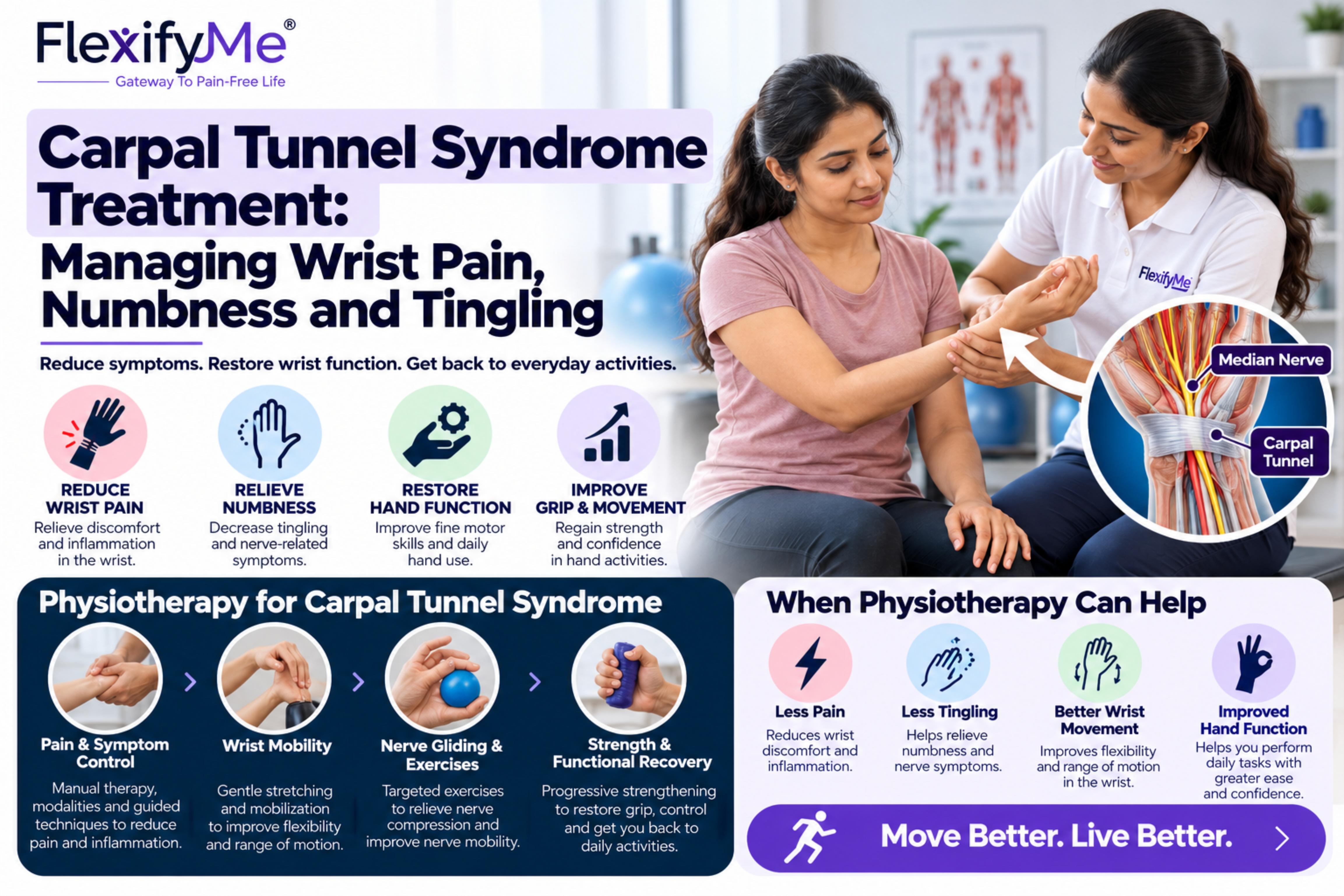
Carpal Tunnel Syndrome Treatment in Hinjewadi, Pune: Managing Wrist Pain, Numbness and Tingling
Waking up with numbness or tingling in your hand can make a good night's sleep difficult. You may notice discomfort while typing, holding a phone, driving or performing tasks that require repeated wrist and finger movements. When these symptoms occur regularly, it is worth finding out what is causing them rather than simply ignoring the discomfort.
One possible cause is carpal tunnel syndrome, a condition involving pressure on the median nerve at the wrist. Symptoms can vary, and not every case of hand numbness or wrist pain is caused by this condition.
The right treatment depends on symptom severity, the underlying cause and whether nerve function is affected. Early assessment can help identify suitable options, which may include wrist splinting, activity changes, medical treatment or physiotherapy.
If you are exploring carpal tunnel syndrome treatment in Hinjewadi, Pune, understanding the symptoms and available approaches can help you decide when to seek professional advice.
What Is Carpal Tunnel Syndrome?
The carpal tunnel is a narrow passage in the wrist through which the median nerve and several tendons pass. The median nerve provides sensation to the thumb, index finger, middle finger and part of the ring finger, and also supports certain thumb movements.
When pressure on this nerve increases, it can cause the symptoms associated with carpal tunnel syndrome.
Common Symptoms of Carpal Tunnel Syndrome
Symptoms may develop gradually and can become more noticeable during particular activities or at night. Common signs include:
Numbness and tingling: Often affecting the thumb, index finger, middle finger and part of the ring finger.
Wrist or hand discomfort: Symptoms may extend into the fingers or sometimes the forearm.
Night-time symptoms: Tingling or numbness may interrupt sleep.
Reduced grip function: Holding objects or performing tasks requiring precise hand movements may become difficult.
Thumb weakness: More advanced cases can affect the muscles responsible for certain thumb movements.
The little finger is usually not affected by carpal tunnel syndrome. If numbness involves the entire hand or follows an unusual pattern, other causes may need to be considered.
What Can Contribute to Carpal Tunnel Syndrome?
Carpal tunnel syndrome may be associated with several factors, and sometimes no single cause is identified.
Factors that may increase the likelihood of developing the condition include:
Conditions such as diabetes or rheumatoid arthritis.
Pregnancy-related fluid retention.
Previous wrist injuries or structural changes.
Repeated or forceful hand activities that aggravate symptoms.
Certain health conditions that affect nerves or surrounding tissues.
Typing or using a phone does not automatically mean someone will develop carpal tunnel syndrome. A proper assessment helps distinguish the condition from other causes of wrist pain and hand numbness.
When Should You Get Your Symptoms Assessed?
Occasional tingling may have several explanations, but persistent or worsening symptoms should not be ignored.
Arrange a medical assessment if you experience:
Frequent numbness or tingling in your fingers.
Symptoms that repeatedly wake you at night.
Difficulty gripping objects or performing everyday tasks.
Persistent loss of sensation.
Weakness that is getting worse.
Visible changes or wasting in the muscle at the base of the thumb.
Ongoing nerve compression can sometimes lead to lasting sensory or muscle problems. Early assessment helps determine whether conservative treatment is appropriate or whether specialist evaluation is needed.
Sudden hand weakness or numbness, particularly when accompanied by facial weakness, difficulty speaking or other sudden neurological symptoms, requires emergency medical assessment rather than routine physiotherapy.
Carpal Tunnel Syndrome Treatment: What May Help?
Treatment depends on the severity of symptoms and the effect on hand function. Mild or intermittent symptoms may be managed differently from persistent numbness or progressive weakness.
1. Wrist Splinting
A wrist splint that keeps the wrist in a comfortable, neutral position may help some people with carpal tunnel syndrome, particularly when symptoms occur at night.
Keeping the wrist from bending excessively during sleep may reduce pressure on the median nerve. The appropriate splint and wearing schedule depend on the individual's symptoms and clinical advice.
A splint does not address every possible cause of hand numbness, and improvement is not guaranteed. If symptoms continue or worsen, seek further assessment rather than relying on the splint alone.
2. Activity and Ergonomic Adjustments
Certain hand positions or tasks may aggravate symptoms. Reviewing how you use your hands can help identify practical adjustments.
Consider the following:
Keep your wrists in a comfortable, neutral position when typing.
Adjust your keyboard and mouse setup to avoid sustained awkward wrist positions.
Take breaks from prolonged or repetitive hand activities.
Avoid gripping tools or objects more forcefully than necessary.
Review work tasks that repeatedly provoke numbness or discomfort.
These changes should be based on your symptoms and daily activities. They may help reduce aggravation, but they are not a substitute for assessment when symptoms persist.
3. Nerve and Tendon Gliding Exercises
A healthcare professional may recommend selected movement exercises to support wrist and finger mobility. Nerve and tendon gliding exercises involve controlled movements intended to help the relevant structures move through their available range.
These exercises are not suitable for every person or every stage of carpal tunnel syndrome. They should be demonstrated and adapted to your condition, especially if movement increases tingling, numbness or pain.
Avoid forceful stretching or repeatedly pushing through symptoms in an attempt to make the nerve recover faster.
4. Assessment of the Wrist and Other Possible Causes
Hand numbness does not always originate at the wrist. Similar symptoms can occur with other nerve conditions, including problems involving nerves in the neck or arm.
A clinical assessment may consider your symptom pattern, medical history, wrist movement, grip function and other relevant findings. Further tests, including nerve conduction studies, may be recommended by a doctor when needed.
Identifying the cause matters because treatment for carpal tunnel syndrome may differ from treatment for another nerve or musculoskeletal condition.
5. Physiotherapy for Wrist Pain and Hand Function
Physiotherapy may help address wrist mobility, strength, functional limitations and activity-related aggravation when appropriate for the underlying condition.
FlexifyMe offers wrist pain treatment that may involve assessing range of motion, grip strength, functional mobility, and postural or ergonomic factors to help guide personalised physiotherapy.
The treatment options that may include manual therapy, strengthening exercises, tendon gliding exercises, splinting and support, postural re-education and a home exercise plan.
These options are not automatically required for every person with carpal tunnel syndrome. A physiotherapist should select appropriate interventions based on the assessment and refer for medical evaluation when symptoms suggest significant nerve compression or another condition.
FlexifyMe also describes AI-powered posture analysis at selected locations. This is a movement-assessment tool, not a stand-alone test that confirms carpal tunnel syndrome.
6. Medical Treatment and Surgery
A doctor may discuss additional treatment options depending on the diagnosis and severity of symptoms. These may include a corticosteroid injection or referral to a specialist.
Carpal tunnel release surgery may be considered when symptoms are severe, nerve damage is suspected, or non-surgical management has not provided adequate relief. The decision depends on clinical findings and individual circumstances.
Physiotherapy should not delay medical or surgical assessment when persistent numbness, progressive weakness or muscle wasting suggests that the nerve may be significantly affected.
What Should You Avoid If You Have Hand Numbness?
When symptoms are present, avoid assuming that every wrist problem requires the same treatment.
Keep these points in mind:
Do not ignore persistent numbness: Ongoing loss of sensation needs assessment.
Do not force painful exercises: Stop or modify movements that aggravate your symptoms.
Do not self-diagnose from symptoms alone: Other nerve conditions can cause similar sensations.
Do not rely on pain relief alone: Reducing discomfort does not necessarily resolve nerve compression.
Do not delay specialist advice for progressive weakness: Changes in grip function or thumb muscle size require medical review.
A suitable plan should address the underlying cause and the effect of symptoms on your everyday activities.
Frequently Asked Questions About Carpal Tunnel Syndrome Treatment
Can carpal tunnel syndrome go away on its own?
Symptoms can vary, and some cases may improve when contributing factors change. However, persistent numbness, weakness or worsening symptoms should be assessed rather than left untreated. The likelihood of improvement depends on the underlying cause and severity.
Should I wear a night splint for carpal tunnel syndrome?
A neutral-position wrist splint at night may help some people with carpal tunnel symptoms. The type of splint and how long to wear it depend on your condition and clinical advice. Seek further assessment if symptoms continue or worsen.
Are carpal tunnel exercises helpful?
Selected exercises may be recommended as part of an individualised treatment plan. They are not suitable for everyone, and they should not cause increasing numbness or pain. A qualified professional can advise whether nerve or tendon gliding exercises are appropriate for you.
Can physiotherapy help carpal tunnel syndrome?
Physiotherapy may help improve wrist function and manage symptoms in appropriate cases. FlexifyMe offers wrist pain treatment and rehabilitation options tailored to individual needs. However, medical evaluation is important when symptoms suggest significant nerve compression or a possible need for surgery.
When is surgery considered for carpal tunnel syndrome?
Surgery may be considered for severe or persistent symptoms, evidence of nerve damage, or inadequate response to non-surgical treatment. A doctor or specialist can assess the risks, benefits and suitability of surgery for the individual.
How do I find a physiotherapist near me for wrist pain?
When searching for a physiotherapist near me or physiotherapy near me, look for a qualified professional who assesses wrist movement, grip function and possible causes of your symptoms. Persistent numbness or weakness may also require medical or specialist assessment.
If you are considering FlexifyMe, check the official website for current clinic locations and available services. Confirm whether in-person or online appointments are suitable for your needs.
Take the Next Step Towards Better Hand Function
Night-time tingling, persistent wrist discomfort and difficulty gripping objects can interfere with work, sleep and everyday activities. Understanding the cause is the first step towards choosing an appropriate treatment approach.
If you are searching for wrist pain treatment in Hinjewadi, Pune, consider a professional assessment instead of relying on self-treatment alone. Depending on the diagnosis, management may include wrist support, activity adjustments, selected exercises, physiotherapy or medical treatment.
FlexifyMe provides physiotherapy services that include wrist pain assessment and treatment options. Visit the official website www.flexifyme.com to review the services available at its listed locations and confirm the most suitable appointment option.
This article is for general information only and is not a substitute for medical diagnosis or personal treatment advice. Persistent numbness, worsening weakness or visible thumb muscle wasting requires medical assessment. Sudden neurological symptoms need emergency care.