





 ₹https://clinics.flexifyme.com/flexifyme/new-delhi/model-town-phase-2/flexifyme-advanced-physiotherapy-clinic-in-model-town-phase-2-new-delhi--13vdsz/articles/travelling-from-model-town-phase-2-for-onam-how-to--b37f6d27-5ee2-4f90-ae23-7744b2f6dc8e
Flexifyme Advanced Physiotherapy Clinic, Model Town Phase 2, new delhi
Physiotherapy Clinic in Model Town Phase 2, New Delhi, Delhi
No F14/57, Upper Ground Floor, Nearby Muscle Junkie, Model Town Phase 2, new delhi, delhi - 110009
Request A Call Back
Flexifyme Advanced Physiotherapy Clinic Social Feeds in Model Town Phase 2, new delhi
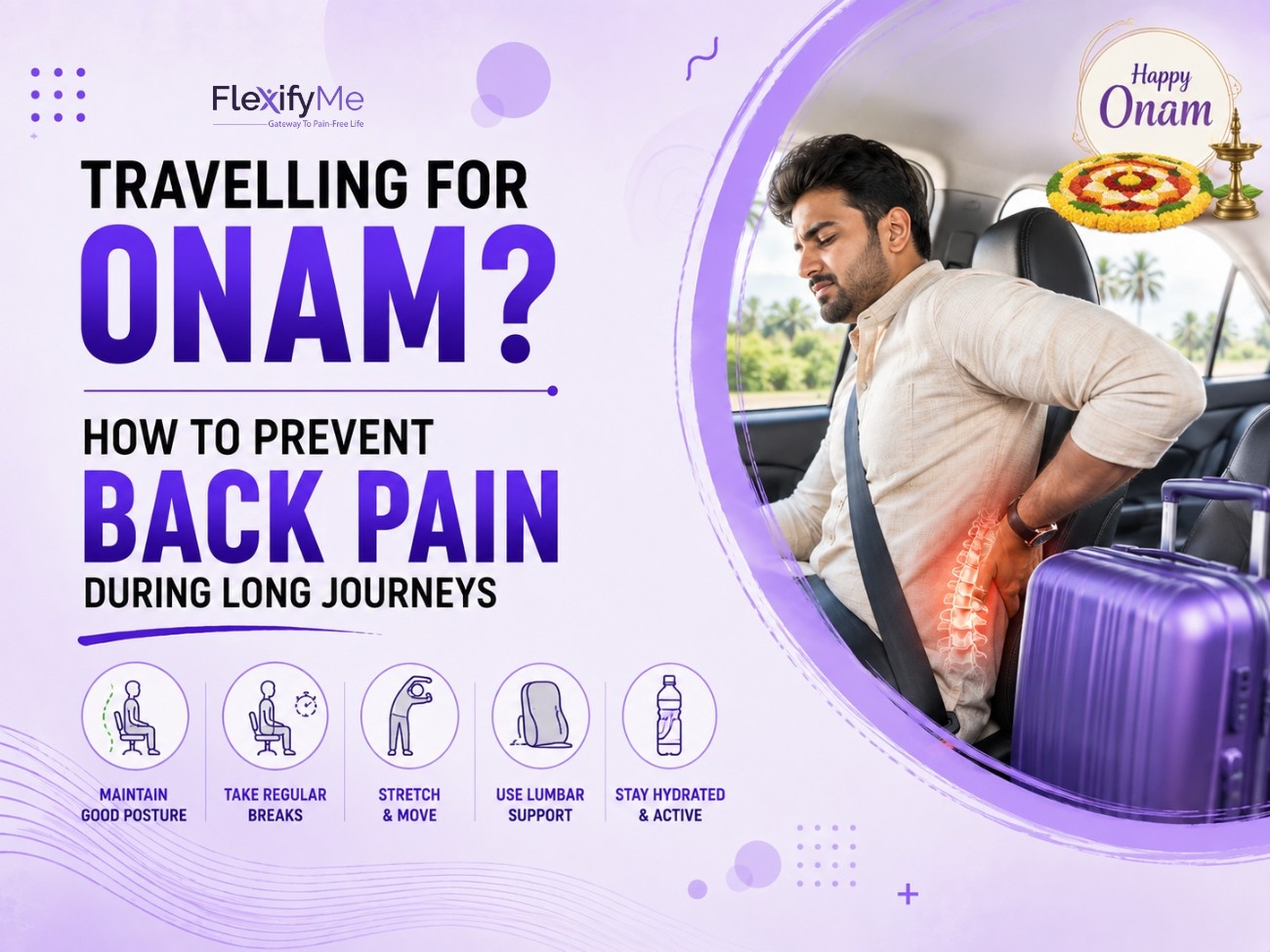
Travelling from Model Town Phase 2 for Onam? How to Prevent Back Pain on Long Journeys
Onam brings one of the year's biggest travel rushes. Flights fill up months ahead, trains from Model Town Phase 2 and the rest of new delhi get booked out, and plenty of families simply load the car and drive through the night.
What nobody plans for is the arrival. You reach home, step out of the car or off the train, and your lower back feels stiff and sore. Two days of the festival can quickly turn into a recovery period.
The useful part is that long journeys can place considerable strain on the back, particularly when you stay in one position for hours and then handle heavy luggage immediately afterwards. FlexifyMe identifies prolonged positions, poor posture, muscle imbalance, injuries and spinal conditions among factors that can contribute to back pain. Its approach to back pain includes assessment, personalised physiotherapy, movement-based treatment and ergonomic advice.
Why Long Journeys Can Hurt Your Back
Long-distance travel often means prolonged sitting with limited opportunities to move. This can contribute to stiffness and discomfort, particularly if you already experience back pain.
Some common factors include:
Prolonged sitting: Staying in one position for several hours can aggravate back discomfort and reduce mobility.
Poor seating position: Slouching or sitting without adequate support can increase strain around the lower back.
Vehicle vibration: Long car, bus and train journeys can expose the body to continuous vibration while seated.
Muscle fatigue: Staying in one position for a long time can leave muscles feeling tired and stiff.
Sleeping upright: Trying to sleep in a bus, train or flight seat can leave you in an awkward position for an extended period.
Luggage: Lifting or carrying heavy bags after several hours of sitting can suddenly increase the load on your back.
Before You Leave: A Short Preparation List
A little preparation can make a long journey easier on your back.
Choose an aisle seat when possible so that getting up and changing position is easier.
Distribute your luggage between smaller bags where practical instead of carrying one unnecessarily heavy bag.
Keep essential items within easy reach so you do not repeatedly bend or stretch for them.
Walk before boarding. A few minutes of movement can help you avoid beginning the journey already feeling stiff.
Carry simple lumbar support such as a small cushion if you find it comfortable.
If you already have back pain, consider an assessment before travelling. FlexifyMe offers physiotherapy for back pain and personalised online physiotherapy consultations, with treatment suitability determined through assessment.
How to Sit During a Long Journey
Set Up Your Seat Comfortably
There is no single posture that works for everyone, but a supported and comfortable position can reduce unnecessary strain.
Keep both feet supported where possible.
Sit back against the seat rather than perching on the edge.
Use a small cushion or rolled towel around the natural curve of your lower back if it feels comfortable.
Avoid remaining in one position for the entire journey.
Adjust the seat or backrest to find a position that allows you to relax without slouching.
Keep Changing Position
You do not need to maintain a rigid "perfect posture" for hours.
Regular movement and changes in position are more useful than trying to hold one posture throughout an entire journey.
Whenever it is safe and practical, stand up, walk around and allow your back and hips to move.
Driving to Kerala? A Few Things That Matter
If you are driving for several hours during the Onam holiday, your driving position deserves attention.
Sit close enough to the pedals so that you do not have to stretch your legs excessively.
Keep the steering wheel within comfortable reach without rounding your shoulders forward.
Keep your lower back supported by the seat.
Do not keep your wallet, phone or other bulky object underneath one side of your body while driving.
Take regular breaks during a long drive and walk for a few minutes.
Share driving duties when possible.
Avoid pushing through extreme fatigue simply to reach your destination faster.
FlexifyMe's official back pain information highlights poor ergonomics and prolonged positions as possible contributors to back pain and includes ergonomic advice within its treatment approach.
The Break Routine That Can Help
During a long journey, use appropriate opportunities to move.
When you can safely leave your seat:
Walk for a few minutes.
Stand comfortably and gently move your back rather than remaining still.
Move your hips and ankles after prolonged sitting.
Roll your shoulders gently if they feel stiff.
Take a few relaxed breaths and reset your sitting position before continuing.
You do not need an elaborate exercise routine while travelling. The main goal is to break up prolonged periods of sitting.
If a particular movement causes sharp or worsening pain, stop it rather than forcing the movement.
Lifting Your Luggage Without Paying for It Later
Luggage handling can be particularly challenging after several hours of sitting.
Stand and move around before lifting a heavy bag.
Face the luggage directly rather than twisting while lifting.
Keep the load close to your body.
Bend through your hips and knees when appropriate instead of rounding your back and reaching from a distance.
Avoid lifting a heavy bag overhead if you cannot control it safely.
Ask for assistance with luggage that is too heavy to handle comfortably.
Use luggage wheels wherever the surface allows it.
If possible, organise your bags before the journey so that you do not need to repeatedly lift heavy luggage during stops.
What to Do If Your Back Starts Hurting Mid-Journey
If back discomfort starts while travelling:
Change your position rather than remaining still.
Get up and walk when it is safe to do so.
Adjust your lumbar support if you are using one.
Try gentle, comfortable movements rather than aggressive stretching.
Stay hydrated and maintain regular meals where practical.
Avoid repeatedly testing a painful movement.
If symptoms are severe, worsening or unusual for you, seek appropriate medical advice.
FlexifyMe's back pain service describes treatment as being based on a comprehensive clinical assessment and personalised physiotherapy rather than a generic approach.
After You Arrive
Do not assume that lying down for the rest of the day is always the best response to travel-related stiffness.
If you are comfortable doing so:
Take a gentle walk after reaching your destination.
Change positions regularly rather than staying in bed for prolonged periods.
Return gradually to your normal activities.
Give your body time to recover after a particularly long journey.
Monitor symptoms rather than repeatedly testing movements that hurt.
If back pain continues, keeps returning or begins affecting your normal activities, consider getting it assessed. FlexifyMe provides physiotherapy support for back pain, including lower back conditions, through its physiotherapy services and online consultations.
Seek urgent medical attention if back pain is accompanied by significant leg weakness, numbness around the groin or inner thighs, or changes in bladder or bowel control.
Frequently Asked Questions
Is a train or a bus better for someone with back pain?
There is no universal answer. A train may make it easier to stand and walk around, while a bus may restrict movement. Your comfort will also depend on the seat, journey duration, road conditions and your existing symptoms.
Do travel back supports and belts help?
A small lumbar cushion may make sitting more comfortable for some people. Braces and belts are different and may be appropriate for specific conditions. They should not be treated as a universal solution for travel-related back pain. If you already have a diagnosed condition, ask your physiotherapist or doctor whether a support is appropriate.
Should I take a painkiller before a long journey?
Do not start medication specifically for a journey without appropriate medical or pharmacy advice. If you already use prescribed medication, follow your healthcare professional's instructions and make sure you have enough for the journey.
How long should back pain last after a long journey?
Mild stiffness can improve as you resume comfortable movement. However, persistent or worsening pain, pain travelling into the leg, numbness, weakness or other concerning symptoms should be assessed rather than attributed automatically to travel.
I get back pain every time I travel. Why?
Repeated travel-related pain may indicate that prolonged sitting, ergonomics, movement limitations, muscle weakness or an existing back condition is contributing to your symptoms. FlexifyMe's back pain assessment considers symptoms, posture, function and possible contributing factors before developing a personalised treatment plan.
Enjoy the Festival, Not the Recovery
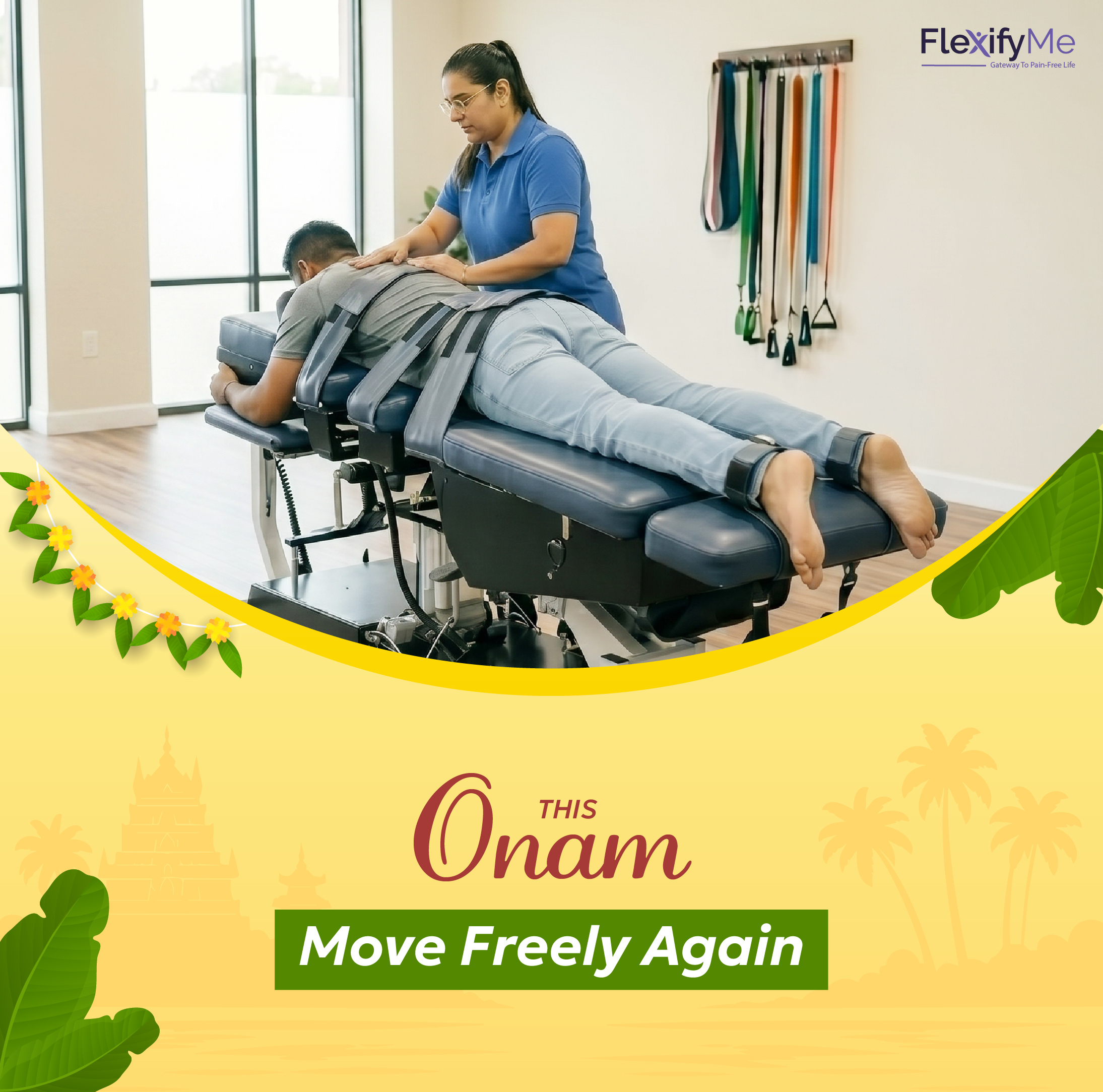
Onam should be about reaching your family, enjoying the celebrations and making the most of the time together, not spending the first few days recovering from a long journey.
Plan breaks, change your position regularly, handle luggage carefully and pay attention to how your back responds.
If your back already troubles you, or if long journeys repeatedly trigger your symptoms, consider getting it assessed before your next trip. FlexifyMe provides personalised physiotherapy for back pain, including online one-to-one sessions with physiotherapists. The official website lists back pain among the conditions supported through its physiotherapy services.
This article is for general information and is not a substitute for personal medical advice. Seek urgent medical care for significant leg weakness, numbness around the groin or inner thighs, or changes in bladder or bowel control.