





 ₹https://clinics.flexifyme.com/flexifyme/new-delhi/model-town-phase-2/flexifyme-advanced-physiotherapy-clinic-in-model-town-phase-2-new-delhi--13vdsz/articles/sciatica-treatment-causes-symptoms-exercises-best---93605479-d820-4aa2-a929-e8e0c44c8ec1
Flexifyme Advanced Physiotherapy Clinic, Model Town Phase 2, new delhi
Physiotherapy Clinic in Model Town Phase 2, New Delhi, Delhi
No F14/57, Upper Ground Floor, Nearby Muscle Junkie, Model Town Phase 2, new delhi, delhi - 110009
Request A Call Back
Flexifyme Advanced Physiotherapy Clinic Social Feeds in Model Town Phase 2, new delhi
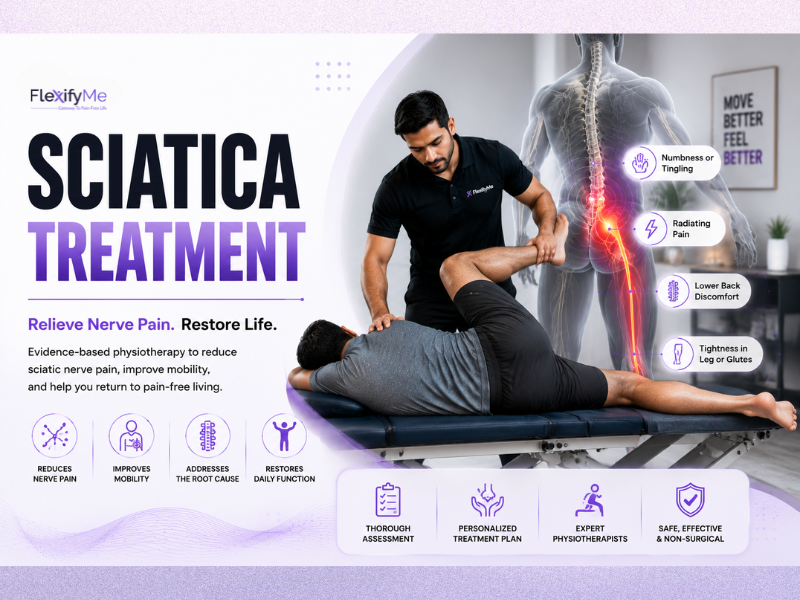
Sciatica Treatment: Causes, Symptoms, Exercises & Best Physiotherapy Clinic in new delhi
Pain that starts in your lower back and travels down your leg can make even the simplest daily activities challenging. Whether it is sitting at your desk, driving, walking or sleeping, sciatica can significantly affect your quality of life. Fortunately, early diagnosis and the right physiotherapy treatment can help relieve pain, restore mobility and prevent future episodes.
If you are looking for effective sciatica treatment in Model Town Phase 2, new delhi, FlexifyMe offers personalised physiotherapy programmes designed to identify the root cause of your pain and support long-term recovery. Our experienced physiotherapists use evidence-based rehabilitation techniques to help reduce nerve irritation, improve movement and strengthen the muscles that support your spine.
What Is Sciatica?
Sciatica is a condition caused by irritation or compression of the sciatic nerve, the largest nerve in the human body. The sciatic nerve originates in the lower spine and travels through the hips, buttocks and down each leg.
When this nerve becomes compressed or inflamed, it can cause pain, numbness, tingling or weakness along its pathway. Sciatica is not a disease itself but a symptom of an underlying spinal or nerve-related condition.
Common Causes of Sciatica
Several conditions can place pressure on the sciatic nerve, leading to pain and discomfort.
Herniated or Slipped Disc
A damaged spinal disc may press against the sciatic nerve, causing pain that radiates into the leg.
Degenerative Disc Disease
Age-related changes in the spine can reduce disc height and contribute to nerve compression.
Spinal Stenosis
Narrowing of the spinal canal can place pressure on the nerves in the lower back.
Piriformis Syndrome
The piriformis muscle, located deep in the buttock, can sometimes irritate the sciatic nerve.
Poor Posture
Long hours of sitting, improper lifting techniques and poor spinal alignment can increase stress on the lower back.
Sports Injuries
Repetitive movements, sudden twisting or heavy lifting during sports may contribute to sciatica.
Pregnancy
Changes in posture and increased pressure on the lower back during pregnancy may occasionally lead to sciatic nerve irritation.
Symptoms of Sciatica
Sciatica symptoms vary from person to person but commonly include:
Pain radiating from the lower back into the buttock and leg
Sharp or burning pain
Tingling or pins-and-needles sensation
Numbness in the leg or foot
Muscle weakness
Pain that worsens after prolonged sitting
Difficulty standing up from a seated position
Pain while bending or twisting
Reduced mobility
Symptoms may affect one side of the body and can range from mild discomfort to severe pain.
Who Is More Likely to Develop Sciatica?
Sciatica can affect people of all ages, but the risk may be higher in:
Office professionals who sit for long hours
Individuals performing heavy manual labour
Drivers who spend extended periods sitting
Athletes
Older adults with age-related spinal changes
People with poor posture
Individuals with weak core muscles
Those who are physically inactive
Maintaining spinal health through regular exercise and proper posture may help reduce the risk.
How Is Sciatica Diagnosed?
At FlexifyMe, every treatment programme begins with a comprehensive physiotherapy assessment.
Your physiotherapist may evaluate:
Medical history
Pain pattern
Muscle strength
Joint mobility
Reflexes
Walking pattern
Functional movements
Posture
If required, you may be advised to consult a specialist for further investigations such as imaging to better understand the underlying cause of your symptoms.
Sciatica Treatment Options
The most appropriate treatment depends on the underlying cause, severity of symptoms and individual recovery goals.
Physiotherapy
Physiotherapy plays an important role in managing sciatica by improving mobility, reducing pain and strengthening the muscles that support the spine.
Manual Therapy
Hands-on techniques may help improve joint mobility, reduce muscle tightness and relieve discomfort.
Exercise Rehabilitation
Targeted exercises improve flexibility, strengthen core muscles and support long-term spinal health.
Postural Correction
Learning proper sitting, standing and lifting techniques helps reduce unnecessary strain on the spine.
Activity Modification
Your physiotherapist may recommend temporary modifications to your daily routine while you recover.
Education and Self-Management
Understanding your condition helps you manage symptoms more effectively and reduce the risk of recurrence.
Best Exercises for Sciatica
Exercise is an essential part of sciatica rehabilitation. However, all exercises should be performed under the guidance of a qualified physiotherapist.
Pelvic Tilts
These exercises help strengthen the lower back and improve spinal stability.
Knee-to-Chest Stretch
This gentle stretch may reduce tension in the lower back and hips.
Hamstring Stretch
Tight hamstrings can increase stress on the lower back. Stretching helps improve flexibility.
Piriformis Stretch
This exercise may help reduce pressure around the sciatic nerve in suitable cases.
Cat-Cow Stretch
A gentle spinal mobility exercise that encourages flexibility.
Core Strengthening Exercises
Building core strength provides better support for the spine and may help prevent future episodes.
Important: Avoid starting new exercises without professional guidance, especially if your pain is severe or worsening.
Lifestyle Tips to Help Manage Sciatica
Along with physiotherapy, these healthy habits may support recovery:
Avoid prolonged sitting.
Maintain proper posture while working.
Take regular walking breaks.
Lift heavy objects correctly.
Stay physically active.
Maintain a healthy body weight.
Sleep on a supportive mattress.
Perform your prescribed home exercise programme consistently.
When Should You See a Physiotherapist?
You should seek professional assessment if:
Pain lasts longer than a few days.
Pain travels down your leg.
You experience numbness or tingling.
Walking becomes difficult.
Your symptoms interfere with daily activities.
Pain continues to return.
Early physiotherapy intervention may improve recovery and help prevent chronic symptoms.
Sciatica Treatment Cost in new delhi
The cost of sciatica treatment depends on several factors, including:
The underlying cause of your symptoms
Severity of the condition
Number of physiotherapy sessions required
Additional rehabilitation techniques included
Individual treatment goals
At FlexifyMe, each patient receives a personalised assessment before treatment begins. This allows our physiotherapists to develop an individual rehabilitation plan with transparent pricing based on your specific needs.
Why Choose FlexifyMe for Sciatica Treatment in new delhi?
Choosing the right physiotherapy clinic can make a significant difference to your recovery.
At FlexifyMe, patients receive:
Experienced physiotherapists
Comprehensive musculoskeletal assessments
Personalised treatment programmes
Evidence-based rehabilitation
One-on-one physiotherapy sessions
Modern physiotherapy techniques
Functional movement analysis
Focus on long-term recovery and prevention
Rather than simply treating pain, our goal is to restore movement, improve spinal health and help you return to your daily activities with confidence.
Frequently Asked Questions
Can sciatica go away without surgery?
Many people experience improvement with conservative treatment such as physiotherapy, activity modification and guided exercise. The most appropriate treatment depends on the underlying cause and should be determined after a professional assessment.
How long does sciatica take to recover?
Recovery varies depending on the cause, severity and individual response to treatment. Some patients improve within a few weeks, while others may require a longer rehabilitation programme.
Is walking good for sciatica?
Gentle walking may help some individuals maintain mobility. However, exercise should always be appropriate for your condition and guided by a healthcare professional.
Can physiotherapy help sciatica?
Yes. Physiotherapy aims to reduce pain, improve movement, strengthen supporting muscles and address factors contributing to sciatica.
How many physiotherapy sessions will I need?
The number of sessions depends on your diagnosis, symptom severity, treatment goals and progress during rehabilitation.
Conclusion
Sciatica can affect your ability to work, exercise and enjoy everyday life, but with early assessment and the right treatment, recovery is possible. If you are experiencing persistent lower back pain, leg pain or nerve-related symptoms in Model Town Phase 2, new delhi, personalised physiotherapy can help you manage pain, restore mobility and prevent future flare-ups.
At FlexifyMe, we believe in treating the root cause of your symptoms through evidence-based physiotherapy, customised rehabilitation programmes and patient-centred care. Our goal is to help you move freely, regain confidence and enjoy a healthier, more active lifestyle.
Book Your Sciatica Assessment at FlexifyMe
Do not let sciatica limit your daily life. Book a consultation with FlexifyMe today and receive a personalised treatment plan designed to relieve pain, improve mobility and support long-term spinal health.