






 ₹https://clinics.flexifyme.com/flexifyme/new-delhi/model-town-phase-2/flexifyme-advanced-physiotherapy-clinic-in-model-town-phase-2-new-delhi--13vdsz/articles/long-journey-neck-pain-physiotherapy-tips-for-trav--d1a74a35-4a16-4449-8f53-af3d9dbf85a2
Flexifyme Advanced Physiotherapy Clinic, Model Town Phase 2, new delhi
Physiotherapy Clinic in Model Town Phase 2, New Delhi, Delhi
No F14/57, Upper Ground Floor, Nearby Muscle Junkie, Model Town Phase 2, new delhi, delhi - 110009
Request A Call Back
Flexifyme Advanced Physiotherapy Clinic Social Feeds in Model Town Phase 2, new delhi
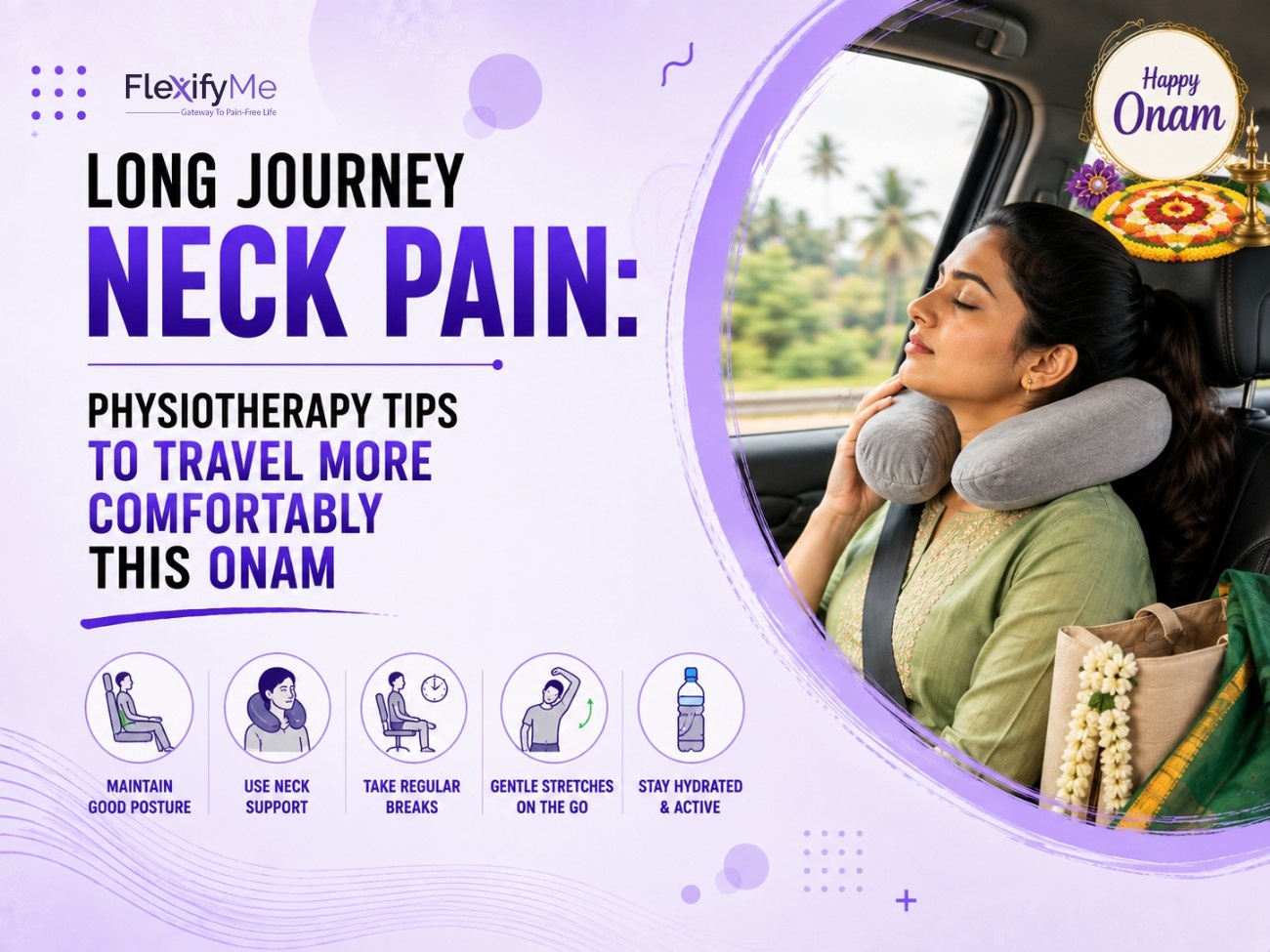
Long Journey Neck Pain: Physiotherapy Tips for Travellers from Model Town Phase 2 This Onam
There is a particular kind of neck pain that seems to appear after travelling. You doze off with your head tilted sideways somewhere past midnight and wake up unable to turn your head properly.
For anyone travelling from Model Town Phase 2 and around new delhi to Kerala for Onam, a long journey can mean hours in a car, bus, train or flight, followed by days of stiffness and discomfort.
The reason is often straightforward. During travel, your neck may remain in one position for a long time, particularly when your head is unsupported or you fall asleep in an awkward position. Prolonged poor posture, repetitive strain and cervical spine problems are among the factors FlexifyMe identifies as contributors to neck pain. Its official neck pain treatment page also highlights stiffness, reduced neck movement, headaches and symptoms that may travel into the arms.
Why Travel Can Be Hard on Your Neck
Long journeys combine several factors that can contribute to neck pain after a long journey.
Unsupported head position: Holding your head tilted forward or sideways for a prolonged period can place additional demand on the neck and shoulder muscles.
Sleeping upright: Falling asleep without adequate head support can leave your neck in an awkward position for an extended period.
Vehicle movement: Vibration, sudden braking and bumps can make maintaining a comfortable position more difficult.
Screen use: Looking down at a phone or tablet for long periods can contribute to neck and shoulder strain.
One-sided luggage: Carrying a heavy bag on one shoulder can place uneven load through the neck and shoulder area.
Prolonged sitting: Staying in one position without regular movement can contribute to stiffness.
FlexifyMe specifically lists prolonged poor posture, forward head position, repetitive strain and cervical spine degeneration or disc issues among potential causes of neck pain.
The Most Important Fix: Support Your Head
If you make only one change before a long journey, pay attention to how your head is supported.
Use a travel pillow that supports your neck comfortably and helps prevent your head from repeatedly falling forward or sideways.
If you do not have one, a rolled towel or light jacket can provide temporary support.
A window seat may allow you to rest your head against the side when appropriate.
Adjust the headrest so it supports the back of your head rather than sitting too low behind your shoulders.
Try not to sleep with your chin repeatedly dropping towards your chest.
The purpose of a travel pillow is not simply comfort. It can help you avoid holding your neck in an awkward position while you rest.
How to Set Up for a Long Journey
Seat and Position
A comfortable sitting position can make a long journey easier on your neck.
Sit back so your upper back and shoulders are supported.
Keep your shoulders relaxed instead of constantly shrugging them.
Recline the seat slightly if doing so is comfortable and safe.
Position the headrest behind your head.
If an air-conditioning vent is blowing directly onto your neck and causing discomfort, redirect it where possible.
There is no need to hold one rigid posture for the entire journey. Changing position regularly is more useful than trying to maintain one "perfect" posture for hours.
Use Your Phone and Other Screens Differently
Long journeys often mean long periods of screen time. Small changes can reduce the amount of time your neck remains bent forward.
Hold your phone higher rather than keeping it in your lap.
Support a book or tablet at a comfortable height instead of looking down continuously.
Take regular screen breaks.
Look into the distance and move your neck gently between periods of reading or watching.
Avoid spending several uninterrupted hours with your chin dropped towards your chest.
FlexifyMe's official neck pain information includes ergonomic correction, posture education and regular breaks among strategies that can help manage neck discomfort.
Be Careful With Your Bags
Luggage can strain the neck and shoulders before you have even started your journey.
Use both straps of a backpack rather than carrying a heavy backpack on one shoulder.
Prefer wheeled luggage when practical.
Avoid carrying a heavy sling bag on the same shoulder for several hours.
When removing luggage from an overhead compartment, bring it towards you under control rather than reaching excessively.
Ask for help if a bag is too heavy to lift safely.
Gentle Neck Movements You Can Try During Travel
If you do not have an existing condition that makes movement unsafe, gentle movement during a long journey can help prevent stiffness.
Try these slowly and within a comfortable range:
Chin nods: Gently draw your chin slightly backwards and down, then relax. Repeat several times.
Slow head turns: Turn your head comfortably towards one side and then the other without forcing the movement.
Gentle side bends: Slowly bring your ear towards your shoulder without lifting the shoulder.
Shoulder blade movements: Gently draw your shoulder blades back and down, then relax.
Shoulder rolls: Slowly roll your shoulders backwards several times.
FlexifyMe's official neck pain resources mention neck rotations, chin tucks, shoulder rolls, shoulder blade squeezes, range-of-motion exercises and strengthening exercises as examples of exercises used for neck pain management.
Do not force a stiff neck through a painful range of motion. Avoid sudden or aggressive movements, particularly if you have an existing neck condition.
If Your Neck Becomes Stiff During the Journey
If you develop neck pain while travelling:
Stop repeatedly testing how far you can turn your head.
Improve your head and upper-back support.
Change position when it is safe to do so.
Perform small, comfortable movements rather than keeping your neck completely still.
Once you reach your destination, warmth may feel soothing for muscular stiffness.
Avoid aggressive stretching or forceful self-manipulation.
FlexifyMe states that neck pain management may include physiotherapy, exercises, lifestyle modifications and, depending on the cause and severity, other forms of medical management.
What to Do After You Arrive
The first day after a long journey is a good time to return gradually to normal movement.
Take a comfortable walk if your symptoms allow it.
Avoid spending the entire day lying down because your neck feels stiff.
Use a pillow that keeps your head and neck comfortably aligned while sleeping.
If you sleep on your side, choose a pillow that fills the space between your head and shoulder comfortably.
Avoid spending another long stretch looking down at your phone immediately after arriving.
Continue gentle neck and shoulder movements if they feel comfortable.
If your symptoms do not settle or keep returning after every journey, a professional assessment can help identify whether posture, muscle strain, reduced mobility or another condition is contributing to the problem.
When Travel Neck Pain Needs a Physiotherapist
Consider seeing a physiotherapist if:
Your neck stiffness continues instead of gradually improving.
You repeatedly develop neck pain after long journeys.
Your neck movement remains noticeably restricted.
Neck pain is regularly accompanied by headaches.
The problem is affecting driving, work, sleep or other daily activities.
FlexifyMe's official neck pain service includes physical and neurological examination, postural assessment and treatment approaches such as physiotherapy exercises, manual therapy, soft tissue mobilisation and ergonomic education.
FlexifyMe also lists Neck Pain and Cervical Spondylosis among the conditions treated through its physiotherapy services.
When You Should Seek Medical Assessment
Do not assume every travel-related neck problem is simply stiffness.
Seek prompt medical assessment if neck pain is accompanied by:
Weakness in the arm or hand
Numbness or tingling that travels into the arm or hand
Increasing difficulty with fine hand movements
Problems with balance or walking
Significant symptoms following a fall, accident or other injury
FlexifyMe's cervical spinal canal stenosis information specifically identifies neck pain accompanied by arm numbness, weakness or tingling, difficulty with fine motor tasks and balance problems as symptoms requiring appropriate assessment.
Frequently Asked Questions
Are travel neck pillows actually useful?
A travel pillow can be useful if it provides comfortable support and helps prevent your head from repeatedly falling forward or sideways. It is a comfort and positioning aid, not a treatment for an underlying neck condition.
Why does my neck hurt more after a bus journey than a flight?
The difference can come down to journey duration, seat design, vibration, movement opportunities and how well your head is supported. Overnight bus journeys can be particularly challenging because you may spend several hours in one position while sleeping.
Should I use a cervical collar for a long journey?
Not routinely unless a doctor or other qualified healthcare professional has recommended one for your specific condition. A collar is not a general solution for preventing travel-related neck pain.
How long does a stiff neck from travel take to settle?
It depends on the cause and severity. Mild stiffness may improve as you return to comfortable movement. If symptoms persist, worsen or repeatedly return after travel, consider getting them assessed rather than continuing to self-treat.
Is it bad to sleep sitting up?
Sleeping upright is not automatically harmful. The problem can arise when your head repeatedly falls forward or sideways without adequate support for a prolonged period. Improving head and neck support can make sleeping during travel more comfortable.
Travel Comfortably, Arrive Ready to Celebrate
A long Onam journey does not have to end with a stiff neck. Support your head, avoid prolonged screen-down positions, change your posture regularly and give your neck and shoulders opportunities to move.
If your neck hurts after every trip, keeps becoming stiff or affects your everyday activities after travelling, it may be worth getting the underlying problem assessed.
FlexifyMe offers physiotherapy assessment and treatment for neck pain, including exercises, manual therapy and ergonomic education based on individual needs. Its official website also lists online physiotherapy and multiple physiotherapy clinics in Pune.
For travellers from Model Town Phase 2, new delhi, getting the right guidance before your next long journey can help you travel more comfortably and return to your Onam celebrations without unnecessary neck discomfort.
This article is for general information and is not a substitute for personal medical advice. Seek prompt medical care for arm weakness, significant numbness or tingling, balance problems, or neck pain following an accident.