




 ₹https://clinics.flexifyme.com/flexifyme/new-delhi/model-town-phase-2/flexifyme-advanced-physiotherapy-clinic-in-model-town-phase-2-new-delhi--13vdsz/articles/caring-for-your-parents-knee-pain-how-physiotherap--7c990cbb-14e5-4059-b1ff-d72578379ddd
Flexifyme Advanced Physiotherapy Clinic, Model Town Phase 2, new delhi
Physiotherapy Clinic in Model Town Phase 2, New Delhi, Delhi
No F14/57, Upper Ground Floor, Nearby Muscle Junkie, Model Town Phase 2, new delhi, delhi - 110009
Request A Call Back
Flexifyme Advanced Physiotherapy Clinic Social Feeds in Model Town Phase 2, new delhi
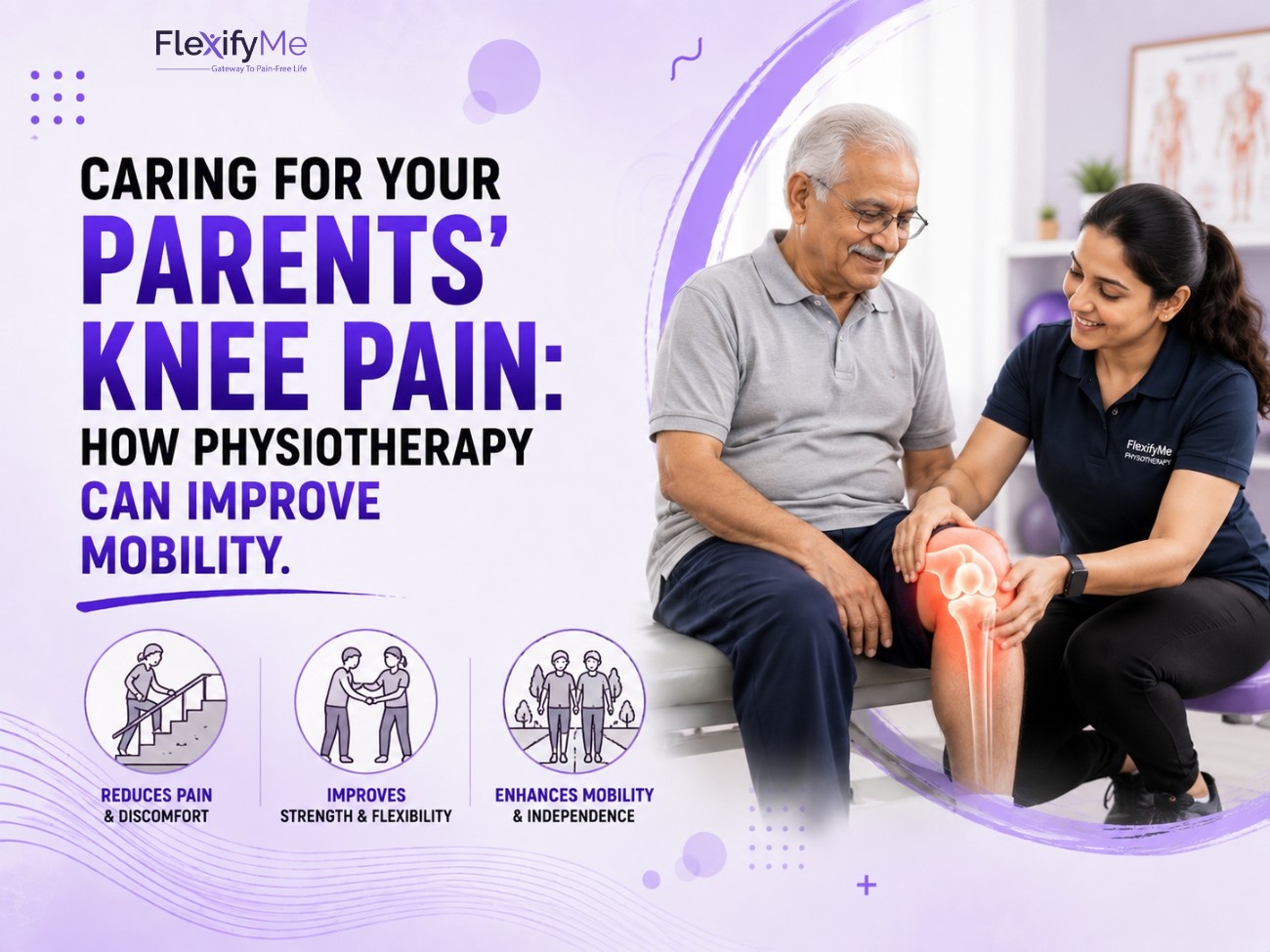
Caring for Your Parents' Knee Pain: How Physiotherapy Can Improve Mobility
What Is Usually Happening in an Older Knee?
Knee pain can quietly change the way older adults live. It may begin with difficulty using stairs, shorter morning walks, discomfort while sitting on the floor or hesitation before standing up from a low chair.
The line families often hear is that nothing can be done at this age, so everyone simply adapts around the problem. Chairs get added. Outings become shorter. Someone else takes over shopping or household tasks, even when the market is only a short walk away in Model Town Phase 2.
Knee osteoarthritis is common in older adults, but knee pain and reduced mobility can have several causes. Physiotherapy may help improve strength, mobility and function when the treatment is appropriate for the individual's condition.
FlexifyMe's official knee pain information identifies osteoarthritis as one of the causes of knee pain and states that physiotherapy treatment can focus on reducing pain, restoring strength and improving movement. (flexifyme.com)
What Can Contribute to Knee Pain in Older Adults?
Knee pain is not always caused by one problem. Possible contributors include:
Knee osteoarthritis, which can cause pain, stiffness and reduced range of motion
Reduced muscle strength, particularly when activity levels have fallen because of pain
Restricted knee movement, making activities such as stairs, standing and sitting more difficult
Balance and walking difficulties, which can affect confidence and mobility
Previous injuries or surgery, which may influence strength and movement
Reduced physical activity, which can contribute to deconditioning
FlexifyMe lists osteoarthritis, ligament and meniscus injuries, tendon problems, bursitis, overuse and other conditions among possible causes of knee pain. Its assessment process includes evaluating joint mobility, muscle strength, flexibility, gait and posture. (flexifyme.com)
An X-ray or other imaging result can provide useful information about the joint, but treatment decisions should also consider symptoms, movement, strength and everyday function.
Where Families Often Go Wrong
Many responses to an older parent's knee pain come from a good place. However, some approaches may unintentionally reduce activity further.
Advising Complete Rest
"Sit down and do not walk too much" may seem sensible when the knee hurts. However, prolonged inactivity can contribute to further loss of strength and mobility.
The appropriate level of activity depends on the condition. A physiotherapist can help determine how much movement and exercise is suitable.
Taking Over Every Task
It is natural to carry bags, fetch things and help with household activities when a parent has knee pain. But when a person is physically capable of safely doing part of a task, allowing them to remain involved can help maintain everyday movement.
The right level of assistance should always be based on safety and individual ability.
Waiting for All Pain to Disappear Before Exercising
For many long-term knee problems, complete absence of discomfort is not a realistic starting point for rehabilitation. Physiotherapy programmes can be adjusted according to symptoms, with exercises progressed gradually.
If exercise causes severe or worsening symptoms, the programme should be reviewed rather than simply pushed through.
Relying Only on Pain-Relief Products
Pain-relief medicines, braces or other supports may have a role in some situations, but they do not replace an appropriate rehabilitation programme when strengthening and movement work are indicated.
Assuming Surgery Is the Only Option
Surgery is not automatically required for every person with knee osteoarthritis or chronic knee pain. Physiotherapy and other conservative approaches may be appropriate depending on the condition.
At the same time, physiotherapy should not be presented as a guarantee that surgery will never be needed. Some people will require surgical assessment.
Choosing Generic Exercises From the Internet
An older adult may have arthritis alongside other health conditions, previous surgery, balance limitations or other mobility concerns. An exercise programme should therefore be selected according to their individual assessment rather than copied from a generic video.
How Physiotherapy Can Improve Knee Mobility in Older Adults
It Starts With Goals That Matter to Your Parent
A physiotherapy programme should connect to everyday activities.
That may mean walking to the gate, climbing the stairs to the flat, standing during a family function, getting in and out of a car or being able to move around the home more confidently.
Functional goals can make rehabilitation more meaningful because progress is measured against activities your parent actually wants to perform.
It Works on Strength
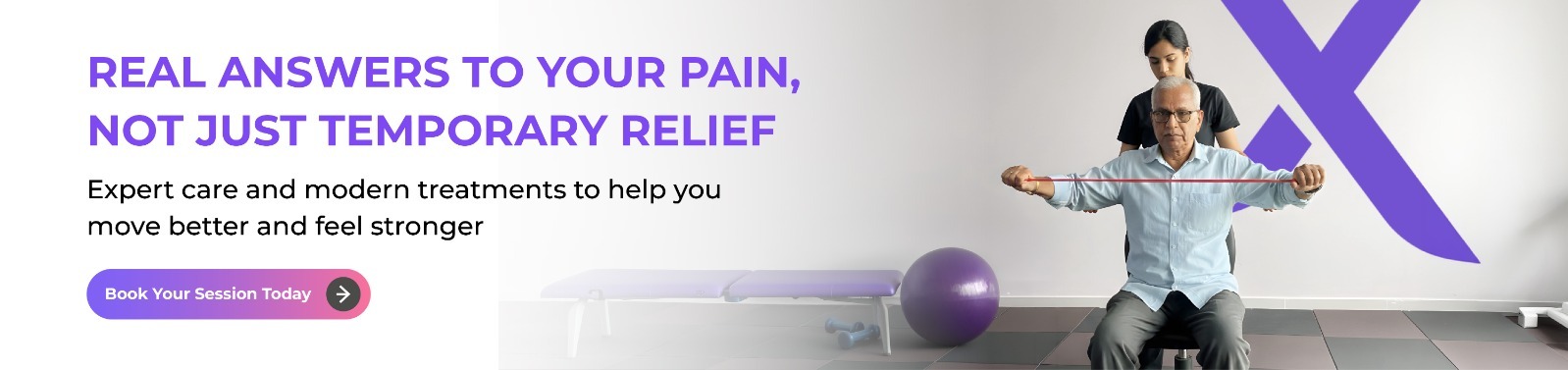
Strengthening exercises can be an important part of knee rehabilitation. Depending on the assessment, exercises may target the quadriceps, hamstrings, hips and other muscles involved in lower-limb movement.
FlexifyMe's official knee pain treatment information specifically lists strengthening exercises targeting muscles around the knee, including the quadriceps and hamstrings. (flexifyme.com)
The exercises can be adapted to the person's current ability and gradually progressed.
It Helps Improve Range of Motion
Difficulty fully bending or straightening the knee can make everyday activities harder.
Physiotherapy may include stretching, mobility work and appropriate exercises to help improve movement. FlexifyMe lists stretching and mobility work among the treatment approaches that may form part of an individualised knee pain programme. (flexifyme.com)
It Can Address Balance and Stability
Knee pain may affect how someone walks and moves. Reduced confidence can then lead to less activity.
FlexifyMe includes balance and proprioception training among the possible components of its knee pain treatment programme. (flexifyme.com)
If your parent has experienced falls or repeated episodes of the knee giving way, a physiotherapist can assess whether additional balance or gait training is appropriate.
It Retrains Everyday Movements
Rehabilitation is not only about isolated exercises.
Depending on the person's condition, a physiotherapist can work on functional activities such as:
Standing up from a chair
Walking
Managing stairs
Getting in and out of a vehicle
Improving movement confidence
Returning gradually to appropriate daily activities
The aim is to translate improvements in strength and mobility into activities that matter outside the treatment session.
It Can Support Recovery After Knee Surgery
Physiotherapy can also be part of rehabilitation following procedures such as knee replacement.
FlexifyMe's official website lists post-surgical physiotherapy as part of its knee pain treatment offering, and its physiotherapist profiles include experience with total knee replacement rehabilitation. (flexifyme.com)
The exact rehabilitation plan depends on the procedure, medical advice and the individual's recovery.
Choosing Knee Pain Treatment in Model Town Phase 2 for a Parent
For an older parent with knee pain, travel is part of the practical treatment decision. A service that is easier to reach may make it simpler to attend appointments and maintain a home exercise routine.
When looking for knee pain treatment in Model Town Phase 2, new delhi, consider:
Accessibility: Check parking, entrance access, stairs and the distance your parent needs to walk.
Assessment scope: Look for an assessment that considers knee movement, strength and walking rather than focusing only on the painful area.
Suitable appointment timings: Choose timings that fit your parent's routine and travel needs.
Family involvement: Ask whether a family member can participate in the initial assessment or receive guidance about supporting the home programme.
Home exercise guidance: Check whether exercises are explained clearly so they can be performed safely between appointments.
Progress reviews: A useful rehabilitation plan should include ways to monitor progress and adjust treatment when necessary.
FlexifyMe currently provides physiotherapy through its clinics in Kharadi and Koregaon Park, Pune, as well as online physiotherapy consultations. The official website states that online physiotherapy is designed for conditions involving pain, stiffness, reduced mobility and movement dysfunction, with suitability determined through assessment. (flexifyme.com)
What You Can Do at Home to Support Them
Family support can make rehabilitation easier, but it should complement rather than replace professional guidance.
Encourage appropriate daily movement rather than prolonged inactivity.
Adjust walking distance and activity according to your parent's symptoms and physiotherapist's advice.
Consider whether chairs and beds are at a manageable height for safe transfers.
Check footwear for adequate grip and fit.
Keep frequently used routes well lit and free from clutter.
Follow the prescribed home exercises rather than adding random exercises.
Do the exercises together if your parent finds company motivating.
Track simple functional improvements, such as walking farther or standing up more comfortably.
Ask before helping. Allow your parent to do the parts of an activity they can safely manage themselves.
When Surgery Does Enter the Conversation
Physiotherapy does not replace an orthopaedic assessment when surgery may be indicated.
A medical review is particularly important when knee pain is severe or persistent, function continues to decline despite appropriate treatment, or symptoms significantly affect quality of life.
Even when knee replacement becomes necessary, physiotherapy can have an important role before and after surgery. FlexifyMe's official website lists total knee replacement among the areas of experience of some of its physiotherapists and includes post-surgical physiotherapy in its knee treatment services. (flexifyme.com)
The specific timing and rehabilitation programme should be determined by the treating medical and physiotherapy team.
Frequently Asked Questions
Where can I get knee pain treatment for my parents in Model Town Phase 2? Look for a physiotherapy service that assesses knee movement, strength and function and creates a personalised rehabilitation plan. Convenience is also important when an older adult needs regular follow-up.
Is it too late to start physiotherapy for a seventy-year-old with knee pain? No. Age alone does not determine whether someone can participate in physiotherapy. The programme should be adapted to the person's health, mobility, symptoms and physical capacity.
Should my parent walk if their knees hurt? The answer depends on the cause and severity of the pain. In many cases, appropriate movement is preferable to prolonged inactivity, but activity may need to be modified. If your parent has significant swelling, severe pain, instability or difficulty bearing weight, seek professional assessment.
Are knee caps, oils and belts useful? Some supports may provide comfort or stability in particular situations, but they should not automatically replace an exercise and rehabilitation programme when one is appropriate. Ask a physiotherapist whether a particular support is suitable.
Can physiotherapy help avoid or delay knee replacement? Physiotherapy can improve strength, movement and function and may be an appropriate conservative treatment for some people with knee problems. However, it cannot guarantee that surgery will be avoided or delayed. The decision depends on the individual's condition and response to treatment.
How long before we see improvement? Recovery varies according to the cause, severity and duration of knee pain, as well as the person's response to treatment and consistency with rehabilitation. FlexifyMe does not present one fixed recovery timeline for every knee condition, so a personalised assessment is more useful than promising a specific number of weeks. (flexifyme.com)
Help Them Get Their Day Back
Your parents may not always tell you that they have stopped doing something because of their knees. They may simply stop doing it.
Look at what has quietly disappeared from their routine. Maybe it is the morning walk, the trip to the market, the stairs, a family outing or simply getting around the house without hesitation.
Physiotherapy for knee pain in elderly adults can focus on improving strength, mobility, stability and everyday function through an individualised treatment plan. FlexifyMe's official knee pain service includes clinical assessment, gait and posture analysis, strengthening, mobility work, balance and proprioception training, home exercises and post-surgical rehabilitation where appropriate. (flexifyme.com)
If your parent is experiencing persistent knee pain or reduced mobility, consider arranging a professional assessment to understand what may help them move more comfortably and confidently.
This article is for general information and is not a substitute for personal medical advice. Sudden severe knee pain, significant swelling, inability to bear weight, a locked knee, or a knee that repeatedly gives way should be assessed promptly.